Kumamoto Earthquake: Mall Explosion, Rising Death Toll, and a Race Against Aftershocks

A magnitude 7.1 earthquake struck the Kumamoto Region of Kumamoto Prefecture, Japan, at 16:27 JST on July 28, 2026, with the Japan Meteorological Agency recording the epicenter at 32.6°N, 130.7°E at a depth of 10 km JMA. The Kumamoto prefectural government has since reported at least 23 fatalities Voice of Alexandria. Prime Minister Sanae Takaichi, who chaired the first Emergency Headquarters meeting at the Prime Minister's Office on July 28 Prime Minister's Office of Japan, confirmed 13 deaths as of 8:30 a.m. on July 29 Prime Minister's Office of Japan, a figure subsequently overtaken by the prefectural count.
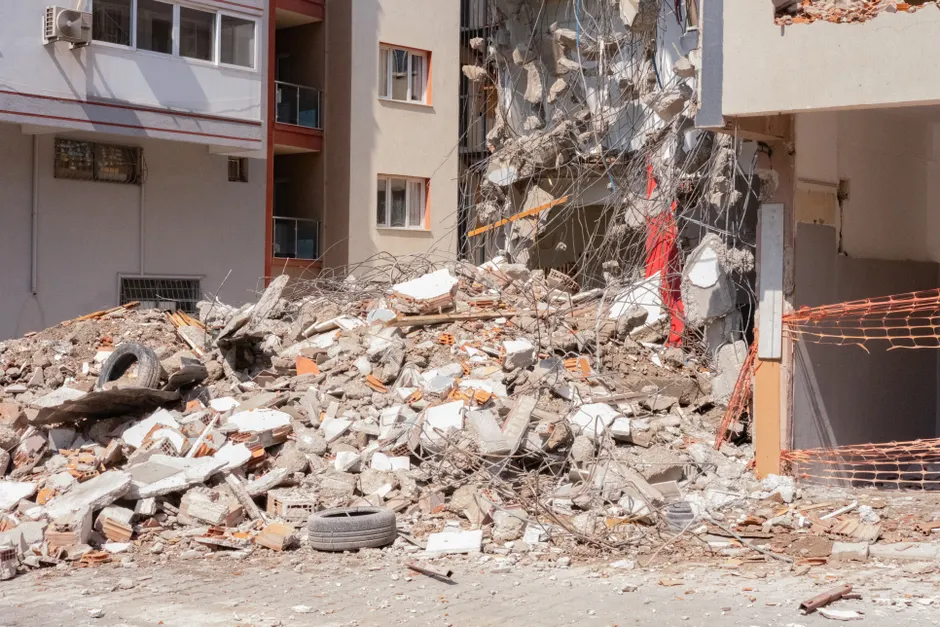
The single most consequential site-specific event was an explosion at the Aeon mall in Kashima, Kumamoto Prefecture, approximately 50 minutes after the mainshock Al Jazeera. Aeon President Akio Yoshida stated that staff evacuated roughly 3,000 shoppers within half an hour of the earthquake. First responders pulled eight people from the partially collapsed structure early on July 29; three were dead and five had injuries, according to a local official cited by AFP France 24. Three Aeon shop workers remained unaccounted for as of the most recent reporting Al Jazeera. One survivor was found injured inside a toilet in the mall after the explosion.
Aeon is investigating a possible gas leak as the cause. Yoshida said the probability of gas being the trigger was "very high" Al Jazeera. If confirmed, this would point to a secondary disaster chain in which seismic ground motion ruptures utility infrastructure and the resulting gas accumulation ignites, a pattern well documented in urban earthquake response literature.
The mall had reopened just the previous month after recovering from the magnitude 7.3 Kumamoto earthquake of April 2016, and featured seismically reinforced ceilings Al Jazeera. That a structure retrofitted after a known seismic event suffered partial collapse underlines the difficulty of hardening large commercial buildings against both direct ground motion and cascading secondary failures such as gas explosions. The reinforced ceilings were designed for seismic loading, not blast loading, and the explosion occurred nearly an hour after the earthquake, suggesting the structural compromise may have stemmed from the secondary event rather than the mainshock alone.
More than 100 aftershocks had rattled Kumamoto by the end of July 28, according to the JMA tally referenced in reporting Al Jazeera. The aftershock swarm kept police and firefighters wary of entering the wreckage at the Aeon site due to the risk of further collapse, complicating rescue access during the critical first 24 hours. About 170 soldiers from Japan's Self-Defense Forces were deployed to assist with rescue operations at the mall Al Jazeera.
Takaichi described the situation as a "race against time" to rescue those trapped in the mall and others affected by the quake, and urged residents to "take all precautions" Reuters. Aerial photographs taken by a Kyodo News helicopter on July 28 documented the broader damage footprint NBC News, and the following day electric poles were observed tilted in Hikawa, Kumamoto Prefecture, indicative of ground deformation or liquefaction effects beyond the immediate epicentral area Kyodo News.
In a rescue that drew attention amid the grim recovery, all 25 cats left behind in a cat cafe inside the Aeon mall during the evacuation were rescued on July 29 Al Jazeera.
The 2016 Kumamoto sequence provides the closest historical analog. In April 2016, a magnitude 6.5 foreshock was followed two days later by the magnitude 7.3 mainshock, together claiming 50 lives. That sequence prompted revisions to Japan's seismic design codes for urban structures and accelerated retrofitting programs across Kyushu. The 2026 event striking the same region at comparable magnitude, and compromising a building that had undergone post-2016 reinforcement, will likely prompt scrutiny of whether current retrofitting standards adequately account for post-earthquake secondary hazards, particularly gas-leak ignition in large commercial structures.
The broader context here is the interplay between Japan's seismic infrastructure hardening and the persistent vulnerability of utility systems to ground failure. Japan operates one of the world's most advanced earthquake early-warning networks, and the JMA's prompt characterization of the event, with depth, coordinates, and regional classification published rapidly, reflects that capability. Yet the Aeon mall sequence, with a successful mass evacuation followed by a delayed explosion, illustrates that early warning and structural reinforcement address only part of the risk surface. Post-mainshock utility integrity, gas shut-off automation, and the safety protocols for re-entering large structures in the aftershock window remain areas where existing frameworks may be tested. With three workers still missing and the death toll still climbing as of July 30, the operational and regulatory lessons of this event are likely to extend well beyond the rescue phase.