SolarSquare Raises $4 Million in Seed Funding to Scale Rooftop Solar Platform

SolarSquare Raises $4 Million in Seed Funding to Scale Rooftop Solar Platform
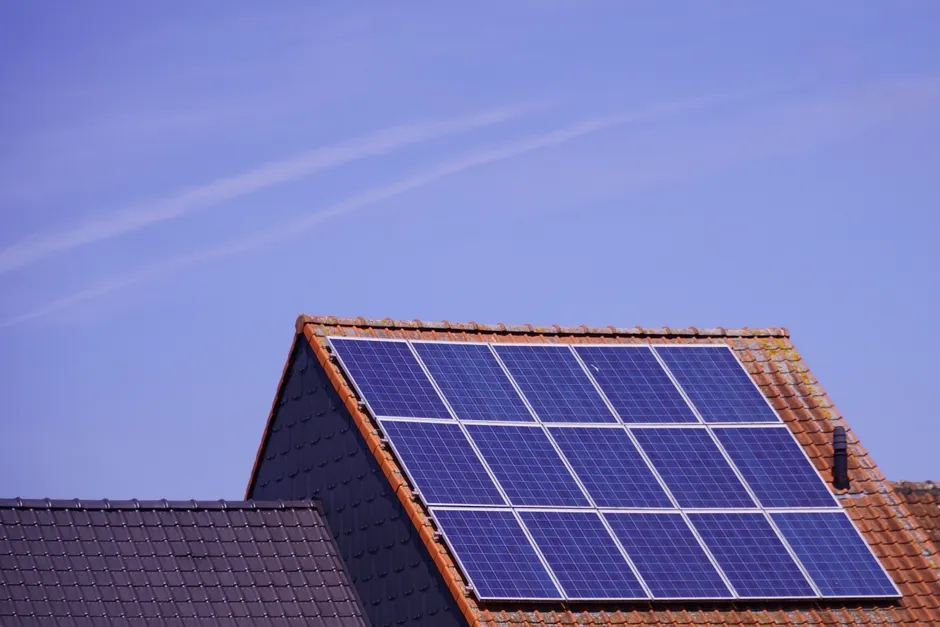
Mumbai-based SolarSquare has closed a $4 million seed funding round led by Good Capital, with participation from additional investors, to accelerate deployment of its rooftop solar installation platform across India's residential and commercial markets.
The funding represents one of the larger seed rounds in India's distributed solar sector, where most early-stage companies typically raise between $1-2 million in initial institutional capital. SolarSquare operates a full-stack model that handles everything from customer acquisition and system design to financing, installation, and ongoing maintenance for rooftop solar systems.
Platform and Business Model
SolarSquare's approach centers on addressing the traditional friction points that have limited rooftop solar adoption in India's urban markets. The company handles the complete customer journey through a digital platform that automates system sizing, provides real-time project tracking, and integrates financing options directly into the purchase flow.
The platform targets both residential customers and small-to-medium commercial establishments, segments that have historically been underserved by larger solar EPC companies focused on utility-scale projects. SolarSquare's technology stack includes remote site assessment capabilities using satellite imagery and drone surveys, automated permitting workflows, and IoT-enabled monitoring systems for post-installation performance tracking.
For financing, the company partners with banks and non-banking financial companies to offer customers flexible payment options including solar loans and lease structures. This addresses one of the primary barriers to rooftop solar adoption, where upfront capital costs can range from ₹60,000 to ₹2 lakhs for typical residential installations.
Market Context and Timing
India's rooftop solar market has seen accelerated growth following policy support through the PM-KUSUM scheme and state-level net metering regulations, though adoption rates remain below government targets. The sector faces persistent challenges around awareness, financing availability, installation quality, and long-term maintenance support.
Having covered the solar industry's evolution over the past decade, I've observed a clear pattern where successful distributed energy companies emerge by solving operational complexity rather than just technology innovation. SolarSquare's full-stack approach mirrors strategies that proved effective during the residential solar boom in California and Germany, where companies like SolarCity and Sungevity scaled rapidly by owning the entire customer experience rather than focusing on individual components.
The timing aligns with several favorable market conditions: declining module costs, improved grid stability for net metering, and growing awareness of electricity cost inflation among Indian consumers. Additionally, the COVID-19 pandemic accelerated digital adoption patterns that make online solar sales more viable than in previous years.
Technology Infrastructure
SolarSquare's platform architecture integrates several specialized systems typically handled by separate vendors in traditional solar installations. The customer acquisition flow uses machine learning algorithms to qualify leads based on electricity consumption patterns, roof characteristics assessed through satellite analysis, and local grid connection capacity.
System design automation reduces the typical 2-3 week engineering cycle to under 48 hours for standard residential installations. The platform generates electrical schematics, structural drawings, and bill of materials automatically, with human review reserved for complex roof configurations or non-standard electrical setups.
Installation teams use mobile applications that provide step-by-step guidance, quality checkpoints, and photo documentation requirements. This standardization approach aims to address quality consistency issues that have affected the broader rooftop solar market, where installation practices vary significantly across contractors.
Post-installation monitoring relies on smart inverters and additional IoT sensors that track energy production, consumption patterns, and system health metrics. The data feeds into SolarSquare's customer portal and enables proactive maintenance scheduling.
Competitive Landscape
SolarSquare operates in a fragmented market where most players focus on specific segments of the value chain. Traditional EPC companies like Tata Power Solar and Vikram Solar primarily serve large commercial and industrial customers, while numerous local installers handle residential projects with limited technology infrastructure.
Digital-first competitors include companies like SolarBuddy and ZunRoof, which have raised smaller rounds to build online solar marketplaces. However, most focus on lead generation and customer matching rather than owning the full installation and financing stack.
The company's approach of handling end-to-end operations requires significantly more capital and operational complexity compared to marketplace models, but potentially offers better unit economics and customer experience control.
Strategic Implications
Looking at what this funding enables, SolarSquare is positioned to scale operations across multiple Indian metros where rooftop solar economics are most favorable. The capital will likely support team expansion in engineering, operations, and customer acquisition, while building the working capital buffer needed for inventory management and project financing.
The broader context here suggests we're seeing the emergence of India's first generation of technology-enabled distributed energy companies that can operate at scale. Success in this model would validate the applicability of international residential solar platforms to Indian market conditions, potentially accelerating overall sector growth.
For the distributed solar ecosystem, SolarSquare's progress offers a test case for whether full-stack integration can overcome the structural challenges that have limited rooftop solar penetration outside of a few progressive states. The company's ability to maintain quality standards while scaling rapidly will likely influence how other players approach the market.
The funding also reflects growing investor confidence in India's energy transition opportunities, particularly in segments that benefit from policy tailwinds and declining technology costs. As grid infrastructure improves and net metering becomes more standardized across states, platforms like SolarSquare could capture significant market share during the next phase of distributed solar adoption.