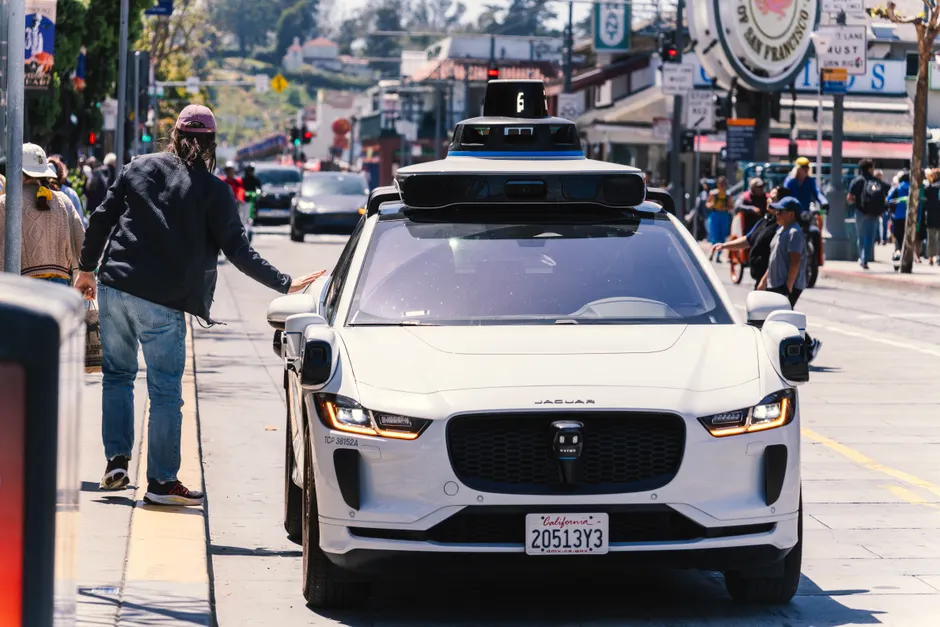
Waymo's $220M Proving Ground Purchase Puts a 115-Acre City Simulation in Its Own Backyard
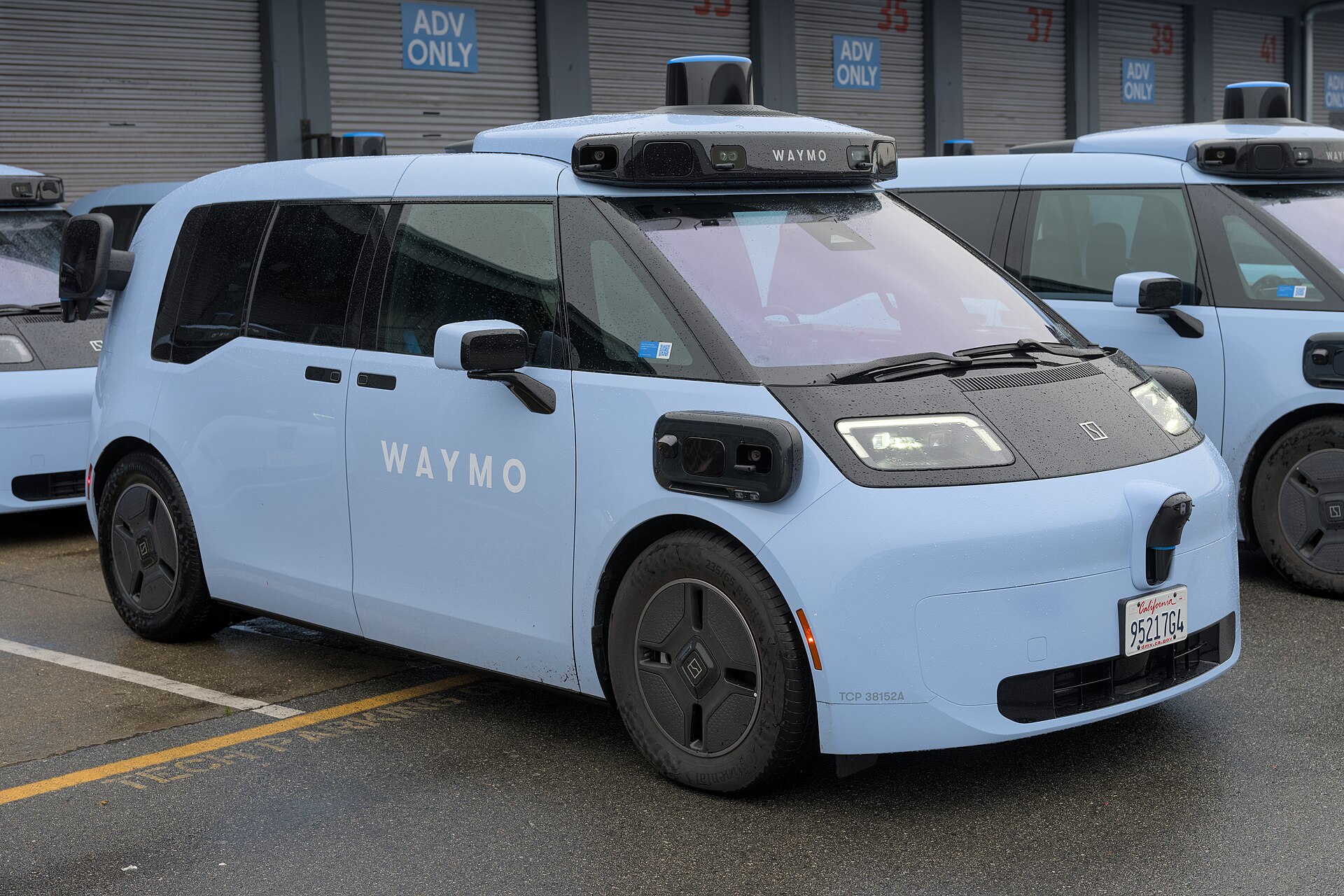
Waymo has acquired Apple's former self-driving vehicle proving ground in Arizona for $220 million, gaining direct control of a 115-acre city simulation area that the iPhone maker had built to develop its now-shelved automotive ambitions, according to TechCrunch.
The deal hands Alphabet's autonomous vehicle subsidiary a purpose-built test environment at a moment when the company is aggressively scaling its commercial robotaxi operations across multiple U.S. cities. Owning the physical infrastructure outright — rather than leasing access to shared or government-operated proving grounds — removes a logistical dependency that becomes increasingly costly to manage as test cycles multiply.
What the Facility Actually Is
The Arizona site is not a simple track. The 115-acre city simulation area is designed to replicate the density and variety of real urban and suburban driving conditions: intersections, signalized corridors, pedestrian crossings, roundabouts, loading zones, and the kind of edge-case geometry — narrow lane splits, occluded sightlines, irregular curb radii — that rarely appears in standard road testing but shows up constantly in commercial operations.
This class of proving ground is sometimes called a "closed-course urban replica," and it serves a specific function in the AV development stack that open-road miles cannot easily replicate. On public roads, a vehicle encounters edge cases stochastically — you accumulate rare scenarios slowly, across billions of miles. On a controlled urban replica, engineers can construct, repeat, and instrument specific scenarios on demand: a delivery truck double-parked mid-block, a cyclist emerging from a blind alley, a pedestrian stepping off a curb between parked vehicles. The iteration loop is orders of magnitude faster.
Waymo already operates one of the largest autonomous mileage datasets in the industry, built over more than a decade of public road testing. The addition of a controlled urban environment with this footprint allows the company to stress-test specific scenario categories in isolation — particularly useful as Waymo pushes into denser urban cores where the long tail of edge cases is longest.
Apple's Exit, Waymo's Gain
Apple's Project Titan — the company's multi-year, multi-billion-dollar effort to develop an autonomous or semi-autonomous vehicle — was officially wound down in early 2024, with the majority of its engineering team redirected toward generative AI projects. The Arizona proving ground was a tangible remnant of that program: expensive to maintain, strategically irrelevant to Apple's pivot, and an obvious candidate for divestiture.
For Waymo, the timing works. The $220 million acquisition price reflects the specialized nature of the asset — constructing a 115-acre urban simulation environment from scratch is not a trivial undertaking, both in terms of capital and in terms of the regulatory and zoning work required to build one in a location suitable for year-round testing. Arizona's climate, with its high-visibility desert light and minimal precipitation disruption, has long made it a preferred testing corridor for autonomous vehicle programs. Waymo has operated in the Phoenix metropolitan area since 2017 and launched its first commercial robotaxi service there.
There is a certain historical irony worth noting here. Apple was, for a period in the mid-2010s, widely reported to be one of Waymo's most serious potential competitors in the autonomous vehicle space. The two companies were involved in litigation over alleged trade secret misappropriation — a case that settled in 2018 — and Apple was actively recruiting AV engineers throughout that era. A decade later, Apple has exited the field entirely, and Waymo is purchasing the physical infrastructure Apple built to compete. The industry has a long memory for these reversals.
Operational and Strategic Implications
Owning a controlled proving ground at this scale has implications beyond raw testing throughput. Waymo's simulation stack — which the company calls Waymo Simulation, built on top of its broader ML infrastructure — is used to generate synthetic scenarios that can be fed back into training pipelines. A high-fidelity physical environment can serve as a ground-truth reference for validating synthetic data generation: if a simulated scenario produces a vehicle behavior that diverges from what the same scenario produces on the physical replica, that gap is a signal worth investigating.
There is also a competitive intelligence dimension. Testing on a proprietary closed course means Waymo's development work is not observable by competitors or, for that matter, by journalists parked at the perimeter of a public road. As the AV industry matures and competition intensifies — particularly from Chinese operators like Baidu's Apollo Go, which is expanding internationally, and from domestic challengers like Zoox and Motional — protecting the specific failure modes and remediation strategies that Waymo is actively working on becomes more operationally sensitive.
Worth flagging separately: the $220 million price point will draw scrutiny from Alphabet shareholders already watching Waymo's cumulative investment closely. Waymo has consumed substantial capital over its lifetime, and while the company has secured external funding rounds — including a $5.6 billion round closed in 2024 — it does not yet generate revenue at a scale that makes infrastructure acquisitions of this size self-funding. Whether this is capital well deployed depends heavily on how aggressively Waymo expands its commercial footprint over the next three to five years, and how much of its testing work genuinely benefits from a controlled urban environment versus continued accumulation of public road miles.
The Broader Context
Looking at what this acquisition means for the AV proving ground market more broadly: we have seen this pattern before, when cloud infrastructure providers began acquiring or building their own data centers rather than co-locating in shared facilities. The argument was the same — control of physical infrastructure reduces dependency risk, allows tighter optimization, and signals long-term commitment to a capability. The economics eventually justified it for the largest players; smaller operators continued to rely on shared or leased facilities. The AV proving ground landscape is likely to follow a similar bifurcation. Tier-one programs with deep capital backing will own their environments; smaller and mid-tier teams will rely on facilities like the American Center for Mobility in Michigan or GoMentum Station in California.
For Waymo specifically, Arizona now functions as something close to a full-stack development campus: public road operations in the Phoenix metro, regulatory familiarity built over nearly a decade of state-level engagement, and now a controlled urban replica for accelerated scenario engineering. That geographic concentration of capability is not accidental, and it will likely anchor Waymo's next phase of technical development regardless of where its commercial operations eventually expand.
The acquisition closed, per reporting, in the context of Waymo's ongoing push to bring its robotaxi service to additional markets. The 115-acre facility will not put passengers in vehicles by itself — but it is the kind of unglamorous infrastructure investment that tends to matter a great deal when the edge cases finally run out.