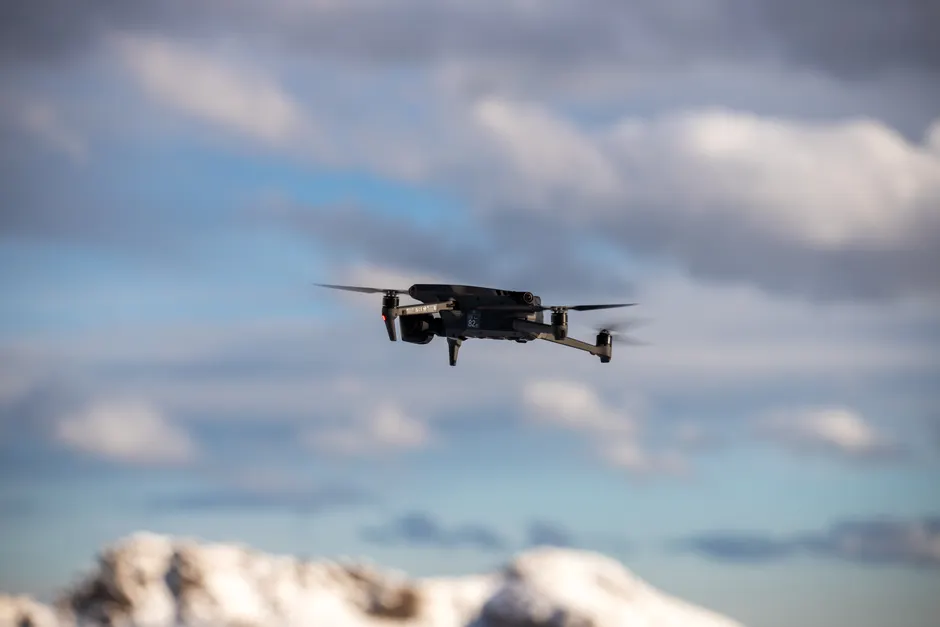
Ukraine's 414th Drone Brigade Escalates Crimea 'Switch Off' Campaign with Coordinated Power-Grid Strikes

On the night of July 21, 2026, Ukraine's 414th Separate Unmanned Strike Aviation Brigade, known as Magyar's Birds, struck 13 electricity nodes across occupied Crimea and southern Ukraine in a single coordinated operation. The targets included substations in Russian-controlled areas of Zaporizhzhia and Kherson provinces, territories Russia claims to have annexed, as well as a 110kV substation near the Crimean holiday resort of Alushta, where a drone impact ignited fires (The Guardian).
The strikes form part of what Ukraine calls the Crimean "switch off" campaign, a sustained effort to disconnect the peninsula from its power and logistics networks. Each of the long-range drones used in the July 21 operation carried between 50 and 100 kilograms of explosives, according to The Guardian's interactive report published August 2, 2026. The drones were built in Kyiv by a Ukrainian defence technology startup whose representatives participate directly in operations alongside the brigade.
The 414th operates within the Unmanned Systems Forces of the Armed Forces of Ukraine. Commanded by Robert Brovdi, the brigade has grown rapidly since its formation and has carried out long-range drone attacks that present a serious challenge to Russian logistics and infrastructure. A May 2026 profile by The Guardian documented Brovdi's role leading the unit and the operational tempo his forces have sustained (The Guardian). Beyond the Crimea campaign, the brigade has demonstrated reach at the tactical level as well: a fiber-optic-controlled FPV drone operated by the 414th struck Russian armored vehicles at a record distance of 42 kilometers from the front line (Militarnyi).
Ukraine's indigenous drone capabilities have expanded substantially since Russia's full-scale invasion in February 2022. The FP1, Ukraine's long-range strike drone, can fly more than 2,500 kilometers, placing anywhere in European Russia and much of Siberia within range. According to The Guardian, Ukraine has become the world's leading unmanned systems power after rapid growth in production and operational deployment.
Russia has conducted nightly attacks on Ukrainian cities since 2022 using Iranian-designed Shahed loitering munitions alongside ballistic and hypersonic missiles. The Ukrainian drone campaign against Russian energy infrastructure represents a symmetric response in kind, though directed at occupied territory and military logistics rather than civilian centers.
Lt Col Ray, a Ukrainian commander with the 414th, framed the campaign in ideological terms in his remarks to The Guardian: "We are making history here. This is where democracy beats totalitarianism. It's like George Orwell. But this time Big Brother loses" (The Guardian).
The broader context here matters for several reasons. The 414th's operational model, in which a defence startup's representatives embed with military units during live operations, collapses the traditional separation between manufacturer and end-user. This integration allows rapid iteration on drone design based on real-time battlefield feedback, compressing development cycles that in conventional procurement can take months or years. The FP1's 2,500-kilometer range, combined with the unit's demonstrated ability to coordinate multi-point strikes against distributed infrastructure targets in a single night, suggests a force that has moved well beyond opportunistic harassment toward systematic degradation of Russian logistical depth.
The "switch off" campaign's logic is straightforward in military terms: a peninsula disconnected from its power grid cannot easily sustain military logistics, fuel depots, communications infrastructure, or troop rotations. The July 21 operation's targeting of 13 electricity nodes simultaneously across geographically dispersed locations indicates a capacity for synchronized multi-axis attacks that compounds the defensive burden on Russian air defense and electronic warfare systems. Each successful strike against a substation cascades into broader grid instability, multiplying the operational effect beyond the physical damage of 50 to 100 kilograms of explosives per drone.
The 42-kilometer fiber-optic FPV strike adds a separate dimension. Fiber-optic control links are immune to electronic jamming, a persistent Russian countermeasure against radio-controlled drones. Achieving a strike at that distance with a wire-guided system points to maturing capabilities in both platform endurance and launch-and-recovery tactics far forward of the contact line.
Ukraine's emergence as the world's leading unmanned systems power, as characterized by The Guardian, is less a claim about absolute production volume than about the density of operational experience. No other military has fielded drones in comparable numbers against a peer adversary with integrated air defenses. That experience, accumulated under combat conditions, feeds directly back into the design loop maintained by the Kyiv-based startups whose representatives ride along on operations.