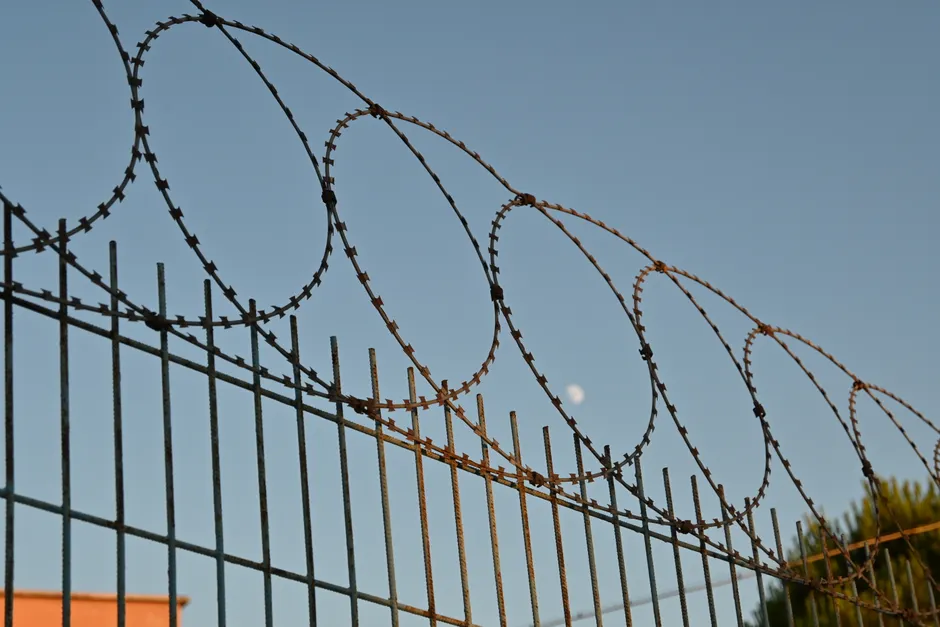
Ceuta Crisis: 50,000 Migrants Cross in a Day, 67 Dead, Spain Activates Emergency Response
Around 50,000 migrants crossed into the Spanish enclave of Ceuta in a single day in late July 2026, prompting Prime Minister Pedro Sánchez's government to activate a crisis response on July 30 and triggering an urgent meeting of EU interior ministers scheduled for the following Tuesday. At least 67 people died in the mass influx, according to Al Jazeera.
Morocco's King Mohammed VI coordinated the return of roughly 49,000 migrants from Ceuta via Lamine village, as reported by the BBC on August 1. Reuters separately confirmed that Spain said it had reversed the huge rush of migrants, with most of the more than 50,000 people having returned to Morocco. Spanish state broadcaster TVE reported that 2,000 to 3,000 people had crossed into Ceuta on Thursday, July 30, though Reuters could not immediately confirm that figure.
Sánchez, in an official press appearance at the Almudaina Palace in Palma de Mallorca on July 29, addressed the migration situation directly. He blamed trafficking gangs for the surge and called for an EU meeting over the Ceuta border crossing. In the same appearance, Sánchez pushed back against what he described as "fake news" and "disinformation," stating that "virtually all" migrants had been processed, as reported by The Guardian.
Spain also installed a floating barrier off Ceuta in response to the deadly influx, Al Jazeera reported. More than 1,500 migrants had reached the enclave by sea over the week preceding July 30, a figure that underscored the maritime dimension of the crisis alongside the mass overland crossings.
Ceuta, a Spanish autonomous city on the North African coast bordered by Morocco, has long been a focal point for irregular migration into the European Union. The Spanish Interior Ministry's biweekly report on irregular immigration, covering data accumulated from January 1 to July 15, 2026, is published in the "Balances e Informes" section of its official website. For comparison, 41,861 irregular immigrants arrived in Spain overall in 2020.
The autonomous city government of Ceuta had previously relocated 437 of 571 unaccompanied migrant minors eligible for transfer, a compliance rate of 76.5%, according to the Spanish government's official announcements from March 2026. That earlier relocation effort provides a framework for how the enclave's institutions handle unaccompanied minors, a category that typically requires expedited processing under both Spanish law and EU directives.
The broader context here is the ongoing tension between Spain and Morocco over migration management at Ceuta and Melilla, the two Spanish territories on the Moroccan coast. Mass crossings into Ceuta have occurred before, but the scale of this event — tens of thousands in a single day with a double-digit death toll — places it in a different category of crisis. The rapid return of nearly 49,000 migrants through Moroccan coordination suggests that Rabat retains the operational capacity to manage cross-border movement when political conditions align. What remains less clear from the available reporting is whether the initial surge resulted from a deliberate Moroccan loosening of border enforcement, a breakdown in coordination, or the sheer capacity of trafficking networks to exploit a moment of vulnerability.
Sánchez's framing of trafficking gangs as the primary driver, combined with his explicit rejection of "disinformation," signals an effort to control the narrative around an event that carries domestic political risk for his government. The invocation of EU solidarity mechanisms — the urgent interior ministers meeting — reflects Spain's interest in framing Ceuta not as a bilateral Spanish-Moroccan issue but as a European border challenge requiring burden-sharing. Whether that framing yields concrete EU operational support, or remains at the level of ministerial discussion, will depend on the outcome of the scheduled meeting.
The installation of the floating barrier and the speed of returns may stabilize the immediate situation on the ground. But the 67 fatalities ensure that this crisis will be measured not only by the number of crossings and returns, but by the human cost of a route that continues to prove lethal.