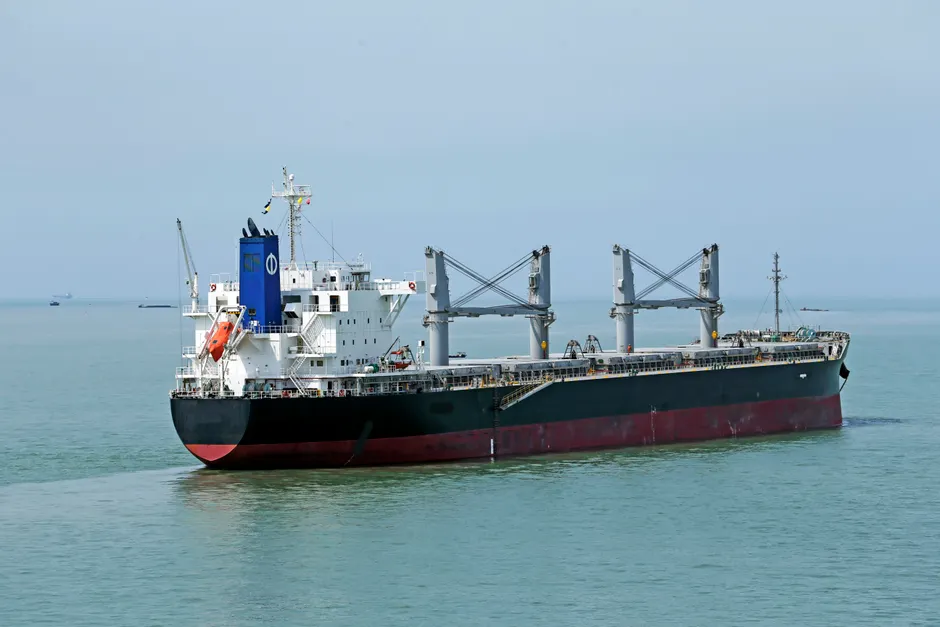
Iran's Directive to Houthis on Red Sea Closure: Escalation Pathways and Yemen's Energy Front

Iran has asked Yemen's Houthi movement to stand ready to close the Red Sea oil route if the United States strikes Iranian power infrastructure, according to sources reported in mid-July 2026 Reuters. The directive frames the Bab al-Mandeb Strait and adjacent Red Sea shipping lanes as a retaliatory lever in any future US-Iran kinetic exchange, extending the Houthis' role beyond the Yemeni theater into a broader regional deterrence architecture.
The Houthi Red Sea campaign, which has disrupted commercial shipping since late 2023, is formally conditioned on external demands. The group has repeatedly stated that ending the campaign requires Israel to end its war in Gaza and lift its siege Crisis Group. Iran's reported directive introduces a second, distinct condition: closure as a proportional response to US action against Iranian infrastructure, unrelated to the Gaza linkage the Houthis have publicly articulated. This dual-condition structure means the Red Sea route could be shut even if the Gaza conflict resolves, should US-Iran hostilities escalate independently.
The directive's operational logic draws on a military geography the Houthis have spent years consolidating. Since 2019, the group has pressed into Yemen's energy-producing south with varying intensity. Saudi forces deployed to Shabwa in September 2019 and worked with the local government toward a de-escalation and ceasefire, with all parties responding positively at the time Reuters. That de-escalation did not hold. By July 2021, Houthi forces had spread fighting to al-Bayda as they attempted to advance toward the southern oil-producing Shabwa region Reuters. In September 2021, Houthi fighters broke through frontlines and made advances in several districts across central Marib and southern Shabwa Reuters. By November 2021, it remained uncertain whether the Houthis would launch a direct assault on the capital of Marib governorate or pivot to seize the nearby oil and gas fields Reuters.
These energy frontlines directly triggered Houthi escalation beyond Yemen's borders. The group extended missile and drone strikes to the UAE after Emirati-backed local militias battled Houthi forces in the energy-producing Shabwa and Marib regions Reuters. The UAE strikes established a precedent for projecting power from Yemeni territory against Gulf states engaged in the conflict, a capability now being repurposed for the Red Sea maritime domain under Iran's reported directive.
The broader context here is a convergence of two escalation pathways that had previously operated on separate tracks. The Houthi Red Sea campaign has been tied to Gaza; Iran's directive ties it to US-Iran deterrence. If the directive represents an operational plan rather than merely signaling, the Houthis would need to execute a maritime closure that their current Red Sea interdiction campaign has approached but not fully achieved. A full closure of the Bab al-Mandeb chokepoint to oil traffic would affect a route carrying roughly 12 percent of seaborne crude, with cascading effects on insurance markets, freight rates, and Gulf export economics. The group's demonstrated capability to strike shipping with drones and missiles, honed through years of combat in Marib and Shabwa, provides the technical baseline for such an escalation.
What remains less clear is the command architecture. The Houthis have maintained a degree of operational autonomy within Iran's so-called "forward defense" network, acting on their own declared conditions in the Red Sea even as Tehran supplies components and strategic guidance. A directive to prepare for closure in a specific US-Iran contingency suggests tighter coordination than the Gaza-conditioned campaign implied. Whether that tighter coordination would override the Houthis' publicly stated conditions, or whether the group would frame any closure as simultaneously satisfying both the Gaza and Iran-demand conditions, is a question that the available reporting does not resolve.
The trajectory from Shabwa and Marib to the Bab al-Mandeb is not incidental. The same fighters who pushed through central Yemen's energy-producing provinces in 2021, and who struck the UAE in response to Emirati-backed militia operations, now constitute the force that Iran is asking to hold a global maritime chokepoint in readiness. The Saudi de-escalation effort in Shabwa in 2019, brief as it was, stands as the last documented case of a negotiated pause in that southern advance. Its failure to hold underscores the difficulty of any diplomatic intervention in a theater where military momentum, external patronage, and ideological framing converge.