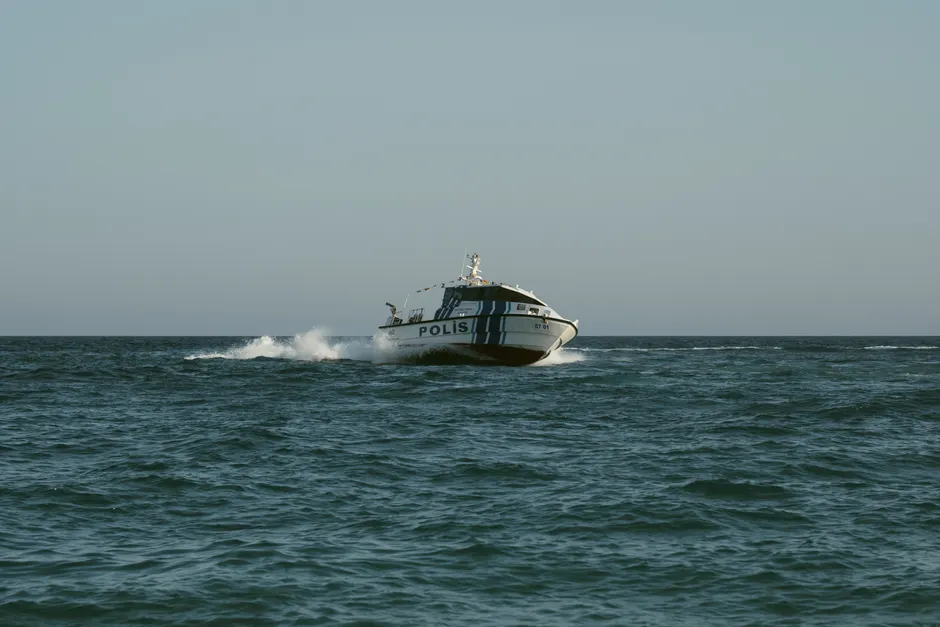
President Lai Joins Midnight Evacuation Drill as Taiwan's Han Kuang Exercises Enter Second Phase

Taiwan's President William Lai (Lai Ching-te) participated in a mid-night emergency evacuation drill on August 6, 2026, riding in an armoured personnel carrier to a command centre as part of the island's annual Han Kuang military exercises. Reuters
The BBC's Katy Watson reported on the drill, which took place in the early hours as part of the broader Han Kuang exercise running from August 5 to 14. BBC
Taiwan is using the Han Kuang drills to prepare for a potential Chinese invasion. The exercises are the largest item on Taiwan's annual military training calendar, and this year's iteration simulates scenarios including a naval blockade, a major earthquake, and a full-scale invasion by China. Reuters (Facebook)
President Lai's late-night movement to a command centre replicates the procedures the national leadership would follow if a kinetic threat required relocation from Taipei. That the head of state personally rehearsed this sequence is consistent with Han Kuang's emphasis on operational realism rather than symbolic display. The use of an armoured personnel carrier, rather than a motorcade of civilian vehicles, signals a focus on survivability under fire or electronic disruption.
The Ministry of National Defense (MND) also manages a parallel series of disaster-prevention exercises known as the Wan-an drills, which it publishes announcements and press releases about on its official website. The MND issued a press release explaining the cancellation of the Wan-an exercise in Taiwan's eastern region, though the specific rationale was detailed only in that release. MND
The Wan-an cancellation in the east, however, does not affect the Han Kuang exercise, which is a separate and more militarily focused set of war games. Han Kuang encompasses joint-force combat scenarios involving the Army, Navy, Air Force, and reserve mobilisation. The Wan-an drills, by contrast, are civilian air-raid and disaster-preparedness exercises meant to rehearse population-level responses.
The scenarios this year carry weight. A blockade simulation rehearses the disruption of maritime supply lines that Taiwan depends on for energy imports and trade. The earthquake component tests the military's capacity to operate as a first responder when civilian infrastructure is degraded. The full-scale invasion scenario integrates the two, layering a kinetic military threat on top of a humanitarian crisis.
The broader context here is the trajectory of cross-strait military planning. Taiwan's exercises have steadily shifted from scripted, almost ceremonial displays toward scenario-driven, force-on-force simulations. Incorporating the president into a midnight evacuation drill fits that pattern, and it places the political leadership inside the operational loop rather than at a comfortable distance from it.
For defence planners and observers watching the Indo-Pacific, the relevant detail is that Han Kuang's scenario set now explicitly includes a blockade as a standalone event, not merely a precursor to invasion. That distinction matters operationally, because a blockade scenario tests different capabilities, mine countermeasures, escort operations, and sustainment of sea lines of communication, than an amphibious assault does.
The exercise period runs through August 14. Additional phases are expected to test reserve mobilisation, coastal defence, and air-intercept operations in the days ahead.