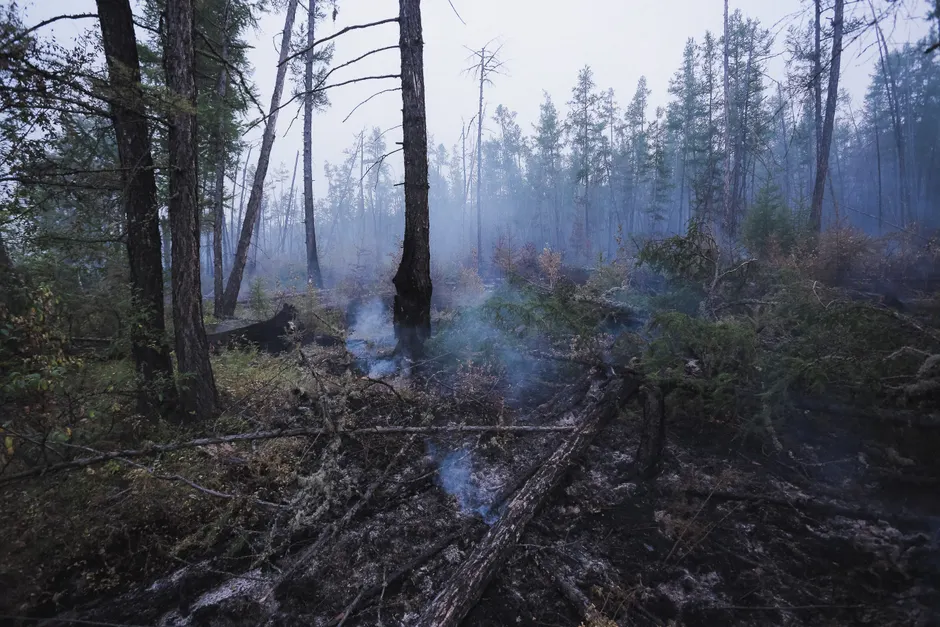
Bald Range Wildfire Forces Mass Evacuation of Summerland and Peachland, B.C.

The entire population of Summerland, British Columbia, roughly 12,000 people, was ordered to evacuate on August 8, 2026, as the Bald Range wildfire bore down on the community. Neighbouring Peachland, with approximately 8,000 residents, received the same directive. Together, the orders displaced around 20,000 people from the Okanagan region in one of the most significant wildfire-driven evacuations of the 2026 fire season.
Emergency Info BC, British Columbia's provincial emergency-management agency, issued the evacuation order on its Gov.bc.ca website, citing a significant risk to life. The directive was unambiguous: anyone in the affected area "must leave NOW." Residents were directed to evacuate to 550 Eckhardt Avenue West in Penticton, B.C. The District of Peachland is listed as the local authority responsible for the evacuation notice, according to BC Wildfire Service records, which designate the blaze as incident K51490 within fire year 2026.
Power was lost across Summerland early Saturday, according to city officials, complicating an already fraught evacuation effort. An official identified as Thompson, who had been providing updates from the emergency operations centre on Friday evening, confirmed on Saturday morning that he had left the post to evacuate his own family. "We're heading south," he said.
The human dimensions of the displacement extend well beyond the immediate population count. Okanagan residents have been struggling to evacuate horses and other large animals, with some owners unable to transport their livestock out of the fire's path. According to CBC, some residents left their gates open, hoping the animals would find their own way to safety. Others painted identifying markings on their animals to facilitate later recovery. The number of structures destroyed in the blaze was not yet clear as of the latest reporting.
The Okanagan Valley has long been one of British Columbia's most fire-exposed corridors. Its topography, dry summer climate, and prevailing wind patterns create conditions in which a single ignition can escalate rapidly into a multi-front incident threatening populated areas. The Bald Range fire's trajectory toward two municipalities, rather than remote timberland, placed it on a direct collision course with residential infrastructure and forced emergency managers into simultaneous evacuation logistics across adjacent jurisdictions.
The scale of displacement here matters for operational reasons. Coordinating reception, shelter, and re-entry for 20,000 evacuees across multiple communities strains provincial capacity, particularly when power infrastructure has already failed in one of the affected municipalities. The loss of electricity in Summerland also degrades communications, traffic management, and the ability of residents who may not have received the initial order to confirm evacuation routes. Emergency operations centres typically rely on continuous power to maintain situational awareness and interagency coordination; the early failure of that infrastructure in Summerland suggests the fire's impact on critical systems was already acute before the full evacuation could be completed.
The animal welfare dimension, while secondary to human safety in triage terms, carries practical consequences for emergency management. Large-animal evacuation requires trailers, trained handlers, and destination facilities, none of which scale easily under 12-hour timelines. The improvised strategies residents adopted, opening gates and painting markings, reflect the gap between the speed of wildfire spread and the logistical capacity to move livestock. For emergency planners, this is a recurring pressure point in rural B.C. communities where equine and agricultural populations are significant and where mandatory evacuation orders do not always account for the time required to move animals safely.
Thompson's departure from the emergency operations centre to evacuate his own family is a detail that captures the fire's intensity. When officials tasked with coordinating the response are themselves in the evacuation zone, the line between emergency manager and affected resident dissolves. It also signals that the fire's rate of spread left no margin for delay, even for those whose professional role is to remain at the centre.
The Bald Range wildfire remains an active incident. BC Wildfire Service records confirm it is tracked under incident number K51490 for the 2026 fire year. With structural damage assessments still pending and evacuation orders in effect for both Summerland and Peachland, the full scope of the fire's impact on the Okanagan region will depend on weather conditions, containment progress, and the resilience of infrastructure that has already shown vulnerability.