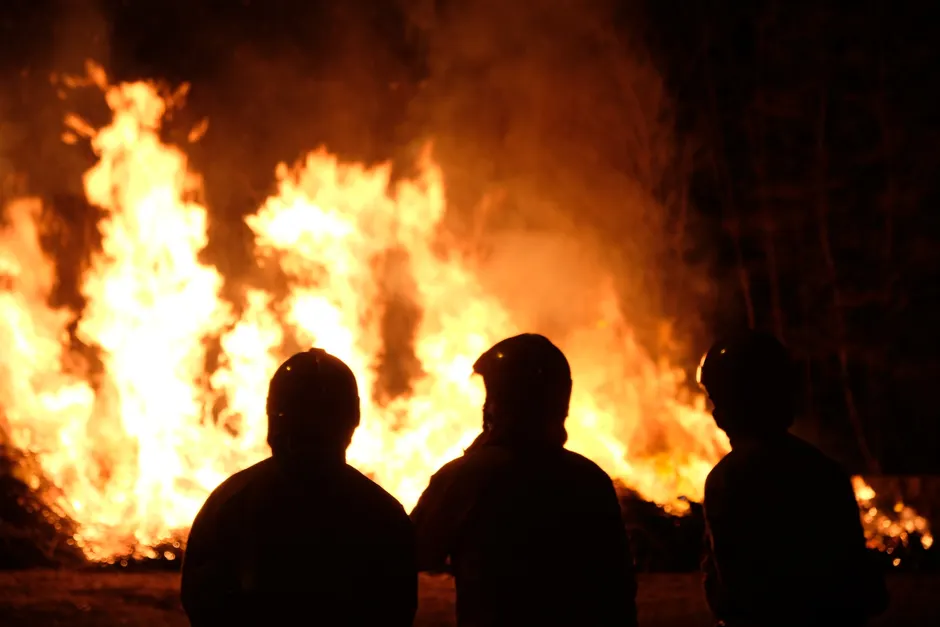
A Massive Wildfire Forced 20,000 People to Flee Their Homes in British Columbia

British Columbia declared a state of emergency on August 8, 2026, after a fast-moving wildfire called the Bald Range fire forced more than 20,000 people to leave their homes across the Okanagan region. The fire was burning out of control across about 9,500 hectares (23,500 acres). Overnight, the entire community of Summerland, home to about 12,000 people, was evacuated. Another 8,000 people in and around Peachland, to the north, were also told to leave PBS NewsHour Reuters.
A state of emergency is a special declaration that gives the government extra powers, such as the ability to redirect resources, restrict travel, and take control of equipment needed to fight fires or protect people.
The Central Okanagan Emergency Operations centre expanded its evacuation orders on August 6 to include the Shelter Cove, Secret Point, and Cinnabar Creek areas CORD Emergency. As of August 8, orders for properties in the Quilpituk Creek Wildfire area also remained in place, and evacuation orders and alerts stayed in effect across Peachland and Central Okanagan West due to the Bald Range fire CORD Emergency.
The Bald Range fire came right after another fire in the same region, the Bradley Creek fire, which officials believe destroyed more than 200 homes. That fire was reported as "being held" — meaning firefighters had managed to surround enough of it to stop it from spreading further BBC News. Having two major fires hit the same area back to back has put enormous strain on emergency services in a region where many homes and buildings sit close to forests and dry land, a setup that makes fires especially dangerous.
British Columbia's emergency declaration came during a summer of severe wildfires across the Northern Hemisphere. In the United States, more than 65,000 people were forced to flee fires in Washington state during the same period. In Europe, devastating fires burned across Spain and France as both countries dealt with drought and record-high temperatures. France had its worst fire season in two decades, while officials in Madrid called their 2026 fires the worst the region had ever seen BBC News.
Canada has been through this before. In 2023, the country had its worst wildfire season on record in terms of total land burned. The 2026 Okanagan fires have not yet reached that national scale, but they are pushing provincial emergency resources to their limits in a region that has repeatedly faced the threat of wildfires near populated areas.
The broader context here matters for understanding both the immediate challenge and where the fire season may be heading. The Bald Range fire grew rapidly to 9,500 hectares, and it started while the Bradley Creek fire was still being brought under control. That means the same crews and agencies were stretched in two directions at once. Evacuating 20,000 people from a fairly compact area within hours is a major logistical effort, and the decision to evacuate all of Summerland overnight suggests the fire was behaving severely enough that there was no time for a slower, staged approach.
The fact that large fires are burning at the same time in British Columbia, Washington state, Spain, and France also raises questions about whether countries can still help each other. During Canada's 2023 fire season, firefighters from multiple countries came to assist. But now that fire seasons in North America and Europe are overlapping more than they used to, there may be fewer crews and aircraft available to send abroad. French and Spanish officials describing their 2026 seasons in extreme terms suggests their own resources are already heavily committed.
For the Okanagan region specifically, the loss of more than 200 homes in the Bradley Creek fire, followed by the Bald Range evacuation, means the area's 2026 fire season has already caused compounding damage and displacement. The area's mountainous terrain, the large number of homes built near forests, and seasonal wind patterns all make it harder to contain fires even in milder conditions. The state of emergency gives the province extra authority to manage the crisis, but it also signals that local resources have been overwhelmed.
What is still unclear is whether the Bald Range fire will be brought under control like the Bradley Creek fire, or whether it will keep growing given current weather. With evacuation orders still active across multiple communities and the fire listed as out of control, the situation is still developing.