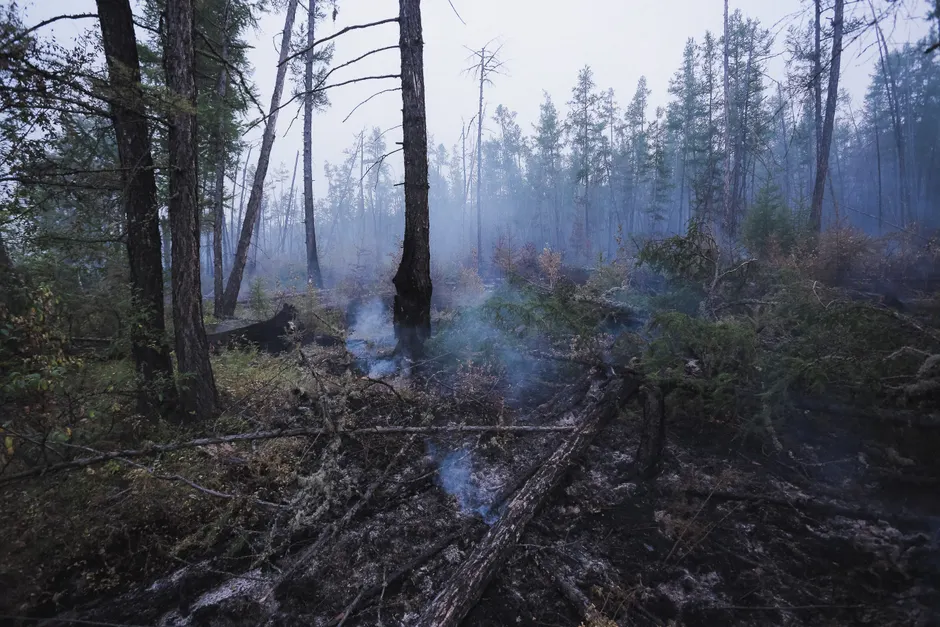
A Massive Wildfire Forced 20,000 People to Flee Their Homes in B.C.

On August 8, 2026, about 12,000 people in Summerland, British Columbia, were ordered to leave their homes immediately. The Bald Range wildfire was heading straight for the community. A neighbouring town, Peachland, with about 8,000 residents, got the same order. In total, around 20,000 people had to evacuate from the Okanagan region, making this one of the biggest wildfire evacuations of the 2026 fire season.
Emergency Info BC, the province's agency that handles emergencies, posted the order on its website. The message was direct: anyone in the area "must leave NOW." Residents were told to go to 550 Eckhardt Avenue West in Penticton, B.C. The BC Wildfire Service, which tracks and fights wildfires across the province, listed the fire as incident K51490 for the 2026 fire year.
Summerland lost power early Saturday, according to city officials, which made an already difficult evacuation even harder. An official named Thompson, who had been giving updates from the emergency operations centre on Friday night, said Saturday morning that he had left to evacuate his own family. "We're heading south," he said.
People in the Okanagan region have also been trying to get their horses and other large animals out of the fire's path. Some owners could not find trailers in time to transport their animals. According to CBC, some residents left their gates open, hoping the animals would find safety on their own. Others painted identifying marks on their animals so they could be found later. It was not yet clear how many buildings had been destroyed.
The Okanagan Valley is one of the most fire-prone areas in British Columbia. Its dry summers, wind patterns, and landscape of valleys and slopes mean a single spark can grow into a large fire very quickly. The Bald Range fire was heading toward two towns rather than remote forest, which put it on a direct path toward homes and forced emergency teams to manage two evacuations at the same time.
The broader context here is that moving 20,000 people out of multiple towns puts enormous pressure on the province's emergency systems. Finding shelter, food, and a safe place for that many people is a major logistical challenge, especially when the power has already gone out in one of the affected towns. Without electricity, communications break down, traffic lights stop working, and people who may not have gotten the initial evacuation order have no easy way to check their routes. Emergency centres need power to stay informed and coordinate across different agencies. The fact that Summerland's power failed early suggests the fire was already damaging critical systems before everyone could get out.
The struggle to evacuate large animals also raises a practical problem for emergency planners. Moving horses and livestock requires trailers, trained handlers, and places to bring the animals, none of which are easy to arrange in a matter of hours. The strategies residents improvised, like opening gates and painting markings on animals, show how fast the fire was moving compared to how long it takes to move livestock. In rural B.C., where many people own horses or farm animals, this is a problem that comes up again and again during evacuations.
Thompson's decision to leave the emergency operations centre to evacuate his own family says something about the fire's intensity. When the people in charge of managing the emergency are also in the evacuation zone, the line between official and resident disappears. It also means the fire was spreading so fast that even those whose job is to stay and coordinate had no time to wait.
The Bald Range wildfire is still burning. The BC Wildfire Service is tracking it as incident K51490 for the 2026 fire year. Evacuation orders are still in effect for both Summerland and Peachland, and it is not yet known how many structures have been lost. What happens next will depend on the weather, how much progress crews make in containing the fire, and whether the infrastructure that already showed weakness can hold up.