Wildfires Force 22,000 People From Their Homes in British Columbia
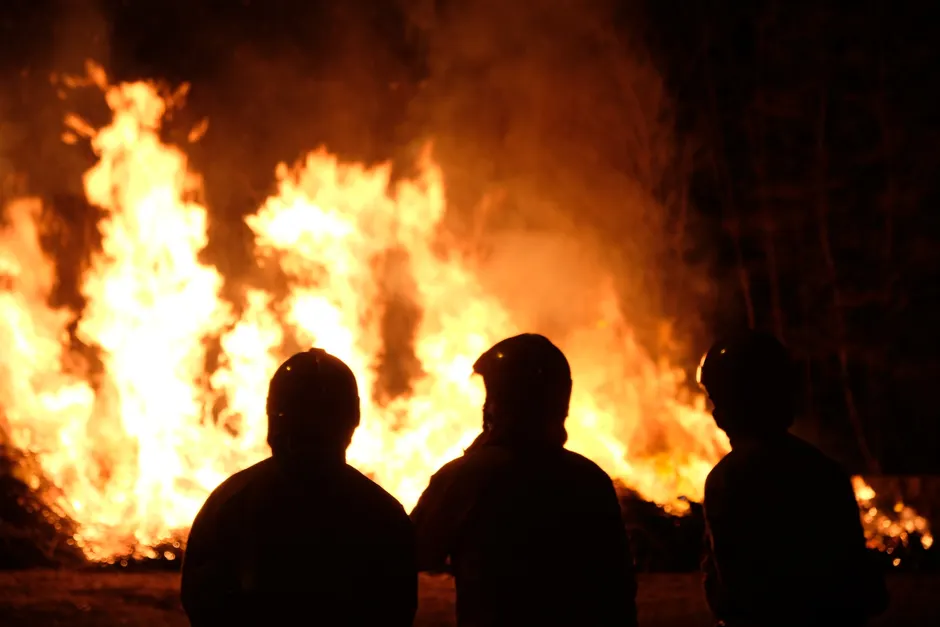
Canada's federal government has approved urgent help for British Columbia after fast-moving wildfires forced about 22,000 people to flee their homes over the weekend. Eleanor Olszewski, the minister in charge of emergency management, approved the province's request for federal aid on Sunday. She ordered federal officials to work with the province to provide shelter for people who had to leave their homes The Guardian.
The main fire, called the Bald Range wildfire, was first spotted late Friday evening. Within hours it had grown to more than 100 sq km (39 sq miles) and moved nearly 15 km toward Okanagan Lake. Officials said this is the largest evacuation so far this summer in British Columbia Reuters. Premier David Eby declared a provincial state of emergency on Saturday. A state of emergency is a special declaration that gives the government extra powers to respond to a crisis.
The entire town of Summerland, about 50 km south-west of Kelowna and home to about 12,000 people, was evacuated overnight. Another 8,000 people around Peachland, near Summerland, were also evacuated. About 10,000 more residents across the province have been told to be ready to leave at a moment's notice The Guardian.
As of Sunday, 102 wildfires were burning across British Columbia. Seventy-eight of them started in the past week alone. Nearly half are classified as "out of control," meaning firefighters cannot currently contain them. Cliff Chapman, a director at the BC Wildfire Service, said the hot and dry weather had created "explosive" fire conditions he has never seen before. He warned that lightning from upcoming thunderstorms could make things worse. Southern British Columbia and the nearby US Pacific north-west have had almost no rain in the past six weeks, leaving the land "bone dry," according to Mike Flannigan, a fire science professor at Thompson Rivers University. Flannigan blamed the conditions on human-caused climate change and said the speed of these fires is part of a trend of increasingly extreme wildfires across Canada and the United States The Guardian.
Fighting the fires from the air has been difficult. The BC Wildfire Service said 10 helicopters and one night-vision helicopter are involved, but thick smoke, rough air, and the large size of the fires have made operations hard. On the ground, the Royal Canadian Mounted Police are investigating a possible death in the fire near Summerland The Guardian.
The federal help draws on a system Canada has been building up throughout the 2026 wildfire season. It uses something called Operation LENTUS, which is the Canadian military's way of responding to emergencies inside Canada Government of Canada. The federal government's July 2026 wildfire forecast predicted that August would be dangerous for southern interior British Columbia Government of Canada. That prediction has now come true.
The broader context here is that this summer has put growing pressure on how federal and provincial governments coordinate emergency responses. Ottawa has already helped other provinces with wildfire problems this summer. Ontario asked for federal help on July 16 to evacuate remote northern communities hit by fires Reuters. On May 28, the Government of Canada announced funding for 10 new wildfire-fighting aircraft and two support vehicles to boost the country's ability to respond Public Safety Canada. Through a program called the Emergency Management Assistance Program, Indigenous Services Canada covers 100 percent of eligible wildfire response costs Public Safety Canada. British Columbia normally sees about 1,600 wildfires per year, but the intensity and speed of the current fires are pushing beyond what that average suggests BC Wildfire Service.
What makes this crisis especially striking, for emergency managers, is how fast the Bald Range fire moved. Before this decade, Flannigan noted, fire agencies followed a simple rule: if a fire was 20 km away from a town, there was no need to worry right away. The Bald Range fire covered 15 km toward Okanagan Lake in a matter of hours, collapsing that safety cushion. Agencies are now dealing with fires that move faster than their old decision-making timelines, and the combination of long drought, lightning, and rapid spread is shrinking the time people have to protect themselves from days down to hours.


