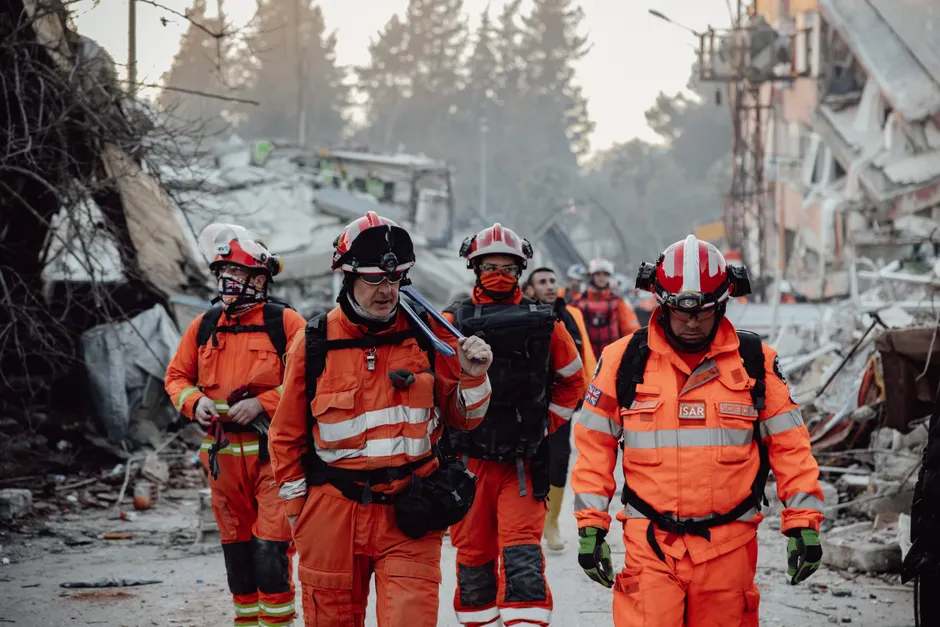
A Major Earthquake Hit Colombia: What Happened and Why

A powerful earthquake struck western Colombia on August 10, 2026, killing at least 82 people and causing serious damage along the Pacific coast. The earthquake was centered near a town called San José del Palmar, in a region called Chocó. Colombia's geological service, the Servicio Geológico Colombiano (SGC), said the quake happened at 7:34 in the morning local time and measured magnitude 7.4. They called it the largest-magnitude earthquake ever recorded in the country. (SGC)
Magnitude is a number scientists use to describe how much energy an earthquake releases. The higher the number, the more powerful the quake. For comparison, a magnitude 5 quake can cause damage to buildings; a 7.4 is many times stronger.
Reuters reported that at least 77 people were killed, with 42 deaths in a single area, the highest toll among the places hit. (Reuters) The Guardian, also citing Reuters, put the confirmed death toll at 82. (The Guardian) Throughout the day, the count rose quickly: from 20, to 22, to 47, to more than 70, and finally to 82. This kind of rapid change is common right after a major earthquake, when information is still coming in from affected areas.
The BBC reported at least 21 killed, citing local officials. That number matches the early stages of the count before later updates raised it. (BBC)
The SGC also reported a magnitude 4.8 aftershock, a smaller earthquake that follows the main one, at 8:18 the same morning, centered near the same area. Aftershocks are normal after large earthquakes, though the SGC has not officially labeled it as such.
To understand why this happened, it helps to know that Colombia sits on the edge of two massive pieces of the Earth's crust called tectonic plates. Along the country's Pacific coast, one plate, called the Nazca Plate, is slowly sliding underneath another, the South American Plate. This process is called subduction. Imagine one giant tile sliding beneath another at an angle. The friction and pressure build up over time and eventually release as an earthquake. The quake on August 10 happened about 103 kilometers below the surface, which scientists call an intermediate depth. The largest earthquake ever recorded in Colombia was a magnitude 8.8 in 1906, also on the Pacific coast, which produced a tsunami, a large ocean wave caused by an underwater earthquake. (SGC)
The SGC's earthquake tracking tool also recorded a smaller quake in Colombia on August 5, 2026. The agency noted several other earthquakes nearby in the days around the main event: a magnitude 5.5 in the Pacific Ocean near the Galápagos Islands, Ecuador; a magnitude 4.6 in Satipo, Peru; and a magnitude 3.8 near the Venezuela-Colombia border. (SGC)
Separately, the SGC issued alert bulletins for the Puracé volcano on August 8, 9, and 10, 2026. The volcano remains on alert, affecting the departments of Cauca and Huila. The same underground plate movement that causes earthquakes in this region also feeds volcanic activity, but the SGC has not connected the Puracé alerts to the August 10 earthquake.
The SGC runs a website where people can report when they feel an earthquake. This helps the agency measure intensity, which is different from magnitude. Magnitude measures the total energy released. Intensity measures how strong the shaking felt at a specific place, based on what people experienced.
The broader context here is that Colombia faces earthquakes regularly along its Pacific coast because of the tectonic plates underneath. The 1906 and 2026 quakes both came from the same geological process. The 2026 quake did not cause a tsunami. Because it happened deep underground, the shaking at the surface may have been less intense than a shallower quake of the same size, though the energy spread over a wider area. The death toll of at least 82, heavily concentrated in one locality according to Reuters, reflects how vulnerable infrastructure is in Chocó, one of Colombia's poorest and least-resourced regions. At the same time, the volcanic alert at Puracé adds pressure on Colombian disaster response teams already busy with the earthquake.
The death toll may still change. The jump from 21 to 82 confirmed dead in a single day shows how long it can take to get accurate information from remote, mountainous areas where communication is difficult. More updates are likely as search and rescue teams continue their work.