Iran Fired Missiles at U.S. Allies. Here's What Happened and Why It Matters

What Just Happened
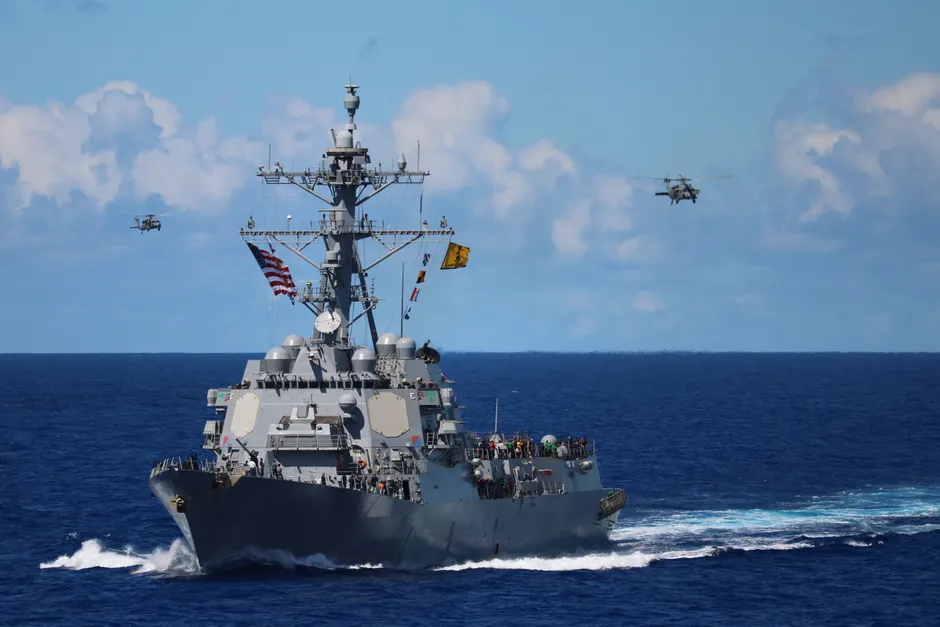
Iran fired seven ballistic missiles at Kuwait and Bahrain on Monday morning, according to U.S. Central Command. U.S. forces and local air defenses shot down six of them; the seventh missile failed on its own. The U.S. military confirmed that at least two of those missiles were aimed at American troops stationed in Kuwait.
This wasn't a sudden burst of violence. It came after the U.S. military had struck Iranian military sites over the weekend — hitting radar equipment and drone control centers. Those American strikes happened after Iran shot down a U.S. military drone. So there was a chain of moves: drone gets shot down, the U.S. strikes back, then Iran fires missiles.
The U.S. military called Iran's missile attack a "ceasefire violation." That's a significant phrase — it means the U.S. is saying Iran and America had already agreed to stop fighting, and Iran broke that agreement.
How We Got Here
To understand why this matters, the order of events is important. An American MQ-1 Predator drone (an unmanned aircraft) was shot down by Iranian forces over the weekend. That was the spark.
The U.S. responded with strikes on Qeshm Island and an area near the city of Geruk — places where Iran keeps radar systems and the equipment it uses to control drones remotely. When you destroy radar, you blind someone; when you destroy drone control centers, you cut their ability to send commands. Both are strategic targets that limit what Iran can do next.
But Iran didn't stop there. It launched seven ballistic missiles — faster, more powerful weapons than drones — at Kuwait and Bahrain. This marked a bigger escalation in two ways: the missiles reached farther and hit harder than the drones had, and they targeted the capitals of American-allied countries, not just military targets.
The fact that six missiles were intercepted is impressive from a military standpoint. It shows the U.S. and its allies have strong air defenses. But the simple fact that Iran chose to fire them at all — at cities where American forces are based — carries heavy political weight.
Iran's Weapons and Strategy
To grasp what Iran did, you need to know a bit about who did it and what tools they used. According to the U.S. State Department's 2024 terrorism report, Iran's military has increasingly moved away from working through proxy groups and is now conducting direct attacks of its own. The IRGC Aerospace Force — Iran's specialized military branch for air operations and missiles — is leading this shift.
This same branch controls Iran's ballistic missiles and its drone program. Iran has even sold drones to Russia, which has used them in the war in Ukraine. Those combat situations have taught Iranian engineers lessons about what works and what doesn't, making their weapons more dangerous.
The Ceasefire Question
When the U.S. military said Iran violated a ceasefire, it raises a natural question: what ceasefire? The available public information doesn't fully answer this.
The existence of a ceasefire between the U.S. and Iran — two countries without formal diplomatic relations — is itself a significant fact. Such agreements are usually negotiated through intermediaries. Oman has historically been a back-channel for U.S.-Iran communications.
There are several possible explanations for why Iran might have fired missiles despite a ceasefire. Hardline military commanders might have acted without approval from Iran's Supreme Leader. Iran's leadership might have deliberately tested whether the ceasefire would hold. Or Iran might have calculated that an escalation would give it better leverage in any future negotiations.
This pattern has happened before. In the months after the U.S. killed Iranian commander Qasem Soleimani in January 2020, Iran and the U.S. traded military strikes while simultaneously sending signals they wanted to de-escalate — a confusing mix that showed neither side had complete control over events.
Why This Affects the Gulf Region
Kuwait and Bahrain are in a difficult position. Both countries host major U.S. military bases — Camp Arifjan and Ali Al Salem Air Base in Kuwait, and Naval Support Activity Bahrain, which is home to the U.S. Fifth Fleet. That makes them targets whenever tensions rise with Iran.
Even though most of the missiles were shot down, Iran's message was clear: hosting American military forces comes with a price. Local governments face pressure from their own people and from Washington. It's a squeeze that has strained relationships among the Gulf countries that are supposed to work together.
Looking Ahead
For U.S. policymakers, the challenge is preserving deterrence — convincing adversaries that attacks will bring consequences — while avoiding a wider war that could devastate the region. The strikes the U.S. conducted were measured: radar stations and drone controls, not nuclear facilities or oil infrastructure or government buildings. That restraint is deliberate, meant to keep the door open for de-escalation. But it also sends a message about limits that an adversary might test.
The broader context matters here. Iran faces economic pressure from international sanctions, its network of allied groups in the region has weakened, and its government struggles with public support at home. These pressures might push Iran toward escalation as a distraction, or they might push it toward negotiating a way out. Which direction Iran chooses in the coming days and weeks will shape whether this remains a contained exchange or spirals into something worse.
For now, missile defense systems in the Gulf remain on high alert, and the diplomatic structures holding this situation short of open war are fragile.