Texas Power Grid Warns About New Data Centers That Can't Handle Outages

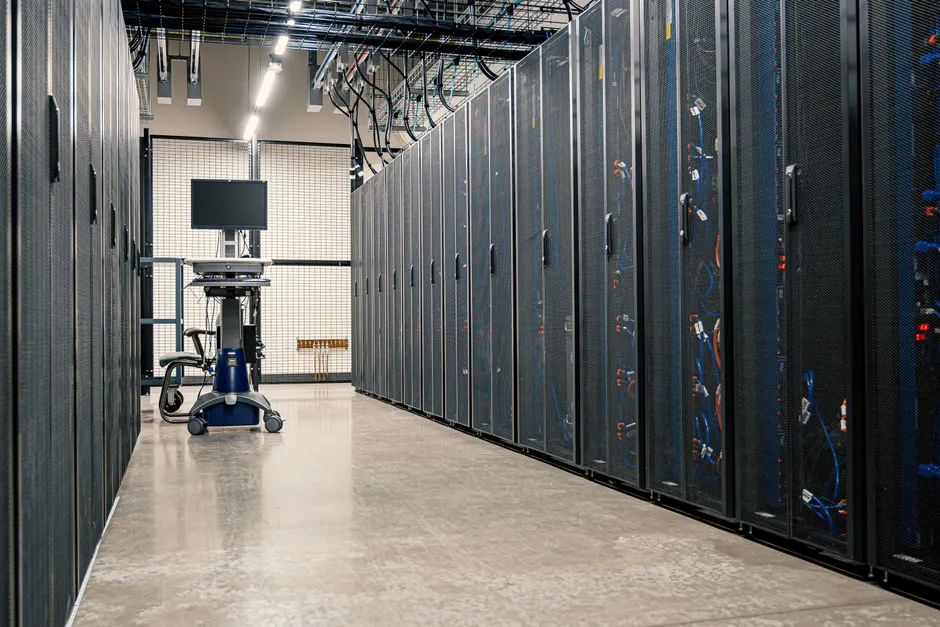
Major data centers and cryptocurrency mining operations planning to connect to Texas's power grid have failed critical safety tests, raising concerns about potential blackouts during hot summer months when electricity demand peaks, according to the Electric Reliability Council of Texas (ERCOT). Reuters confirmed the findings on June 8, 2026.
The problem involves something called voltage stability — the ability of a large facility to stay connected to the grid and keep running smoothly when the electrical system experiences a sudden dip or surge. Think of it like a car that stalls every time you hit a pothole; it's not just inconvenient for that one car, it disrupts traffic for everyone around it. When a massive power consumer abruptly disconnects during a grid problem, it can trigger a chain reaction that causes wider outages across the system.
What Failed and Why It Matters
ERCOT manages electricity for roughly 27 million Texans — about 90 percent of the state — so even a single facility failing at the wrong moment could affect millions of people. The core issue is simple: buildings that cannot handle brief electrical disturbances without shutting down create unpredictable power loss at the worst times. A data center using the electricity equivalent of powering several hundred thousand homes that suddenly goes offline doesn't just go dark locally — it yanks a huge amount of power out of the system all at once, making it much harder for ERCOT to balance supply and demand.
The good news is that ERCOT caught these problems before the facilities were connected to the grid. That's the system working as it should. The harder part now is checking facilities that are already operating to make sure they meet the same standards.
Regulators are moving to require that data centers and crypto mining operations prove they can withstand electrical disturbances before they're allowed to plug into the grid. For the companies building these facilities, that means their backup power systems, surge protectors, and switching equipment all need to be designed to work with a utility grid — not just to keep their own building running. Those two goals often don't align, and that's where problems emerge.
How ERCOT Is Responding
These test failures didn't happen in isolation. ERCOT has been reorganizing its own staff to keep up with the explosion of new facilities asking to connect. On December 12, 2025, ERCOT announced the creation of a dedicated team focused on handling interconnection requests. That reorganization reflected a backlog that had grown far beyond what the old system could handle.
ERCOT is also working with the consulting firm McKinsey on solutions to speed up the connection process, with initial ideas expected in early 2026. On the research side, ERCOT partnered with Texas A&M University in November 2025 to develop detailed computer models of how data centers, crypto facilities, and other large power consumers behave during electrical problems. The goal is to understand how these facilities change their power use during grid disturbances so ERCOT can predict what happens when they're all connected. The voltage test failures now making news are exactly what that research team was building models to prevent.
Why This Pattern Looks Familiar
We have seen this before. In the early 2000s, when internet companies were rapidly building data centers in Northern Virginia and Silicon Valley, they moved faster than utilities could upgrade the electrical infrastructure to support them. Some operators discovered reliability problems only after their facilities were already running. The solution then involved closer coordination between utilities and data center companies, stricter checks before construction began, and eventually designing large campuses with grid planners rather than adding them to an existing system afterward.
The Texas situation is different in some ways — ERCOT operates independently with its own rules, and the growth happening now driven by AI data centers and crypto mining is much faster than the 2000s buildout — but the underlying pattern is the same: money and building materials move faster than electrical infrastructure, and safety testing becomes the brake that forces everything to slow down to what the grid can actually handle.
What Operators Need to Do Now
Data center companies need to figure out where their own facilities stand with these new voltage stability rules. The immediate priority is testing their backup power systems and surge protection equipment against the electrical disturbance scenarios ERCOT expects. This should be a core engineering goal, not something to check off at the last minute.
Crypto mining operations face a slightly different challenge. Mining equipment is designed to be turned on and off quickly in response to electricity prices. A facility that can reduce power use in seconds when prices spike is not the same as one designed to stay stable through a brief, sharp dip in grid voltage. These are different engineering problems, and mixing them up creates compliance risk.
The direction regulators are heading is clearly toward stricter standards for large facilities connecting to the grid, not looser ones. Companies that are early in choosing Texas locations for new facilities should treat electrical grid connection as a critical part of their planning, not something to work out during the final permitting stages. Redesigning power infrastructure after failing a connection test is far more expensive than building to the right standards from the start.
What Happens Next
ERCOT is developing plans to fix the facilities that failed the voltage tests. It hasn't yet publicly detailed what those plans look like — whether it requires physical upgrades before connection, temporary operating restrictions, or some kind of compliance schedule. The summer 2026 peak season puts time pressure on everything. What ERCOT can reasonably require from facilities that are close to being ready versus those still early in the process will probably differ.
The Texas A&M research, once finished, should give ERCOT better computer models to predict how different facility designs will behave during electrical emergencies. That's a longer-term improvement. For summer 2026, ERCOT's tools are the mitigation plans it's developing now and the tighter standards now being enforced for new connections.
The longer-term trajectory is clear: Texas's grid will need to safely handle these large, rapidly growing industrial facilities without letting reliability slip for the 27 million people who depend on steady power. Getting there requires applying the same engineering rigor to these massive facilities that utilities have long applied to power plants — making sure they can handle electrical disturbances, modeling how they'll behave during emergencies, and testing for problems before they go live. The voltage test failures this week show that gap hasn't fully closed yet.