Ford Is Turning an Old Factory Into an Electric Truck Plant for Its New Fathom Pickup
Ford will start building prototype versions of its new electric pickup truck, called the Fathom, at its Louisville Assembly Plant in early 2027. Customers will be able to place pre-orders around the same time (The Verge, Ford).
The Fathom is the first vehicle built on Ford's new Universal Electric Vehicle Platform, a base design meant to support several different electric models (The Verge). Workers at the Louisville plant are already preparing the factory for production and hand-building early Fathom prototypes alongside engineers at Ford's development center in Dearborn, Michigan (The Verge).
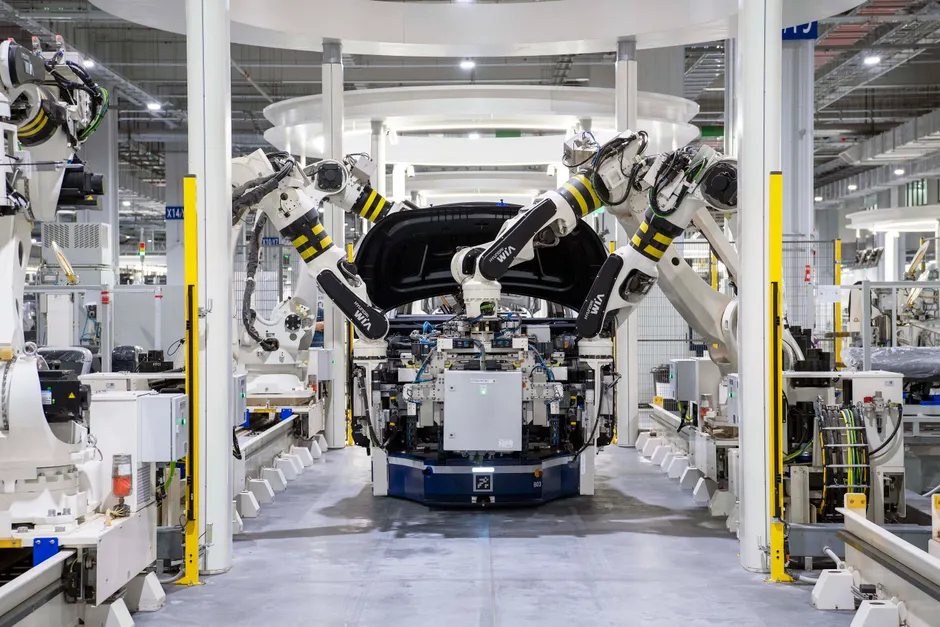
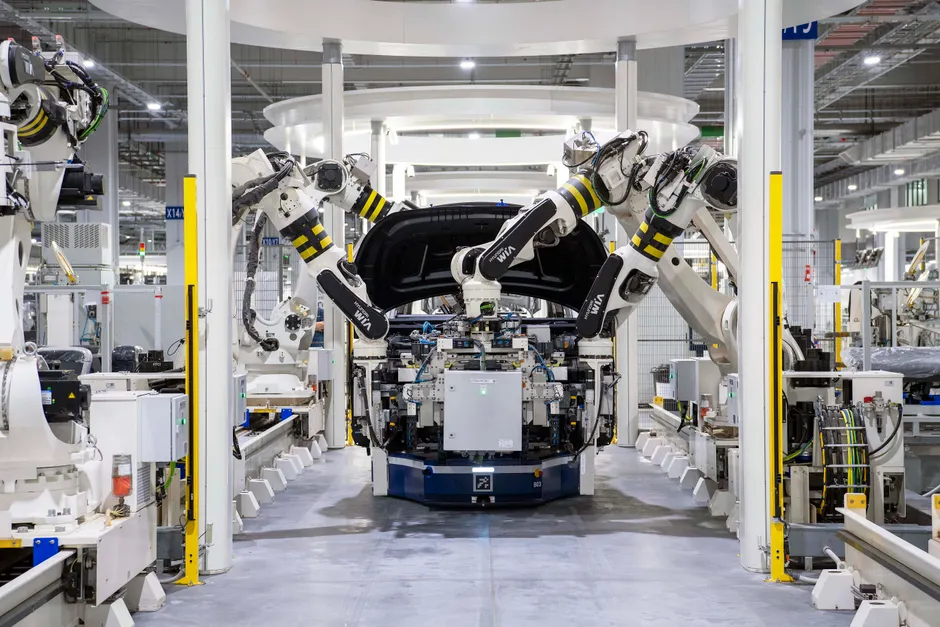
The Louisville plant is over 70 years old and covers about 3 million square feet. Ford shut it down this past winter for a complete overhaul. Workers unbolted and removed the old machinery over several weeks, leaving the building empty by February (The Verge, Work Truck). The plant had previously built gas-powered vehicles like the Escape and Lincoln Corsair. Ford finished converting it to an all-electric facility in under a year (The Verge).
The conversion is part of a $2 billion investment in the Louisville plant for Fathom production (Work Truck, Fox Business). More broadly, Ford is spending $5 billion to add 4,000 new jobs across the Louisville factory and its BlueOval Battery Park in Michigan (The Verge).
A key part of the Fathom's production is Ford's "assembly tree" approach, which builds the truck in three main sections: the front, the rear, and the battery. For the front and rear, Ford will use a technique called unicasting. Instead of making dozens of small metal parts and welding them together, Ford casts each section as one large piece. The company says this can speed up production by up to 15 percent (The Verge).
The Louisville plant also adds a new software station, a first for a Ford assembly line. It uses a private 5G wireless network to test the vehicle's software while the truck is still moving down the assembly line, rather than stopping it at a checkpoint at the end (The Verge).
These investments come while Ford is losing money on electric vehicles. The company lost over $5 billion on EVs and software in 2024 and another $4.8 billion in 2025 (The Verge).
Tesla tried a similar casting approach with its Model Y, combining dozens of parts into single pieces. The challenge Tesla faced was whether the speed and quality gains were worth the cost of new equipment and the reduced ability to change the design later. Ford's assembly tree, which breaks the vehicle into three sections, may help by allowing the front and rear to be developed separately from the battery. Whether that trade-off works will depend on how many different vehicles Ford builds on this platform.
The 5G software station matters beyond the factory floor. Loading and testing software while the vehicle moves down the line, rather than at a stationary checkpoint, saves time. If it works at full production scale, it also lays the groundwork for Ford to send software updates to vehicles after they leave the factory, connecting the manufacturing process to Ford's broader plans for software-equipped vehicles.
The financial backdrop is impossible to ignore. Nearly $10 billion in EV and software losses over two years puts enormous pressure on the Fathom to show that Ford can make electric vehicles profitably, something it has not yet done with earlier models like the Mustang Mach-E and F-150 Lightning. The $5 billion spending across Louisville and the BlueOval Battery Park, along with 4,000 new jobs, signals Ford's push to build more of its own batteries and vehicles in-house, narrowing the cost gap with Tesla and Chinese manufacturers that have taken large shares of the EV market. The Fathom's early 2027 prototype builds will be the first real test of whether Ford's new production system can deliver the 15 percent speed improvement it claims.