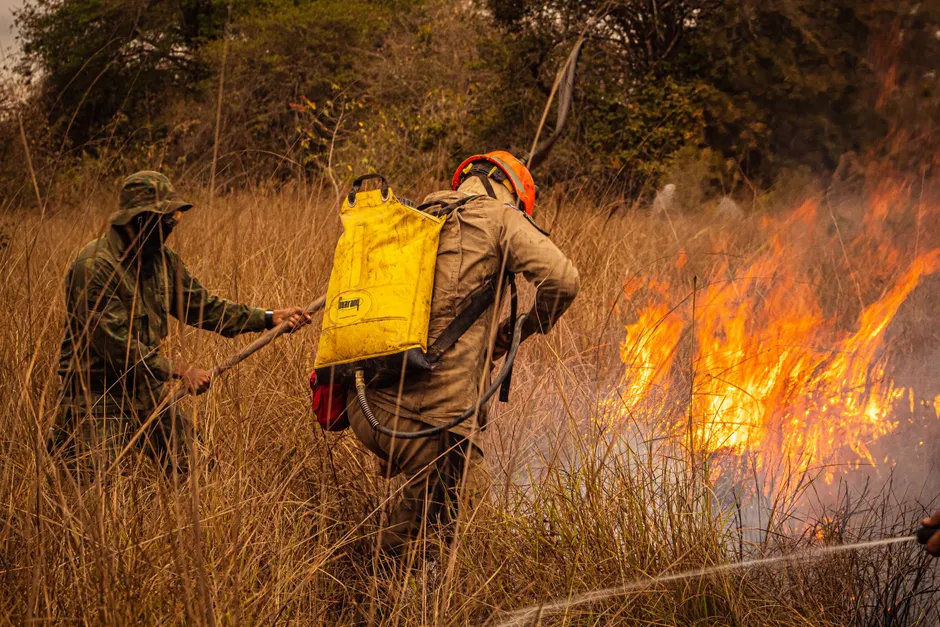
Europe Had Its Hottest Summer Ever in 2026 — Here's What That Means

Europe is going through its third major heatwave of summer 2026, with temperatures expected to reach the mid-30s Celsius (around 95°F) in parts of Britain and France this August. That heat comes after a season that has broken temperature records since May and sparked wildfires that forced hundreds of thousands of people from their homes across the continent CNN, France 24.
The extreme heat started unusually early. In May 2026, a heatwave broke temperature records across France, Portugal, Ireland, and the United Kingdom. "Feels-like" temperatures, which take into account humidity, wind, and sunlight to measure how hot it actually feels to your body, reached 35°C to 40°C across large parts of Europe Copernicus.
June was the hottest June ever recorded in western Europe, and the second-warmest June for the planet as a whole. The average temperature over European land that month was 19.14°C, which is 1.78°C higher than what scientists consider normal for this period. Scientists use the years 1991–2020 as a baseline, or reference point, to compare current temperatures against what used to be typical. This was the second-highest June figure ever recorded Copernicus.
July brought the warmest ocean surface temperatures on record for that month, along with extremely hot and dry conditions across Europe Copernicus. The average European land temperature in July was 20.49°C, 0.66°C above the 1991–2020 baseline, ranking eleventh-highest for the month. Combined, western Europe had its warmest June–July period on record in 2026 World Economic Forum.
The heat has driven a wildfire season that, by late July, had already burned more land than all of 2025, which itself was a record year, across EU countries Reuters. In Greece, temperatures exceeded 36°C on July 4, and a forest fire struck Oinoi, Attica, on July 5 Meteo.gr. Wildfires hit West Attica again on August 3 Reuters. In Spain, firefighters battled a blaze that forced over 1,000 evacuations as of July 17. France and Spain made progress against major fires later in the month, but another heatwave was approaching Reuters, Reuters.
The crisis reached far beyond the Mediterranean region. Austria set a new national temperature record in early August. Hungary had to cut back on power use. Albanian firefighters battled blazes as southern and eastern Europe felt the heat Reuters. A 2026 academic study hosted in AEMET's repository documents a severe spring heatwave that struck southern Spain and North-West Africa, suggesting the unusual warmth began even before the May records AEMET Repository.
As of August 13, Spain's weather agency, AEMET, issued an "important hazard" warning with a 40%–70% chance of temperatures reaching 40°C in the Córdoba region, between 1:00 PM and 9:00 PM. The same day, AEMET forecast highs of up to 39°C in Badajoz, 38°C in Albacete, and 36°C in Barcelona AEMET, AEMET.
Europe is the world's fastest-warming continent Reuters. The 2026 data make that vivid: an unusually early May heatwave, a record June in western Europe, record-warm ocean surfaces in July, and a third heat blast in August, all paired with a wildfire season that beat last year's record by late July. Taken together, the entire June–August period falls well outside what the 1991–2020 baseline would predict.
The broader context here is that several patterns stand out. The Copernicus data show that June's temperature spike was much more extreme relative to normal than July's, at 1.78°C versus 0.66°C above the baseline. This suggests the warming early in the season was unusually strong, possibly connected to interactions between the oceans and the atmosphere, since global ocean surfaces hit record highs in July. The wildfire situation is not a repeat of 2025 but an escalation, with more land burned before August even arrived. And the geographic spread of the damage, from Britain to the Balkans and from Spain to Greece, challenges the idea that this is only a Mediterranean problem.
The August warnings for Córdoba, Badajoz, and Albacete show that Spain remains in an active fire-weather zone. With mid-30s forecast for Britain and France, the heat is not limited to the south. The real question for governments and emergency agencies is whether roads, power grids, and firefighting resources that were designed for the climate of the past few decades can keep up with a reality that has now, for two years in a row, broken every prior record.