Why Europe Wants a Seat at the Table in Ukraine Peace Talks

Why Europe Wants a Seat at the Table in Ukraine Peace Talks
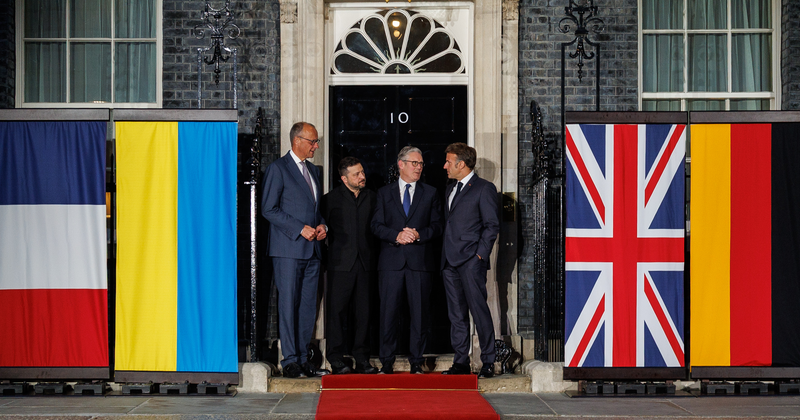
On June 8, 2026, Ukraine's President Volodymyr Zelenskyy met in London with the leaders of the United Kingdom, France, and Germany. The three countries are Ukraine's closest European allies. The meeting was about one crucial question: if Russia and Ukraine start peace negotiations, who gets to speak for Europe?
The main announcement was that these European leaders now openly support Zelenskyy's call for direct ceasefire talks with Russia, according to France 24. But the more important takeaway, from Ukraine's official statement, was something different: they spent time planning how Europe should be part of any peace talks.
Zelenskyy's push to include Europe is not just political symbolism. It is a practical demand with real consequences for whatever peace process eventually happens.
The Diplomatic Track Record
To understand why this meeting matters, we need to look at what has happened since late 2025. There have been several rounds of talks, but none have led to a real breakthrough.
In December 2025, Zelenskyy described talks with the United States as "constructive but not easy," according to Reuters. That careful phrasing—hopeful but cautious—set the tone for what came next.
In January 2026, Ukrainian and Russian representatives met in Abu Dhabi for three-way talks. Reuters reported that Zelenskyy called this significant because territorial disputes were actually on the agenda. That was a big deal. Just months earlier, in June 2025, Russia's position had been that Ukraine must give up large amounts of land before any ceasefire could even start, as Reuters noted.
Then came Geneva. In February 2026, Ukraine and Russia talked again, but according to Ukraine's presidency, Zelenskyy said the results were not good enough. In March, he suggested a limited ceasefire during Easter and asked the United States to relay the idea to Moscow. The Kremlin's answer was lukewarm, Reuters reported.
What we see here is a pattern: each meeting leads to the next one, but no real progress. The talks stay focused on small logistical questions about how to negotiate, rather than moving into the actual negotiation itself.
This has happened before in history. When North and South Korea warmed their relationship in 2018, or when the Minsk talks began in early 2015, there were many meetings that created the appearance of momentum but did not actually move the sides closer together. When the parties disagree about who should even be at the table, they tend to just keep switching locations and formats instead of getting down to serious work.
Security Guarantees and the "Coalition of the Willing"
While diplomacy has been happening, Britain and France have been building what's called a "coalition of the willing" — a group of countries willing to provide Ukraine with security guarantees after any peace deal, according to the BBC. Think of it like insurance: a promise that if Russia tries to attack again, these countries will back Ukraine.
This is separate from NATO membership, which Ukraine cannot get right now because all NATO members have to agree, and some are opposed. It is also different from a regular military alliance between two countries.
Here is why this matters: any peace agreement that leaves Ukraine defenseless could fail the same way the situation did before Russia's invasion in February 2022. Ukraine learned that lesson. The real reason European leaders want to be part of the peace talks is connected to this security question. They are not just asking for a voice out of pride. They want to help design the security arrangement that comes out of the talks, rather than being asked to approve something after it is already decided.
What Zelenskyy Actually Wants From Europe
Zelenskyy's demand that Europe participate directly in negotiations—not just watch from the sidelines—has practical reasons behind it.
So far, most of the diplomatic work has gone through Washington and, to some extent, through intermediaries in the Gulf region. Abu Dhabi hosted talks. The United States has been the main messenger between Ukraine and Russia. Geneva, a neutral European city, hosted talks that Ukraine felt were inadequate.
Europe wants to change that setup. Britain, France, and Germany all believe a peace deal made without them will be harder to enforce and harder for their own citizens to accept. Europe will have to pay most of the cost of rebuilding Ukraine. If a ceasefire falls apart or Russia attacks again, Europe bears the consequences. That means Europe should have say in how the deal is structured.
For Germany and France specifically, there is another reason: their reputation. Both countries invested heavily in earlier peace attempts—the Normandy talks and Minsk negotiations—that ultimately failed. They want to be part of this process so they can make sure it does not fail in the same way those earlier attempts did.
What Happens Next
The London meeting on June 8 did not change the military situation or what Russia is willing to do. Russia has not publicly said it accepts Europe at the negotiating table. What the meeting did accomplish was getting the UK, France, and Germany on the same page publicly. They now formally support direct ceasefire talks and the idea that Europe must be a formal part of those talks.
Whether this agreement actually has power depends on what the United States thinks. The US is still the main player that Russia will listen to. European leaders are essentially asking Washington: will you back our demand to be at the table, or will you publicly reject it? The answer to that question will show how the US and Europe view this peace process, and it will become clearer in the weeks ahead.
The record since December 2025 shows the parties can keep talking. The record since June 2025 shows they still disagree on the major issues. What changed on June 8 is that Europe made its demand crystal clear and showed it is speaking with one voice about what has to happen for negotiations to work.