It's Raining in the UK — But the Drought Is Getting Worse

The Met Office forecast heavy rain across much of the UK for the week beginning 18 August 2026, but experts agree the rain will not end the drought that now affects more than 71% of England. The forecast comes as South East Water told customers in Kent to use water only for essential purposes after taps ran dry for about 8,000 customers on Monday. Wessex Water imposed a hosepipe ban covering 1.4 million customers across Bath, Somerset, Dorset and Wiltshire — its first such ban in 50 years, since the summer of 1976. (The Guardian)
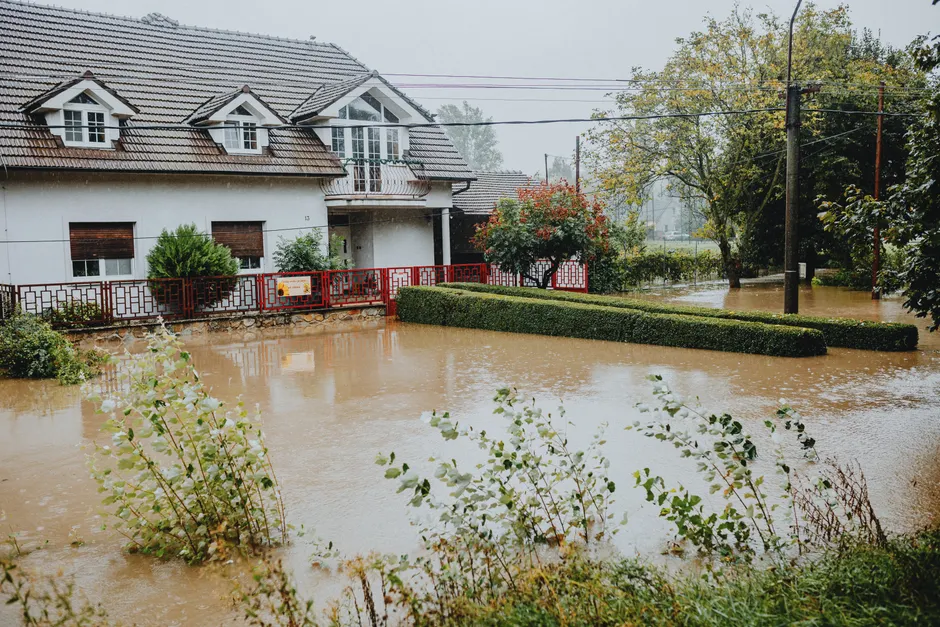
Why doesn't heavy rain fix a drought? After long dry periods, soil becomes hard and actually repels water. Instead of soaking into the ground where it's needed, rain slides off the surface. The Met Office warned that intense showers could cause surface water flooding as rain falls on very dry and hard ground. Deputy chief forecaster Mike Silverstone told PA Media that Thursday would bring heavy showers across much of the country, with thunder showers forecast for Thursday and Friday before brighter, drier conditions on Saturday. (The Guardian)
The rainfall shortfall is large. Liz Stephens, a professor at the University of Reading, said the south-east of England was still a month's worth of rain below normal for that point in the year. Environment Agency data showed five of England's key reservoirs were "exceptionally low" as of 14 August 2026. The agency had already introduced formal bans on spray irrigation, where farmers use water from rivers and underground sources to water crops. In the week of 7 to 13 August, over 1,500 restrictions on taking water from natural sources were in place across the country. (GOV.UK)
The drought has worsened quickly. As of 10 August, 71.3% of England was in drought following a record dry July. The Environment Agency said conditions worsened further after a dry start to August. Reuters reported that Britain described more than 70% of the country as experiencing flash drought, a type of drought that develops rapidly after months of low rainfall and unusually high temperatures. UK officials planned to meet to discuss how to cope with the deepening crisis. (GOV.UK; Reuters)
South East Water became the first water company to issue a hosepipe ban in summer 2026, barring customers in parts of Kent from using them on 3 July. The company is now facing growing pressure over how it has handled the situation. A Department for Environment, Food and Rural Affairs spokesperson said South East Water needed to "go further and faster to reduce leaks and follow its drought plans." The company's essential-use-only instruction came after a supply failure left around 8,000 properties without water. (The Guardian)
Wessex Water's hosepipe ban broadens mandatory water-use limits well beyond the initial measures in Kent. The company had not imposed such restrictions in half a century. The ban covers four counties and affects 1.4 million customers. (The Guardian)
The Met Office uses a colour-coded warning system to tell the public about weather risk. A red warning means dangerous weather is expected, with a very likely risk to life, substantial disruption to travel and energy supplies, and possible widespread damage to property and infrastructure. An amber warning means a higher chance of impacts from severe weather, including possible travel delays, road and rail closures, power cuts, and potential risk to life and property. A yellow warning covers a range of weather situations and requires the warning content to be read for specifics. As of 18 August, the Met Office's UK weather warnings page listed no warnings for the week of 18–24 August and displayed a notice that warnings "may be out of date" due to technical issues. (Met Office)
Separately, the Met Office issued flood warnings for North East England in August 2026, with a band of rain pushing through overnight followed by showers. (Met Office Regional)
The broader picture here is that several water problems are all hitting at once. Low reservoir levels, over 1,500 water-use restrictions, spray irrigation bans, hosepipe bans spreading to new areas, and supply failures affecting thousands of homes are not separate events — they are part of a chain reaction. The key problem is that heavy rain on hard, dry soil runs off rather than soaking in. Reservoirs and underground water stores need steady, moderate rain over long periods to recover. A sudden downpour, no matter how heavy, cannot replace that slow soaking. Think of it like watering a dried-out potted plant: if you dump a full watering can on it all at once, most of the water runs off the sides instead of reaching the roots.
The Met Office warnings-page problems add another layer of concern. With the public warnings portal showing a notice about possible inaccuracy at the same time that surface water flooding is being forecast, the reliability of real-time warnings to people in affected areas is in question at a critical moment.