Why Shell's CEO Says Oil Prices Will Stay High — and What That Means for You

Why Shell's CEO Says Oil Prices Will Stay High — and What That Means for You
The Simple Statement With Big Implications
At a Wall Street Journal leadership event on June 10, Shell's chief executive Wael Sawan said something straightforward but important: "All the easy oil and gas has been found."
This wasn't just casual talk. According to the WSJ, Sawan was making a deeper claim about how oil and gas work as industries. He was saying that drilling for new oil is getting harder, more expensive, and more technically complex — and this trend isn't temporary. It's built into the geology of what's left in the ground.
He also said oil prices will face upward pressure for years to come. Put those two ideas together, and the message is: prices might look high right now because of recent Middle East tension, but something more lasting is driving them up.
Why the Timing Matters
It's easy to assume Sawan is just talking his book. Shell, like other big oil companies, has made real money from higher oil prices this year. When oil sells for more, the cash these companies bring in goes up immediately — with limited extra cost, since they've already spent the money to build their wells and drilling rigs.
But Sawan separated his thinking into two parts. First: the conflict in the Middle East created a temporary spike, a one-off risk premium that will fade when the region stabilizes. Second: there's a separate, structural problem — that the cost of finding and producing oil has permanently shifted higher, separate from any geopolitics. This second part is what matters over decades, not months.
The difference matters if you're hedging energy costs or making long-term business bets. A conflict-driven price bump disappears once the crisis passes. A structural shift in production costs reprices everything — your home heating bills, airline ticket prices, freight costs, manufacturing margins — for years.
What "Easy Oil" Actually Means
In oil industry terminology, "easy oil" means crude from fields that are simple and cheap to produce: on land or in shallow water, high quality, low sulfur content, and with natural pressure that helps the oil flow up to the surface. Giant Saudi Arabian fields like Ghawar, or old-fashioned onshore wells in Texas, fit this description.
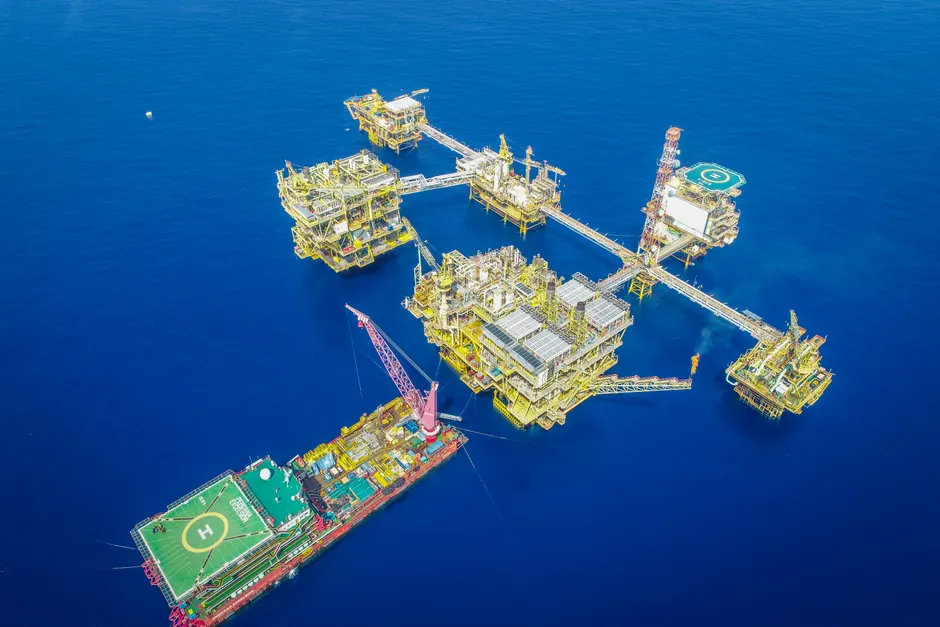
What's left — the oil being found and drilled today — is different. It's deepwater wells miles below the ocean surface, tight rock formations that require hydraulic fracturing to crack open, heavy sludgy oil that needs refining, or remote frontier basins with no existing infrastructure. Each type costs more to find, takes longer to develop, requires more capital per barrel recovered, and carries higher engineering risk.
The Last Time Everyone Thought Oil Was Running Out
This argument echoes a debate from the mid-2000s called "peak oil." Back then, many analysts believed the world was hitting a hard ceiling on how much crude could be produced. They were wrong — but not because easy oil wasn't running out. They were wrong because new technology changed the game.
Shale drilling and horizontal well techniques, developed mainly in Texas and Oklahoma starting around 2008, unlocked oil trapped in tight rock formations. Between 2008 and 2019, this new technique added more than 7 million barrels per day of U.S. production — enough to offset declining output from older fields worldwide. The lesson most investors took: technology always saves us.
Sawan's remarks, read carefully, suggest caution about relying on that lesson again. The Permian Basin in Texas, the heartland of shale oil, is showing signs of slowdown. New wells in the best areas are producing less oil than earlier wells in the same spots, a pattern called "productivity deceleration." There's less easy shale left to tap.
Two Other Big Problems Building Under the Surface
Sawan's argument connects to two longer-term challenges that energy analysts have been watching.
Field depletion. The giant old fields that supply a huge chunk of global oil decline naturally at about 4 to 5 percent per year. To keep production flat, companies must drill continuously and expensively just to replace what's disappearing. The International Energy Agency and other researchers have flagged that without sustained heavy investment, this natural decline could erode global production capacity significantly over a decade.
Oil companies have slowed their spending since 2020, partly due to pressure from environmental, social, and governance (ESG) concerns — the push to redirect investment away from fossil fuels. Investment has picked up recently, but it's still below what some models say is needed to meet even moderate demand growth.
OPEC's spare capacity claim. The Organization of the Petroleum Exporting Countries (OPEC), plus Russia and other producers under a group called OPEC+, periodically says they have millions of barrels per day sitting idle that they could pump at short notice if prices spike or supply gets tight. It's hard for outsiders to verify this claim. If the spare capacity is actually lower, or more expensive to activate, than officially stated, the world has less insurance against supply shocks than it thinks.
Where Sawan Chose to Say This Matters
He didn't speak at a commodity trading convention. He spoke at a Wall Street Journal event for CEOs — leaders from finance, manufacturing, logistics, and other sectors whose bottom lines get hit if energy costs spike.
The venue choice signals intent. Sawan wanted to shape how big companies think about long-term planning and capital spending. A CEO who can argue that oil will face structural cost pressures for years — not just a temporary bounce — has a stronger case for investing more in oil drilling and resisting calls to sell off oil assets.
This internal case is important for Shell. The company has faced investor pressure to spend less on oil and gas and more on clean energy. A credible argument that the upstream oil business will see durable tailwinds helps Sawan defend the oil and gas budget inside the company and to shareholders.
What This Could Mean for Markets and Your Bills
If markets believe Sawan's argument, the pricing structure for oil contracts months or years out could shift. In normal times, oil contracts for delivery far in the future trade slightly cheaper than contracts for immediate delivery — a pattern called contango. If the market starts believing production costs are rising permanently, that could flip. Far-out contracts could trade higher.
That repricing ripples through the economy. It changes how much money oil reserves are worth on company balance sheets. It affects how the government thinks about releasing oil from the Strategic Petroleum Reserve. It changes how energy-intensive industries — trucking, chemicals, utilities — evaluate long-term expansion decisions. And for retirement funds and investment pools that own oil stocks or commodities, it matters for how they weigh energy exposure in their portfolios.
Sawan's argument doesn't touch the other side of the equation: how much oil people actually use. Electric vehicles, changes in how China's economy runs, and energy efficiency in new buildings all remain uncertain. But on the supply side, his position is straightforward: the world's oil and gas reserves are finite, the cheapest ones are mostly gone, and what's left will cost more.