Over 100 Killed in Gold Mine Collapse in Central African Republic

More than 100 people have died after a gold mine in the village of Zamboye, in the western part of the Central African Republic (CAR), collapsed on Tuesday afternoon. Gervais Ganagoroh, a Red Cross volunteer helping with the rescue effort, told the Associated Press that more than 100 bodies had been pulled from the collapse. A senior official at a local mining association confirmed the same number to Reuters (The Guardian). The Nigerian newspaper Vanguard reported a toll of at least 107 miners (Vanguard).
The landslide hit the Zamboye gold mining site around midday on Tuesday, August 18. The site is about 50km from the town of Baboua and close to the border with Cameroon (Mimi Mefo Info). A prosecutor from Baboua told the press that the collapse happened in several underground tunnels where miners were working. Social media footage appeared to show a wave of sand pouring down on a group of people, likely the miners, and burying them.
A statement from a local public prosecutor said many others remained trapped under the rubble but did not give a number of deaths. Al Jazeera reported that miners were still missing and trapped under debris at the site (Al Jazeera). The exact number of people who were inside the mine when it collapsed is still unknown. Bertrand Be Yangué, a member of the Zamboye youth council, said that finding the trapped miners alive would be a miracle, and that the death toll is expected to rise as rescue efforts continue.
Cedric Mbango, a miner at the site, told the AFP news agency that the ground completely collapsed and buried people, calling the event catastrophic. The miners are believed to be from CAR and Cameroon. Authorities in Cameroon's Eastern region said at least three of its citizens have been identified among the victims. Grégoire Mvongo, the governor of Cameroon's Eastern region, told state-owned radio that he was working closely with Central African officials to respond to the tragedy.
The rescue operation itself is dangerous. The Central African news website Corbeau News reported that heavy machinery, including tractors, was being used to dig out victims but could endanger anyone still alive beneath the rubble. Local media in CAR reported that authorities had launched an investigation into what happened.
Before the Zamboye collapse, at least 40 people had already died in mining incidents in CAR this year (The Guardian). The Zamboye disaster killed several times that number in a single event.
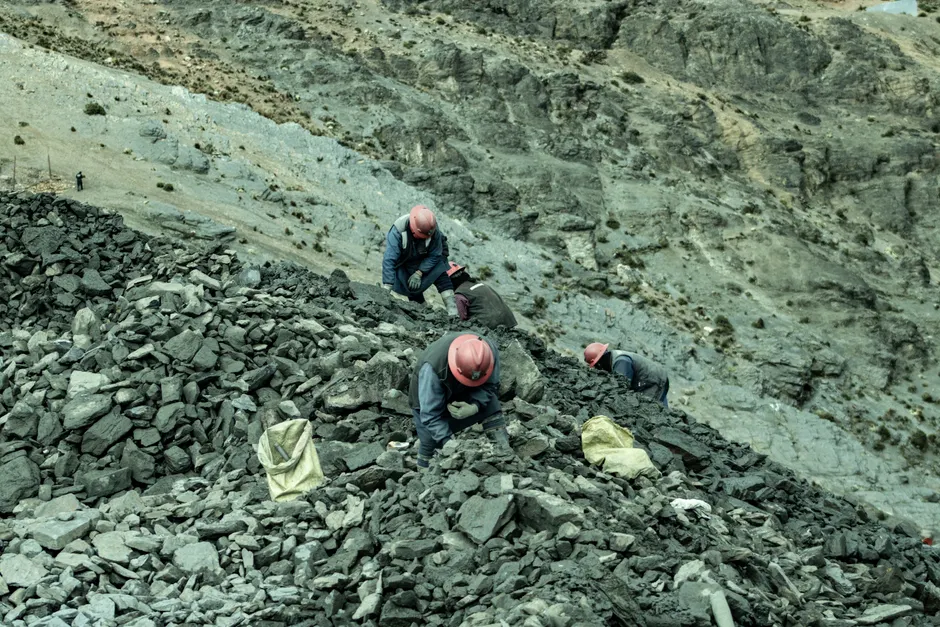
The broader context here is that gold mining in this region is largely unregulated and very dangerous. The mine at Zamboye was what is called an "artisanal" mine, meaning it is dug by hand by small groups of workers rather than by large companies with professional equipment. In CAR, a country that has suffered more than a decade of armed conflict and has weak government control in rural areas, these mines operate with almost no safety rules. The tunnels are dug by hand with no supports to hold them up, no testing of the ground for stability, and no rescue teams on standby. The same things that make this kind of mining appealing — it is cheap to start, draws on informal workers, and sits near trade routes — are exactly what make it deadly when something goes wrong.
The fact that Cameroonian nationals are among the victims points to how easily workers move across the CAR-Cameroon border to search for gold, often without any official paperwork. Governor Mvongo's coordination with Central African officials is a quiet acknowledgment that responding to this disaster will need cooperation between both countries, not just one.
Using heavy machinery to rescue people at an unstable mine site creates a problem that comes up again and again in mining disasters around the world: the need to reach victims quickly versus the danger that heavy equipment could cause more of the ground to collapse, potentially killing anyone still alive underneath. Corbeau News flagged this as a real concern at Zamboye. In artisanal mines, where no one has mapped the tunnels and there is nothing holding them up, the risk is especially severe.
CAR's gold mining sector has drawn more attention in recent years as gold prices have stayed high, attracting both individual diggers and, in some areas, armed groups that take control of mining sites and demand a share of the profits. Whether the Zamboye mine had any official permit or was entirely informal has not been stated in the available reporting. The investigation launched by local authorities may address that question, though CAR's ability to enforce mining rules in remote areas near the Cameroon border is limited by the same weak governance that shapes the entire sector.