Tesla's Self-Driving Taxis in Austin Are Now Going It Alone
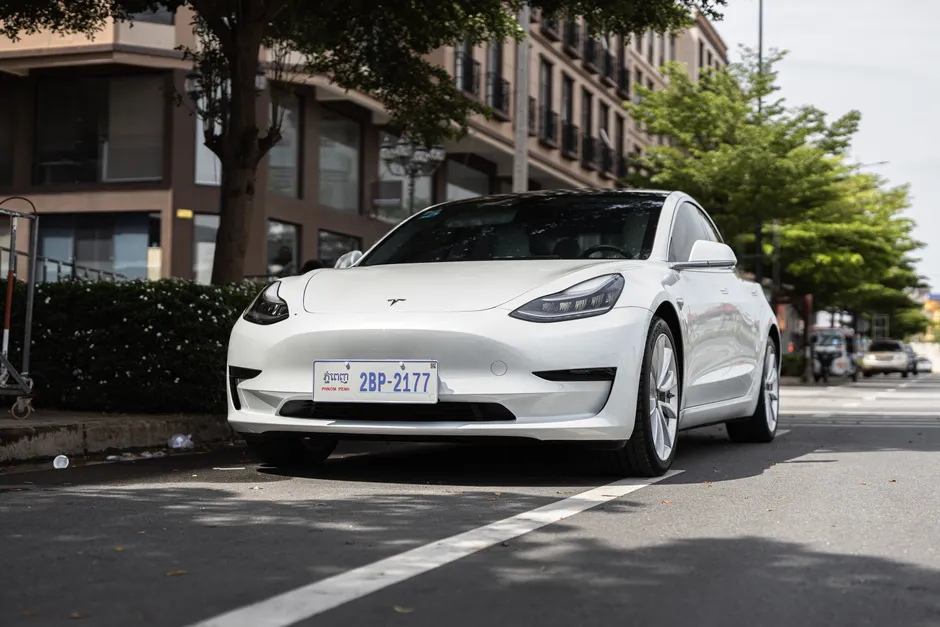
Tesla's self-driving taxi fleet in Austin appears to have switched entirely to operating without a human backup driver, based on data collected by volunteers over a two-week period. During that time, all 170 rides tracked by a community website called Robotaxi Tracker were fully driverless, using 54 different vehicles across the Austin area, according to the site's creator, Ethan McKanna. The Verge
A human backup driver is someone who sits behind the wheel ready to take over if the car's self-driving system gets confused or faces a situation it can't handle. Tesla's first said it was running taxis without these monitors about seven months ago. Posts from riders on Reddit and X support the tracker's findings, and McKanna noted that license plates previously marked as supervised have been confirmed as offering driverless rides. Austin's supervised service appears to have stopped entirely for at least a couple of weeks.
The data also shows the service expanding to new cities. McKanna reported roughly 30 driverless Teslas operating in Dallas and Houston over the past week. As recently as the prior week, the tracker showed just 28 active driverless vehicles across all six Texas and Florida markets it monitors. Austin alone now has nearly twice that count. McKanna attributes part of the jump to improved data sources rather than purely to more vehicles on the road; after fixing the feeds powering the tracker, he found more driverless vehicles than the site had previously shown.
The growth is visible in the historical data. In January, The Verge reported that neither of Tesla's robotaxi services in Austin was fully open to the public. As of July, Robotaxi Tracker listed only 16 driverless vehicles in Austin and four in Dallas. A KXAN report from February noted that McKanna's tracker listed 58 active self-driving vehicles in Austin but had logged just 3 driverless rides. The Verge
An Electrek report from August 17, three days before The Verge's current coverage, told a less positive story. It said Tesla's driverless fleet in Austin had stalled at roughly 17 vehicles as of mid-August, down from about 25 in the spring. The Verge's August 20 reporting, based on the most recent tracker data, replaces that figure.
Robotaxi Tracker, available as a website and an iOS app, provides live wait times, fleet lists, service-area maps, and pricing for Tesla, Waymo, and Zoox self-driving taxi fleets. McKanna, who spent the summer as an intern with Tesla's Robotaxi team, built and maintains the platform on his own as a community resource.
The move to fully driverless Model Y rides comes as Tesla prepares to launch the Cybercab, a vehicle designed from scratch as a self-driving taxi with no steering wheel or pedals, potentially in Austin as soon as this month. On Tesla's most recent earnings call, Musk said the robotaxi program would scale "very rapidly" but gave no specific targets for vehicle numbers or new cities. A JPMorgan note suggested one reason Tesla might be holding back on adding more Model Ys: it expects to scale up the Cybercab soon.
The competitive gap is still wide. Waymo, Tesla's main rival in the self-driving taxi space, operates more than 300 driverless vehicles. Tesla does not publish detailed fleet numbers and did not respond to requests for comment from The Verge.
The broader context here is one of cautious progress rather than a victory lap. The 170 rides tracked over two weeks are a meaningful sample, but they come from volunteer observers rather than official data. McKanna's data sources have already been revised once to correct undercounting, and an earlier Electrek report noted the service was unavailable roughly 60% of the time over a recent week. Whether the current pace of driverless rides holds, and whether it grows as fast as Musk described, will depend on things Tesla has not shared publicly: how many vehicles are available, whether regulators approve expansion to more cities, and whether the Cybercab is ready for real-world use. The Austin numbers are encouraging for Tesla's self-driving program in a way that earlier figures were not, but they remain a narrow look at a single city in a field where Waymo has been running fully driverless commercial service at a larger scale for considerably longer.


