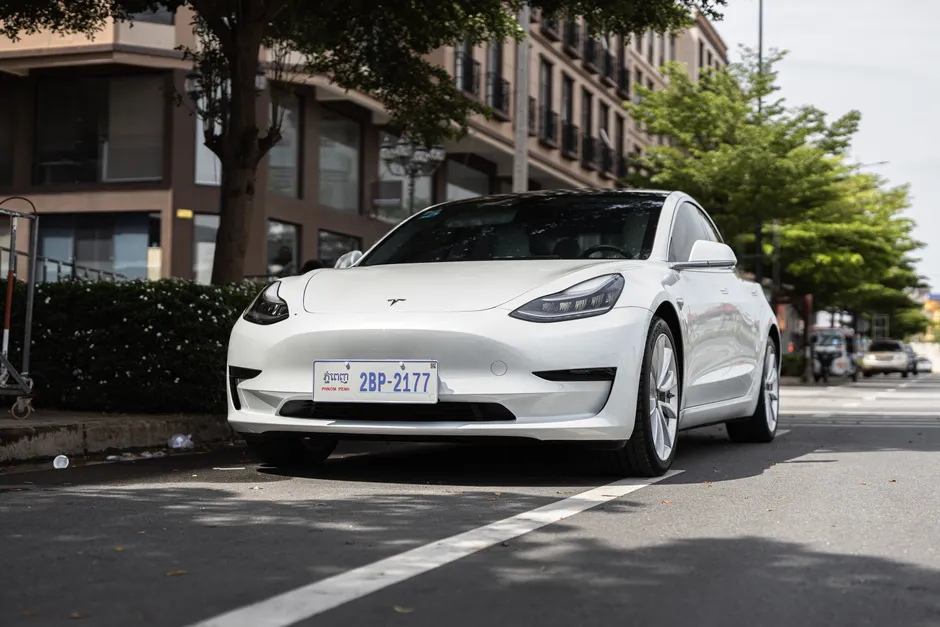
Tesla's Driverless Taxis in Austin Are Now Running Without Anyone Behind the Wheel

Tesla's fleet of driverless taxis in Austin, Texas, is now operating fully on its own, with no human safety monitor inside the car. The shift comes about seven months after Tesla started its first solo ride on 22 January 2026 Electrive.
A crowdsourced website called Robotaxi Tracker, built by Ethan McKanna, recorded that all 170 Tesla taxi rides in Austin over the past two weeks had no human supervisor on board. These rides involved 54 different vehicles Engadget. McKanna has also noticed more unsupervised rides in other Texas cities, including Dallas and Houston.
This is a sharp turnaround from earlier this summer, when the number of driverless cars appeared to be shrinking. As recently as last week, the tracker showed just 28 unsupervised vehicles across six markets. By early June, Tesla's entire Texas fleet had reportedly reached only 42 vehicles Electrive. Elon Musk had said months earlier that safety drivers would be removed from the entire fleet by the end of 2025, but that deadline came and went without happening fully Engadget.
Musk first announced the start of unsupervised Austin rides on 22 January 2026, posting on X that Tesla had "just started Robotaxi drives in Austin with no safety monitor in the car." He added that "solving real-world AI for Optimus will be 100X harder than cars" X. Tesla's stock rose 4% on the news Electrek. Tesla's official X account posted a video that same day showing what it called the first ride around Austin with only the passenger inside X. Musk later said the service had expanded to the entire Austin area X. According to a post shared by Musk, the ride-hailing service is now available in seven areas, including Orlando (fully driverless) and Austin (a mix of driverless and supervised vehicles) X.
The path has not been smooth. In late January 2026, just days after the launch, unsupervised taxis reportedly disappeared from Austin roads Electrek. Earlier this year, it also came out that some Tesla rides that looked unsupervised were actually being controlled by remote human drivers sitting somewhere else Engadget. That detail makes it hard to know what "fully driverless" really meant in those earlier months, especially since Tesla's current taxis are modified Model Y cars that still have pedals and steering wheels.
Tesla is now preparing to launch a new vehicle called the Cybercab. It is built from scratch for self-driving, with no pedals and no steering wheel, so a human physically cannot take over Engadget. The company has told employees to get ready for a Cybercab launch sometime this month, starting in Austin Reuters. Tesla has also announced a contest where selected riders will be invited to the launch event, though no public date has been set yet Tesla.
For comparison, Waymo, Tesla's main competitor in this space, operates more than 300 driverless vehicles in Austin and about 4,000 vehicles across several other cities Engadget.
Tesla's Q1 2026 shareholder update says its software improvements will help speed up efforts to bring fully self-driving capability to both the taxi fleet and cars owned by regular customers Tesla IR. The company has also posted a job opening for an "AI Safety Operator," someone who would drive test vehicles for long stretches and check ride quality through audio Tesla Careers.
The broader context here is worth a closer look. Tesla's push into self-driving taxis has moved in sudden bursts rather than a steady climb: one car in January, a pullback within days, fleet numbers dropping to the low dozens by early summer, and now a jump to 54 driverless vehicles in Austin alone. The revelation about remote human drivers earlier this year further clouds what "unsupervised" actually meant in previous months. The Cybercab, if it launches this month, would remove that ambiguity entirely, since a car with no controls cannot have a human step in. Whether the current Model Y-based fleet can keep running driverless at this scale is still an open question that only more monitoring will answer.
The stakes go beyond how many rides are happening. Tesla's shareholder update links the same software improvements to making regular customer cars fully self-driving, not just the taxi fleet. If the Austin operation holds up, it becomes the test case for a much bigger goal. If it stalls again, as it did after January's launch, the story around Tesla's self-driving timeline starts over.