Iran and the US Are Fighting Over Money, Oil, and a Critical Waterway — Here's What's Happening

Iran's new top security official, Mohsen Rezaei, is warning nearby countries not to join the latest US sanctions against Iran. He's also threatening to attack American business interests across the region. It's his most extensive public statement since taking the job.
Sanctions are penalties one country places on another to damage its economy — like blocking it from international trade or freezing its financial access. The goal is usually to pressure a government into changing its behavior without going to war.
Speaking on Iranian state TV on Saturday, August 23, Rezaei said Iran would strike oil-shipping routes out of the Gulf — including routes beyond the Strait of Hormuz — if neighboring countries joined what he called the US "economic war" against Tehran. He also said Iran would target US oil and economic companies operating in and around Iran and elsewhere. Rezaei claimed Iran had not yet attacked any American business interests, saying it had so far only targeted military bases (The Guardian).
Rezaei was named this month as part of a series of senior appointments widely seen as making Tehran's leadership more aggressive. He served as commander of the Islamic Revolutionary Guard Corps (IRGC) — a powerful branch of Iran's military separate from the regular army — for most of the 1980–88 war with Iraq. That background gives weight to his threats of military action. His appointment to the security council, Iran's highest body for defense decisions, signals a shift toward figures with deep military credentials at a moment of high tension with Washington.
The threats come amid a rapidly escalating economic fight. On August 20, US Treasury Secretary Scott Bessent announced that the United States would impose "the toughest sanctions in history" on Iran (Reuters). The following day, President Trump unveiled a new campaign to isolate Iran's economy, threatening "tremendous economic consequences" on any country that helps or does business with Tehran. Washington has also called on other governments — notably China, among Iran's top partners — to join the effort. Beijing rejected the idea, arguing that US sanctions would not resolve the Middle East conflict.
The UAE moved first among Gulf states to comply. On Tuesday of the prior week, Abu Dhabi announced it was suspending all trade and financial dealings with Tehran until further notice. That decision directly sets up Rezaei's warning to neighbors. The US Treasury has been running what it calls Operation Economic Fury, a targeted sanctions campaign aimed at cutting off Iran's funding.
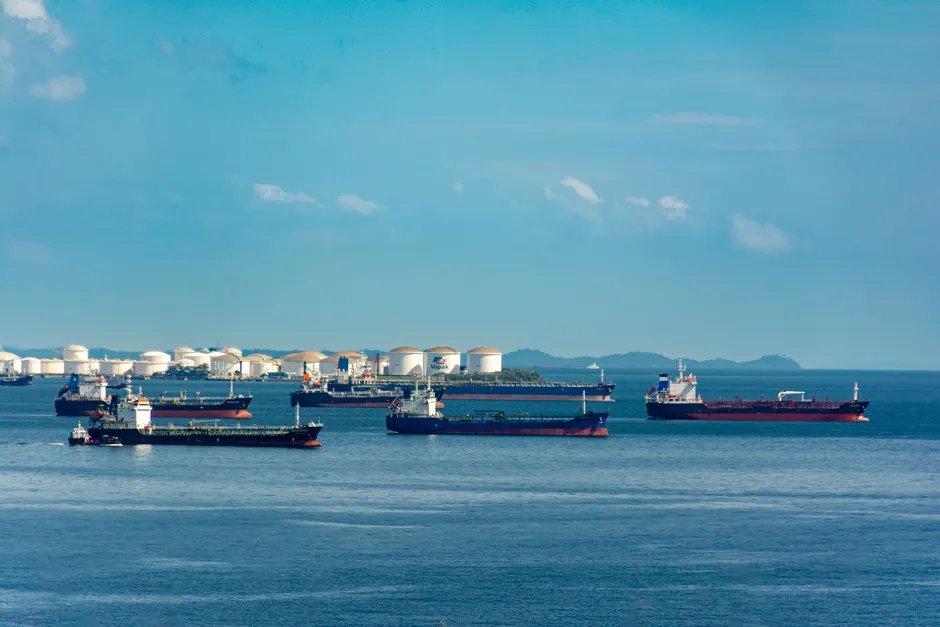
The backdrop is a conflict now approaching its sixth month. The war between the US (alongside Israel) and Iran began on February 28 and has continued without a real resolution. A ceasefire agreement signed in June collapsed. Iran remains in control of the Strait of Hormuz — a narrow waterway between Iran and Oman through which about one-fifth of the world's oil supplies passed before the fighting started. Think of it as a toll booth on the world's most important oil highway. A US naval blockade has since tried to stop Iranian ports from exporting oil, which Iran's economy depends on.
Trump has ramped up his language about the waterway. On Monday, he told reporters he liked the idea of declaring the Strait of Hormuz a US territory, saying, "We control it with the blockade." On Friday, he told a crowd in South Carolina: "We don't even know if we won, because I view the strait of Hormuz as an American territory right now." On Saturday night, Trump shared a map on his social media platform showing the Gulf and labeling the Strait of Hormuz as a "new US territory" (The Guardian).
Rezaei pushed back. He said discussions were ongoing with Oman — the strait's southern neighbor — over management of the waterway, and that fees would be charged. In other words, Iran plans to treat the strait as a money-making asset under its own authority, directly challenging Trump's territorial claim.
Iranian President Masoud Pezeshkian, for his part, has struck a different tone. On August 22, he called for an end to the months-long war with the United States, stating that Tehran holds a position of strength (Al Jazeera). Yet on August 23, Pezeshkian described Iran as being in "a full-scale economic, military and security war" as US sanctions deepen (CNN; Reuters). He acknowledged the country's economic difficulties while insisting that foreign pressure — including efforts to persuade Muslim governments not to do business with Iran — had failed to break national unity (IRNA).
Pezeshkian has previously argued that old methods cannot solve Iran's current challenges, citing sanctions and the enemy's efforts to create an economic blockade (IRNA). He has also told the French president that US behavior had "diverted the path of diplomacy toward threats, pressure and sanctions" (President.ir), and has emphasized regional diplomacy as a way to reduce the effects of the siege (President.ir).
The broader picture here is a tug-of-war within Iran itself. Rezaei talks tough and threatens retaliation. Pezeshkian talks about ending the war. But both men face the same problems: a collapsed ceasefire, a strait that Iran controls but the US is blockading, an economy being squeezed by what the US Treasury calls the toughest sanctions ever, and a growing list of countries — starting with the UAE — cutting commercial ties. Rezaei's threat to expand attacks from US military bases to US business and energy interests is a new step. His mention of alternative oil-shipping routes beyond the Strait of Hormuz suggests Iran is planning ways to spread disruption beyond the waterway it already controls.
For Gulf states, the choice is now urgent. The UAE has already sided with Washington. Saudi Arabia, Kuwait, Qatar, and Bahrain face the same US pressure to cut ties and the same Iranian threat of retaliation against their shipping lanes. China's refusal to back the sanctions campaign makes it harder for Trump to build a united front, but Beijing's opposition hasn't turned into actual economic help for Tehran. Oman's role as a go-between in strait management discussions may offer a narrow diplomatic opening, though Rezaei's talk of imposed fees points to a coercive approach rather than a cooperative one.
The conflict is approaching six months with no political process in place. The June ceasefire is in ruins. Two paths are now visible: a US path centered on maximum economic pressure and claims over the strait, and an Iranian path split between Pezeshkian's diplomatic overtures and Rezaei's threats of military and economic retaliation. Neither path has produced a way out, and the gap between them is widening.