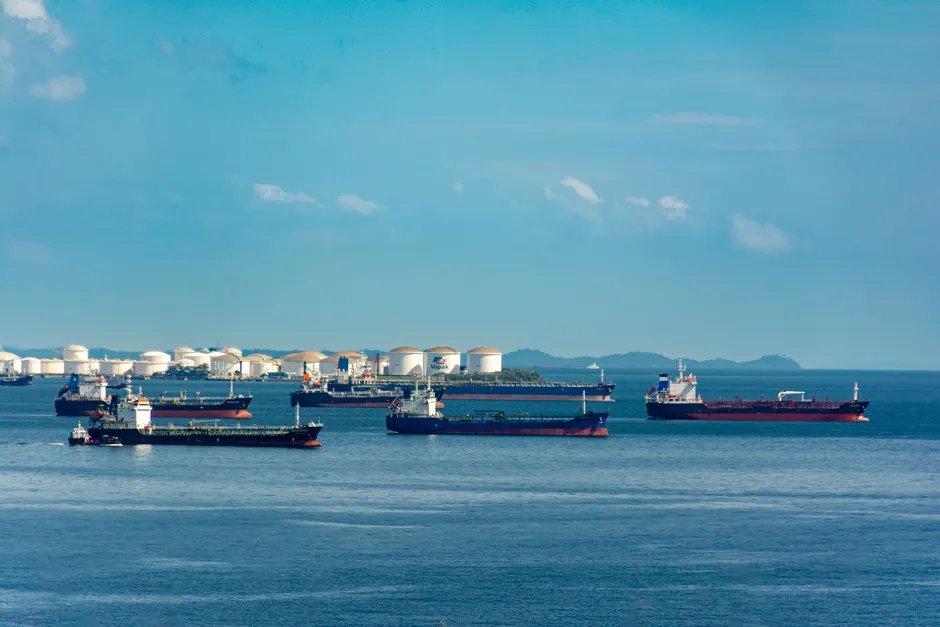
Iran Says It Will Cut Off All Gulf Oil If Neighbors Side With the US

Iran's top security official, Mohsen Rezaei, warned Gulf Arab states on August 23, 2026, that not "a single drop of oil" would leave the region if they joined what Tehran calls President Donald Trump's economic war against Iran. The threat builds on an already dangerous situation: Iran has declared the Strait of Hormuz closed.
The Strait of Hormuz is a narrow strip of water between Iran and Oman that connects the Persian Gulf to the open ocean. About one in every five barrels of oil the world consumes each day passes through it. Think of it as a toll booth on the world's most important energy highway.
Rezaei's remarks, reported by multiple outlets, pack several threats into one message. He vowed to "neutralize the economic war" waged by the United States and threatened direct retaliation against Trump himself. His core warning to neighboring Gulf states was blunt: join Washington's economic measures — things like sanctions, which are penalties meant to pressure a country by cutting off its trade and financial access — and Iran will shut down all oil exports from the Persian Gulf. "Not even a drop of oil" would leave, Rezaei said, according to Al Jazeera and Press TV.
The threat goes beyond the strait. Rezaei warned that Iran would also target alternative oil-shipping routes — the pipelines and overland channels that Gulf states might use to get around a Hormuz closure. That means even if countries tried to bypass the strait, Iran says it would go after those routes too.
A day earlier, on August 22, Rezaei said the Strait of Hormuz would stay closed until Gulf oil was allowed to leave through an alternative route, as reported by IRNA. That statement and the August 23 warning seem to contradict each other. On August 22, Iran said the strait would stay shut to force the opening of alternative routes. On August 23, Iran threatened to close those same alternative routes if Gulf states cooperated with the US. Taken together, the two messages suggest Iran wants to control the terms under which any Gulf oil reaches the rest of the world.
This escalation follows a path Rezaei outlined on July 17, 2026, when he said Tehran would move beyond the military phase of its conflict with the United States, according to Al Jazeera. That shift from military to economic and maritime threats frames the current warnings as a deliberate change in strategy, not a one-off outburst.
The backdrop matters. The July 17 report references a seventh consecutive night of American strikes on Iran. So Rezaei's warnings are not happening in a vacuum — they come during an active military campaign. The economic measures he references are a second track of pressure, and Iran's response now covers both the military and economic sides of the conflict.
The countries most at risk are the Gulf oil producers: Saudi Arabia, the UAE, Kuwait, Qatar, and Iraq. They depend on the Strait of Hormuz for most of their oil exports. Saudi Arabia and the UAE have some pipelines that can carry oil to other ports on the Red Sea and the Gulf of Oman, bypassing the strait. But those pipelines can only handle a small fraction of what the Gulf exports in total. Rezaei's August 22 statement about keeping the strait closed until alternative routes open, combined with his August 23 threat to target those same routes, puts Gulf states in a bind. They face closure at Hormuz and the targeting of any workaround they try.
The broader context here is that Rezaei's statements are aimed at several audiences at once. For Washington, the message is that economic pressure will carry military and maritime costs — not just on Iranian soil but across the global energy supply chain. For Gulf states, the message is that staying neutral is not an option; if they comply with US measures, Iran will treat that as joining the war and punish them for it. For the international market, the message is that Iran is prepared to control the most important oil shipping route on the planet.
Whether Iran can actually sustain a closure of the strait against a US naval presence already conducting active strikes is an open question. Iran has significant military capabilities in the Gulf, including fast attack boats, sea mines, and anti-ship missiles. But a full closure would mean a direct military confrontation with the United States at a time when American forces are already bombing Iranian territory.
What is clear is the framing. Rezaei is not making isolated threats. He is laying out a doctrine of total economic deterrence — treating the entire Gulf oil export system as a hostage to US policy choices and regional loyalties. The July 17 declaration of a shift beyond the military phase, the August 22 demand that alternative routes be opened, and the August 23 threat to close those alternatives form a coherent sequence. Each statement raises the stakes and shrinks the number of ways out for the parties Iran is pressuring.
Gulf states now face a squeeze from all sides: a US administration pushing economic measures against Iran, an Iranian government threatening catastrophic consequences for going along, and a military campaign already underway with no announced end date.