Why 30+ Countries Just Met in Kyiv to Talk About Missiles

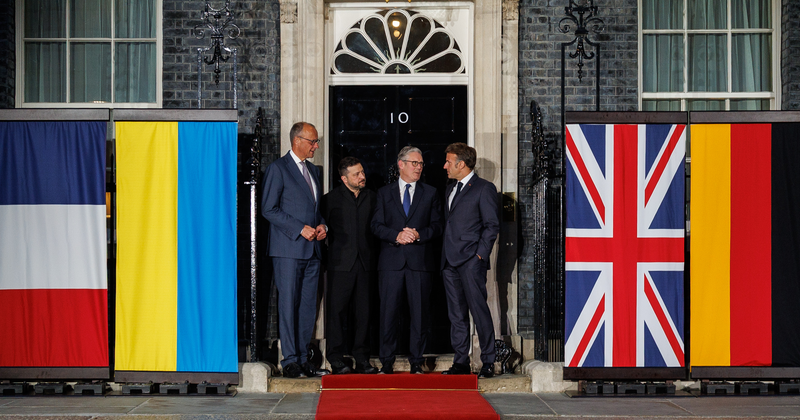
On 24 August 2026, Ukraine celebrated its Independence Day by hosting a major meeting in Kyiv. The leaders of the United Kingdom, France, and Germany jointly led the session. Over 30 countries that support Ukraine came together to coordinate more air defence help and to increase pressure on Russia. France had announced the meeting earlier in August as Russia stepped up its airstrike campaign Le Monde.
Air defence means the systems and weapons a country uses to shoot down incoming missiles and drones before they hit their targets. That is what this meeting was mostly about.
UK Prime Minister Andy Burnham attended in person, making this his first foreign trip since taking office. European Council President Antonio Costa was also there. The day before, 23 August, leaders from Nordic and Baltic countries had met President Volodymyr Zelenskyy in Kyiv for National Flag Day and promised to increase their support Al Jazeera.
Zelenskyy's top request was for interceptor missiles. These are the missiles fired by systems like the Patriot to destroy incoming threats in the sky. He presented allies with a clear picture of how supply has been shrinking. Ukraine received 675 Patriot interceptor missiles in 2023, 364 in 2025, and a projected 264 for 2026. He is now asking for at least 300 Patriot interceptors for the upcoming winter. The request comes after weeks of Russian missile and drone attacks on Kyiv that sent record numbers of residents into metro stations and basements for shelter.
Norway committed to giving another 85 billion kroner ($9.1 billion) in 2027, matching what it gave the previous year. Allies also announced more air defence support for Kyiv and exercises for a military force that would be deployed after a ceasefire, according to Le Monde.
The summer of 2026 saw a rush of related developments. On 13 July, Ukraine and key allies announced a new air-defence coalition that would jointly develop a new anti-ballistic missile system Reuters. On 9 July, Zelenskyy confirmed that Ukraine and the United States had reached a political agreement on licences for domestic production of Patriot interceptors Reuters. In July, Zelenskyy said Ukraine and its partners could within twelve months jointly develop a cheaper, mass-produced air-defence system Arkansas Online.
The trend Zelenskyy laid out tells a worrying story. Deliveries dropped from 675 to 364 to a projected 264 over three years. Even if allies fully meet the 300-missile winter request, it would only bring Ukraine close to 2025 levels, which were already about half of what they got in 2023. Think of it like a town's fire department getting fewer trucks each year while wildfire season grows longer.
Meanwhile, civilians on both sides of the border are still being killed and wounded. Russian authorities said two children were killed and nine other people wounded, including seven minors, when drone debris struck a private childcare centre in Krasnodar, Russia, on 24 August. The company Ozon reported fires at its warehouses in Krasnodar and Makhachkala that morning and evacuated sites in Adygeysk and Nevinnomyssk due to drone threats. Stavropol region Governor Vladimir Vladimirov said a drone attack on an industrial area had been repelled.
In Ukraine's Kharkiv region, at least two women were killed and five wounded when a Russian drone hit an electric train on 23 August. Another attack on the outskirts of Kharkiv city killed three people and injured eight. Al Jazeera reported all of these casualties.
The meeting also pushed forward planning for a post-ceasefire force — a group of troops meant to discourage future fighting after any ceasefire takes hold. Exercises for that force were announced alongside the air defence commitments. This two-track approach, pairing immediate missile deliveries with longer-term planning, shows the coalition sees air defence shortages as both an urgent problem and a gap that needs long-term fixes like building missiles inside Ukraine.
Zelenskyy has argued that Russia was able to start the war because Ukraine sat in a "grey zone" — not a member of any military alliance that would guarantee its protection. His calls for air defence go back to April 2024, when he asked for at least seven Patriot or similar systems. At the June 2026 G7 summit, leaders committed to providing more air defence capabilities. Those calls have slowly turned into licensing agreements and joint development plans.
The numbers Zelenskyy presented in Kyiv, however, tell us that turning promises into actual missiles delivered remains the hardest part. The coalition's next steps will likely be measured not in statements but in missile counts over the winter.