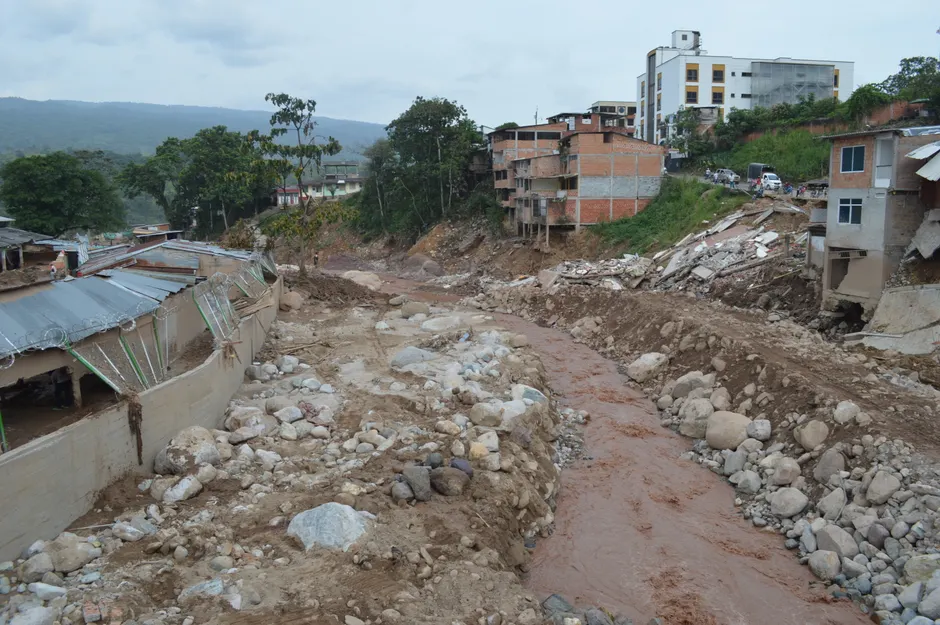
A Glacier Broke Apart and Sent Deadly Floods Into Nepal Villages

On August 26, 2026, flash floods and landslides hit Rasuwa district in northern Nepal near the border with Tibet (China), killing at least 160 people, according to the Associated Press. Rescue workers are searching for survivors after a wall of mud and rock crashed into a Himalayan river, sweeping away villages and roads. Reuters reported that nearly 1,500 people, including more than 700 foreigners, are missing across Nepal and China. The floods were caused by a glacial collapse: the lower part of a glacier broke off and crashed into the river.
The disaster started in the Bhote Koshi River, where a sudden flood came in from the Chinese side on Wednesday morning, causing major damage in Rasuwa and sending a warning downstream. Some 157 bodies had been recovered as of August 26, following the flash flood at Trishuli in Nuwakot district. Authorities had rescued more than 114 people by the same date. Among the 384 travellers reported missing in the Bhote Koshi River in Rasuwa, at least 105 Indian nationals and 37 non-resident Indians were identified. Earlier figures from August 26 confirmed at least eight killed, with the death toll rising fast as recovery efforts continued.
Nepal sent security forces and helicopters to help. The National Disaster Risk Reduction and Management Authority held an emergency meeting while casualties were still being counted. Eight tonnes of relief supplies were sent to the flood-affected areas, including 500 mosquito nets, 1,000 children's dignity kits, 220 sleeping bags, 500 blankets, 10 plastic sheets, 100 tarpaulins, and 500 solar lights.
The broader context here is the danger posed by melting glaciers in the Himalayas. A glacier is a slow-moving river of ice sitting high in the mountains. When part of it breaks off and falls into a river below, it can send a massive wave of water, rock, and mud rushing downstream with little warning. Reuters cited experts suggesting that is what happened here. A similar event, called a glacial lake outburst flood, had previously caused flooding in the same Bhote Koshi area. That happens when a lake held back by a wall of ice or rock suddenly bursts through its barrier. The fact that these events keep happening in this area raises serious questions about whether early-warning systems are good enough and whether glaciers upstream in Tibet are being watched closely.
Looking at what this means for the region, the number of missing people — nearly 1,500 across both countries — means that disaster coordination between Nepal and China will be tested in the coming days. The fact that foreign nationals are among the missing adds another layer of difficulty, because their governments will want updates and help. Nepal's northern districts have seen repeated glacial floods in recent years, yet roads, evacuation plans, and other protections remain uneven. The international humanitarian community will be watching how quickly relief reaches cut-off communities in Rasuwa, and whether the downstream warnings issued by Nepalese authorities actually worked, given the heavy loss of life in Nuwakot.
The coming days will be critical. In mountainous terrain, the chances of finding survivors shrink quickly after a flood. Monsoon-season rains also make it harder for helicopters to fly. The gap between the 157 bodies recovered as of August 26 and the much larger number of missing people shows how powerful the debris flow was, and how hard it is to find victims in a river carrying heavy sediment and rock over long distances.