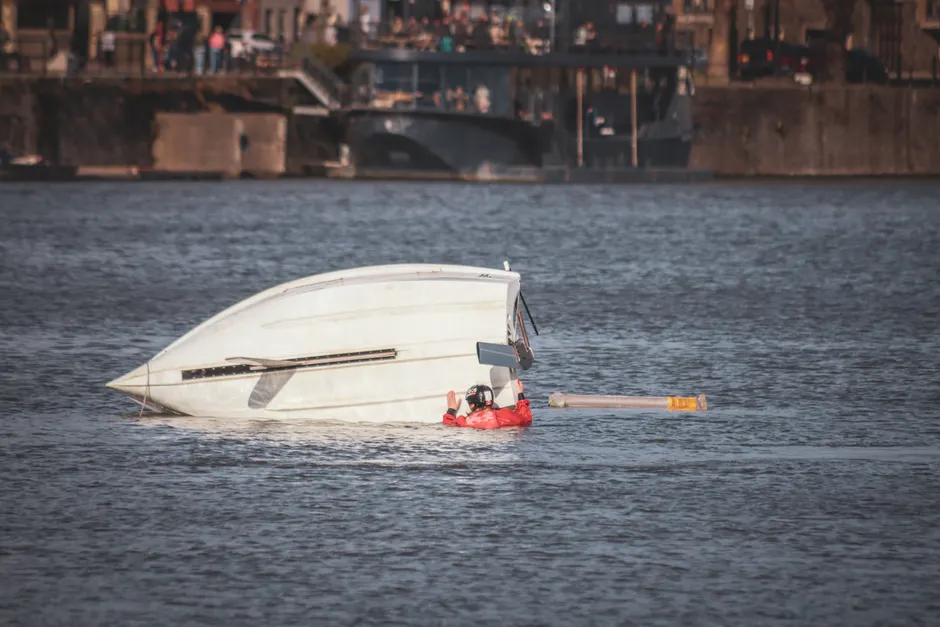
A Passenger Boat Flipped Over Near Cyprus — Here's What Happened

A passenger boat carrying hundreds of people flipped over in the sea about four miles off the coast of northern Cyprus on August 30, 2026. Rescue teams rushed to the waters near the town of Kyrenia to search for survivors. The boat, described by Kibris Postasi as a catamaran operated by a company called Filo Gemicilik (Filo Denizcilik), had left from Girne Port in the Turkish Republic of Northern Cyprus before it started taking on water and overturned (Kibris Postasi).
Anadolu Agency confirmed that rescue efforts were launched after the ferry, which left Girne (Kyrenia) Port, capsized (Anadolu Agency). The incident happened in open waters roughly four nautical miles from shore, according to the BBC (BBC).
Reports differ on exactly how many people were on board. Kibris Postasi said there were 279 people — 259 passengers and 8 crew members. The BBC said about 270 people were on board. The difference has not been cleared up in the publicly available reporting.
Murat Senkul, the mayor of Kyrenia, told CNN Turk that rescue teams had reached 159 of the people who were on the boat. He called the situation "very serious," stressing how urgent the rescue operation is (BBC). No further details about the condition of the people who were rescued have been reported.
What Is a Catamaran and Why Did It Flip?
A catamaran is a boat with two hulls — the hull is the main body of the boat that sits in the water. Most boats have one hull, but a catamaran has two, connected by a deck on top. Catamarans are usually considered stable and are often used for passenger trips. But there is a catch: if water gets into one of the two hulls, that side loses its ability to stay afloat while the other side still floats normally. This unevenness can make the boat tip over very quickly. It is like trying to stand on one leg when the other suddenly gives out. This is a known problem with twin-hull boats, and the reported sequence — taking on water, then flipping — fits that pattern. What caused the water to get in, whether it was a problem with the boat itself, human error, or rough seas, has not yet been reported.
Why Northern Cyprus Is Complicated
The broader context here is that northern Cyprus is a place with unusual political status. The Turkish Republic of Northern Cyprus (TRNC) is recognized as a country only by Turkey. The rest of the world recognizes the Republic of Cyprus, which is the internationally accepted government of the whole island. This means that ports and waters in the north operate separately from the maritime authority that the rest of the world recognizes.
When a serious incident happens in these waters, the TRNC leads the response. Turkey's coast guard and navy often play a supporting or leading role, because of the close ties between Ankara (Turkey's capital) and the TRNC. The fact that Anadolu Agency, which is Turkey's state-run news service, reported the incident reflects that connection.
Girne Port, also called Kyrenia, is one of the main passenger ferry hubs in northern Cyprus. It handles regular traffic to and from Turkey's southern coast. The trip across the eastern Mediterranean is usually a short one, but conditions in open water can change quickly. Boats carrying 250 or more passengers are operating near their limits, which leaves little room for mistakes if something goes wrong like flooding.
What Happens Next
Several big questions remain. First, there is a large gap between the number of people reached by rescuers (159, according to Mayor Senkul) and the total number reported on board (270 to 279). That means well over 100 people are still unaccounted for. In open-water rescues, time is critical, especially if people in the water do not have life jackets or survival suits designed to protect them for long periods.
Second, the TRNC's maritime safety rules will likely be examined closely. Questions about how well the boat was inspected, whether it was carrying too many people, and how prepared the crew was will be central — especially if the catamaran was full or nearly full.
Third, the passenger list itself — who was on board and how they booked their tickets — will be important for figuring out the number of casualties and for any investigation that follows.
The company that operated the boat, Filo Gemicilik (also called Filo Denizcilik), has been named in reports. But its safety record, inspection history, and track record in TRNC waters are not available in the current reporting. These details will matter in any formal investigation.
Search and rescue operations were still going on at the time of reporting.