Why Fighting Keeps Erupting in a Somali City Called Baidoa
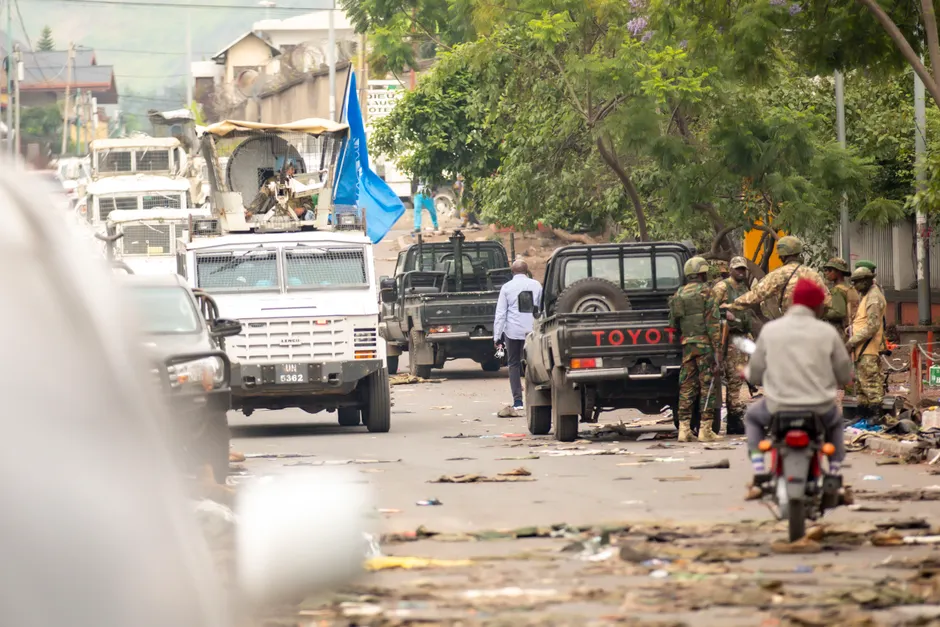
Somalia's military fought off an attack on the city of Baidoa early on September 3, 2026. The government said fighters loyal to a former regional governor named Abdiaziz Hassan Mohamed Laftagareen launched the assault, which began with explosions meant to frighten civilians. The army then struck back and said it badly defeated the attackers. The fighting lasted about six hours. Residents told the news agency AFP that gunfire and explosions could be heard across the town, forcing people to stay indoors. By midday, several residents said Baidoa was calm again.
The two sides are telling very different stories about what happened. A spokesperson for Laftagareen's fighters told AFP that they had captured parts of Baidoa and that fighting was still going on. The Defence Ministry said it was checking how many fighters were killed and would share details later. The ministry also accused the attacking groups of operating alongside al-Shabaab, an armed extremist group that has been fighting Somalia's government for years. Garowe Online, a news outlet, reported the same disagreement: the government said it pushed the attackers back, while Laftagareen's side said its fighters had briefly entered parts of the city.
This is the fourth major clash in Baidoa this year. The fighting is part of a power struggle between Somalia's central government in the capital, Mogadishu, and Laftagareen over who controls South West State, the region where Baidoa is located. Somalia is a federal country, meaning it has a central government plus regional governments that share power, though that balance is often disputed. The central government sent troops to remove Laftagareen from the governor's post in March 2026. He tried and failed to retake the region in May, when two senior army commanders were killed in a roadside ambush near Baidoa during an election dispute. Fighting broke out again in July. In August, Laftagareen's forces fought government troops for control of Baidoa in clashes that killed dozens, including at least four civilians. Reuters reported that government troops drove the attackers out on August 17, killing about 30 of them, and verified social media videos showing the fighting.
Laftagareen opposed President Hassan Sheikh Mohamud's plan to replace Somalia's old election system, where clan elders picked representatives, with direct democratic elections. That plan put the central government at odds with regional leaders who worry the change is really a way for Mogadishu to grab more power. The deployment of federal forces to Baidoa in late August, reported by Garowe Online as Laftagareen's loyalists posed a growing threat, signaled that the government wanted to hold the city by force rather than talk things out.
The Defence Ministry's decision to publicly link Laftagareen's militias to al-Shabaab is a notable escalation in how it is framing the conflict. Baidoa and the surrounding area have long been a place where al-Shabaab operates. Government forces have fought al-Shabaab militants near Baidoa many times, including an operation in June 2025 that the government called a major success, and a strike in April 2025 that killed about ten fighters. That history makes the government's accusation sound plausible on the surface, but the ministry did not provide specific evidence that Laftagareen's militias and al-Shabaab actually worked together in the September 3 attack.
The broader context here is a country stretched thin by two pressures at once: a contested push to change how elections work, and an armed former governor who still has enough fighters to attack a major city again and again. Each round of fighting in Baidoa has pulled federal forces deeper into the region's political crisis without fixing the underlying problem. The August clashes ended with government troops in control and about 30 opposition fighters dead. The September attack seems to have followed the same pattern, with the army pushing the attackers back once more. The cycle suggests that while Laftagareen's forces are not strong enough to hold Baidoa, they can still destabilize it, and the government has not yet found a way, through politics or force, to bring the standoff to an end.
Casualty figures from the September 3 fighting have not yet been released. The Defence Ministry's assessment is ongoing.


