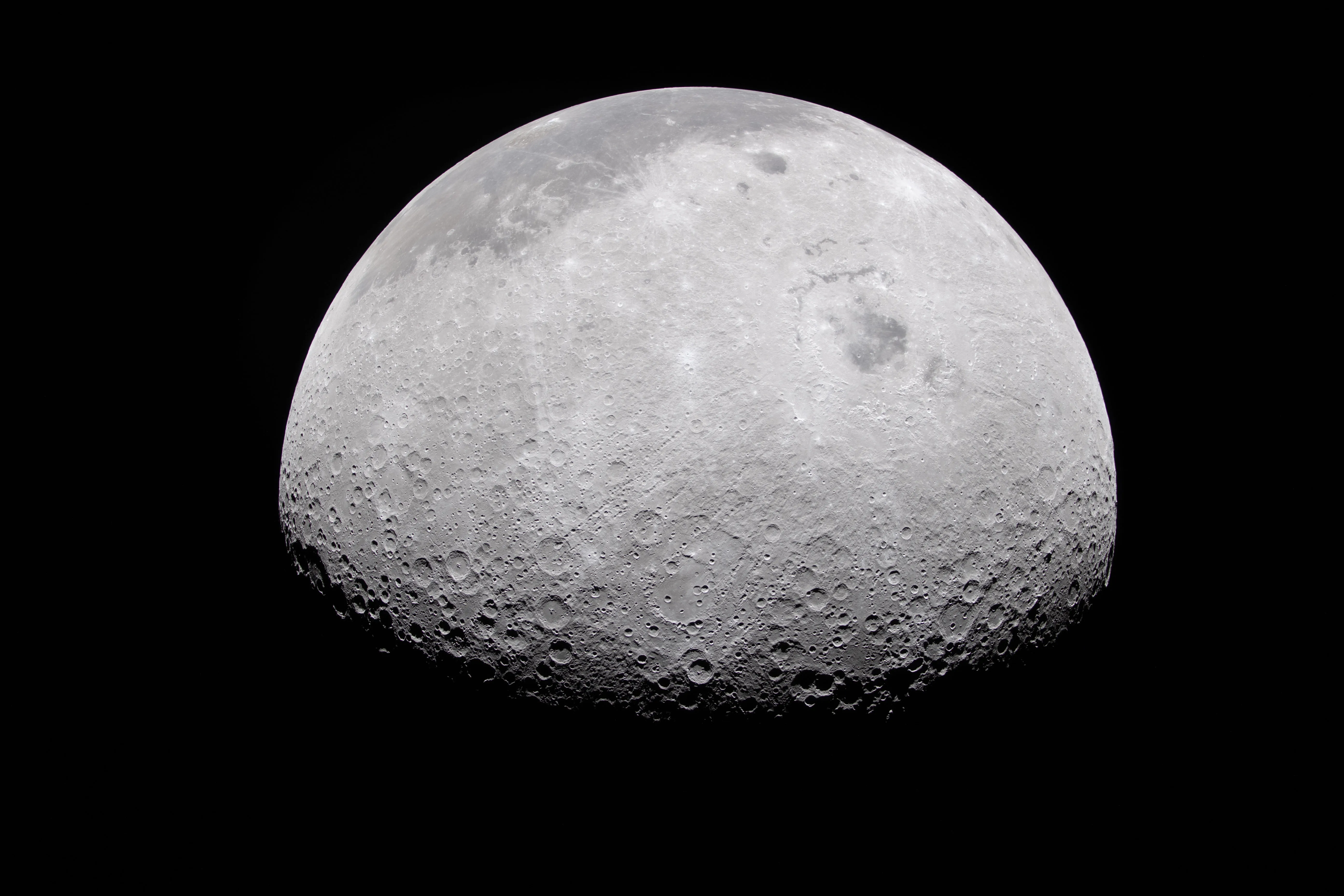
NASA Found a Huge New Crater on the Moon

NASA has found a huge new crater on the Moon, 728 feet wide, that the agency calls the largest new crater seen in modern times. The feature, named McGetchin crater, was reported by NASA scientists on Sept. 15, 2026, in an announcement titled "NASA's Moon Orbiter Spots New, 'Once-in-Century' Moon Crater" NASA.
The crater is 728 feet wide and 141 feet deep, with steep sides. NASA says it spans the length of two football fields NASA. Separate reporting noted it is bigger than the Roman Colosseum. It is far larger than the small pits Moon cameras usually see.
The crash that made it happened between April 11 and May 22, 2024. The object was a comet or asteroid about the size of a three- to six-story building Engadget. Scientists estimate a crash this large happens only once every 132 years.
A person spotted it. NASA scientist Robert Wagner noticed the change in October 2025 while looking at pictures from the orbiter's wide-view camera. That camera scans large areas. The spacecraft flew over the spot again in December 2025, when its close-up camera took sharper pictures of the site.
That two-step method is normal. The wide view finds what changed. The close-up view shows the shape. In this case the second pass confirmed a fresh hole, not a trick of light or a computer error.
Temperature readings gave a third clue. A 4-mile-wide area around McGetchin crater is about 16 degrees Fahrenheit cooler at night. The crater was named after scientist Tom McGetchin.
The bigger picture here is how often space rocks hit. One well-measured crater, with a known time, size, and rock size, gives scientists a firm starting point for the current rate. One event does not rewrite Moon history by itself, but it tightens estimates of how often mid-size rocks hit a body with no air near Earth.
Looking at what this means for work around the Moon, the value is in steady watching rather than any single find. The orbiter has circled the Moon for years, and its photo archive allows before-and-after comparison. Finding change at that scale is a data problem as much as a camera problem. Huge volumes of repeat pictures must stay lined up and steady so a new 200-meter-wide feature stands out to a computer or, as here, to a person doing careful checks.
In my view, one thing worth flagging is how ordinary the tools were, and why that is good news. No new sensor was needed. No special crash-watch fleet was sent up. Long-lived equipment, steady calibration, and careful human checking produced a once-in-a-century find more than a year after the event. That delay matters. It suggests other recent changes are already in stored pictures, waiting to be found.
Looking ahead over many years, in my view, the hopeful point is simple. Better knowledge of space rocks and crash energy improves shielding for spacecraft, choice of landing spots, and risk planning for long stays on the Moon. It also shows how fast the surface is churned on human timescales, not just geologic ones. The Moon is often treated as still. McGetchin crater is evidence it is not.