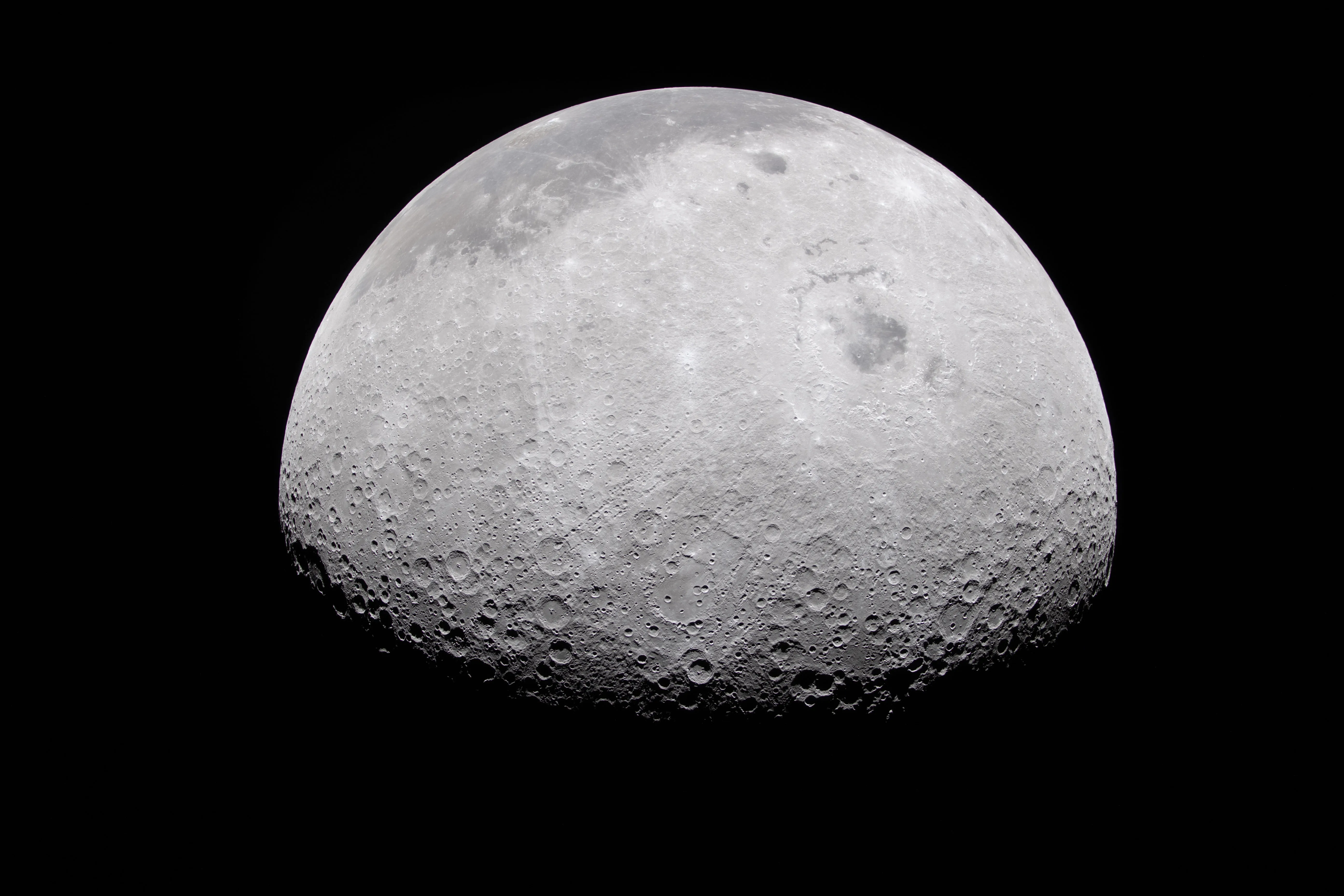
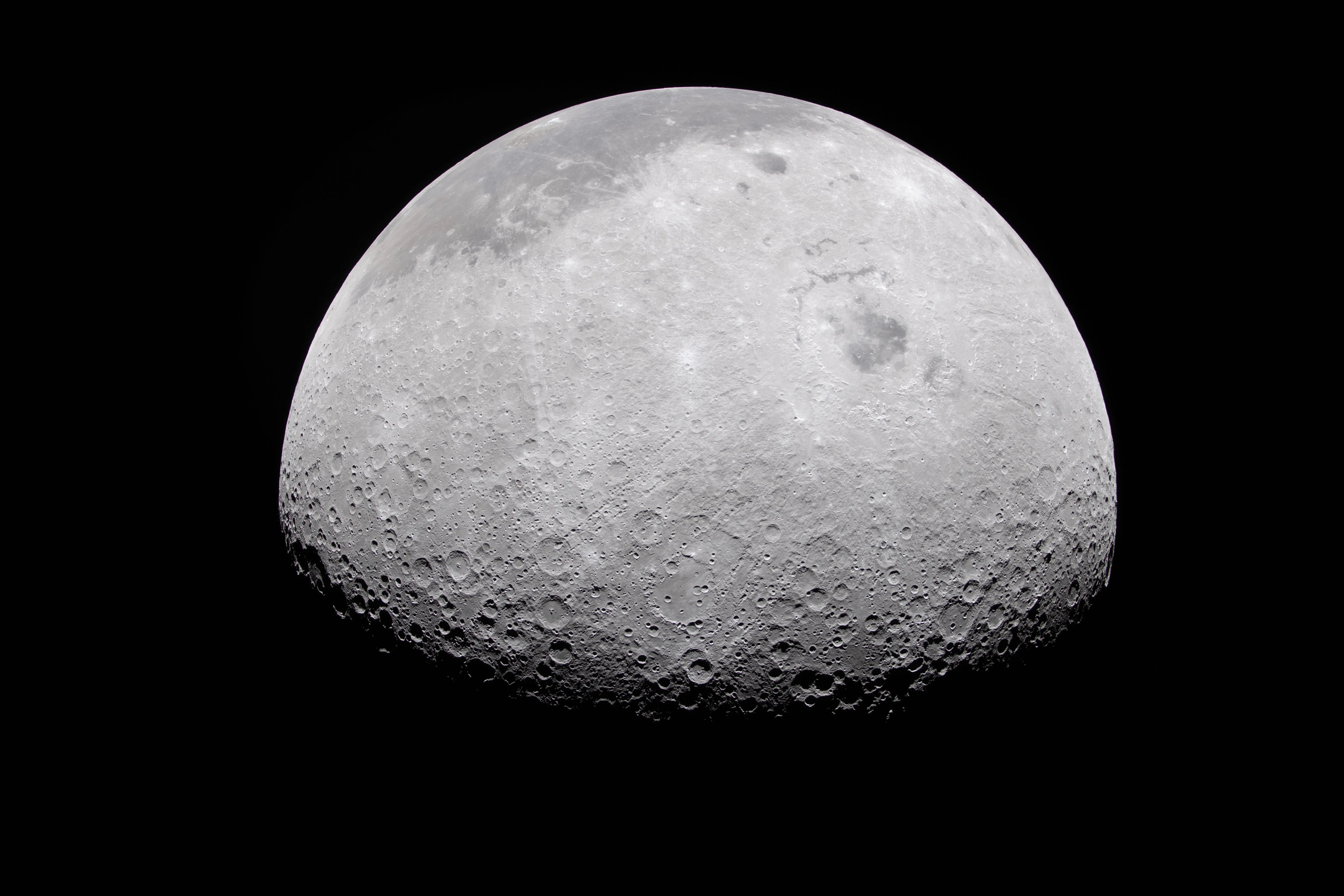
A SpaceX Rocket Crashed Into the Moon. Here's What NASA Learned From the Crater.

NASA has released before-and-after images of a crater on the Moon created when part of a SpaceX Falcon 9 rocket crashed into the lunar surface on August 5, 2026. The images, taken by NASA's Lunar Reconnaissance Orbiter (LRO) between August 11 and 12, show a double crater roughly 60 feet wide and 12 feet deep. The rocket part weighed about 4,000 kilograms and was traveling at 5,400 mph when it hit. NASA Science Engadget
The rocket stage came from a January 2025 mission called Blue Ghost, which carried two robotic landers toward the Moon. The stage's main job was to carry those landers to the right path. It used up most of its fuel doing that, leaving too little to fly back to Earth. With no fuel to steer itself home, the stage drifted through space for 19 months, pulled by the Moon's gravity and nudged by the Sun's gravity, until it finally hit the lunar surface. Engadget
An independent astronomer named Bill Gray first realized the rocket stage was heading toward the Moon in April 2026. He used software that calculates orbits to predict where and when it would hit. NASA and SpaceX then tracked the object as the August 5 impact approached. NASA Engadget
Getting the photos was not straightforward. The LRO circles the Moon from pole to pole at about one mile per second, completing a full pass every two hours. To aim its camera — which can pick out details as small as three feet across — straight down at the crash site, NASA engineers tilted the entire spacecraft sideways as it flew 60 miles above the crater. Even then, the orbiter's flight path did not pass directly over the crash site until six days after impact, on August 11. NASA Science Engadget
A second spacecraft, South Korea's Danuri lunar orbiter, also photographed the crater from a different angle, giving scientists a second set of images to compare. Space.com
NASA said the images revealed new details about the Moon's surface. The crash threw material outward in a pattern that tells scientists about what lies beneath. Darker streaks radiating from the crater are older surface material, changed by long exposure to radiation from the Sun and deep space. Lighter material near the crater's edge came from deeper underground, dug up by the force of the impact. That contrast gives scientists a direct look at the layers of the Moon's surface at that location — something that usually requires a planned experiment or a drilling mission. NASA Science Engadget
The Falcon 9 upper stage was 39 feet long and 13 feet wide. Engadget
This is not the first time a rocket body has made an unplanned crater on the Moon. In March 2022, an unidentified rocket stage hit near a crater called Hertzsprung, leaving a double crater about 28 meters across. That was unusual because spent rocket stages normally leave a single crater. The 2022 event has never been tied to a specific launch. NASA
The broader context is that these events are becoming more common. As more spacecraft travel to the Moon — including NASA deliveries, commercial landers, and orbiters from several countries — the number of spent rocket stages and dead hardware drifting in the space between Earth and the Moon will grow too. The Falcon 9 stage that created this crater was not a mistake or a malfunction. It was the expected result of a mission design where the upper stage does not have enough fuel left for a controlled return to Earth. The Blue Ghost mission successfully delivered its landers, and the stage then did exactly what the laws of physics said it would do.
In my view, the real story here is not that a rocket hit the Moon. It is that NASA's Lunar Reconnaissance Orbiter — a spacecraft now in its 17th year — could be quickly turned to photograph the crater in fine detail, and that a second spacecraft, Danuri, confirmed the finding from a different angle. The LRO's camera was designed for systematic mapping of the Moon, but it worked well as a rapid-response forensic tool. That flexibility, on a spacecraft long past its planned lifetime, is a meaningful sign for anyone thinking about the infrastructure we will need to support future activity around the Moon.
The surface composition data from the crash debris — older, weathered material compared with fresher material from underground — is the kind of information that normally requires a dedicated experiment or a drilling mission. Getting it from an accidental crash, photographed by an aging orbiter, is a small but real efficiency gain for lunar science.
The larger question is what happens when there are ten or fifty spent rocket stages in the space around the Moon, rather than the handful we have today. None of them threaten people or property; the Moon is large and nobody lives there. But each uncontrolled impact adds to a growing catalog, and the scientific value of photographing each new one decreases as they pile up. At some point the LRO will stop working, and there is no confirmed replacement with the same high-resolution camera in development. The window that made this kind of detailed analysis possible is, for now, still open. How long it stays open is a matter of planning — not technology.