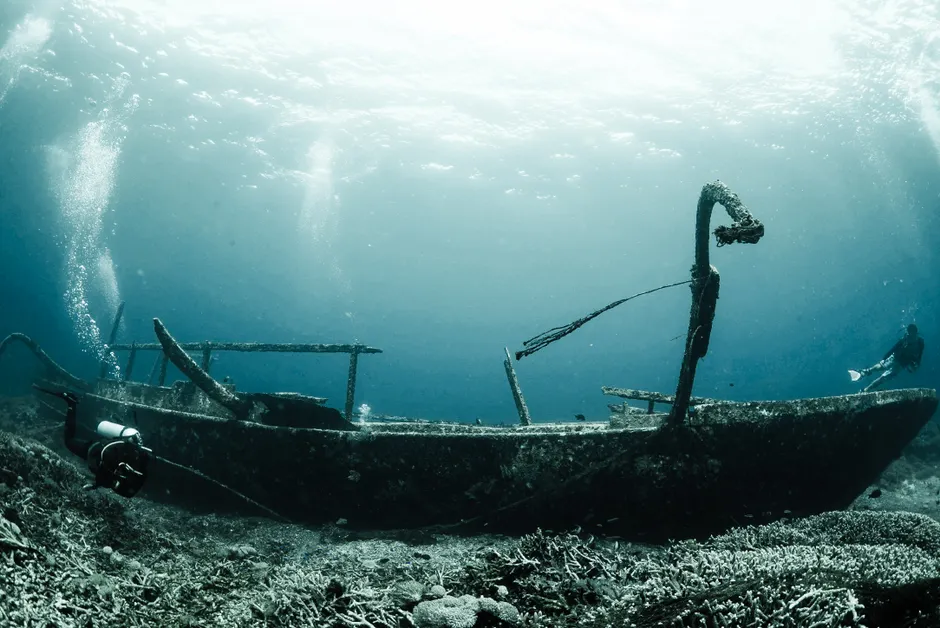
A Korean Island Celebrates a French Shipwreck From 175 Years Ago

Bigeumdo, a small island off the coast of South Korea, is hosting a festival that tells the story of a disaster that happened in 1851. A French whaling ship called Le Narval sank in the waters around the island, according to Asiae. The festival is called "The Encounter of Champagne and Makgeolli" — using France's famous wine and Korea's traditional rice wine to represent the two cultures that met because of the shipwreck.
The story of Le Narval is well documented. The ship ran aground in 1851 near South Korea's Jeolla province, and some of its crew members eventually made it to Shanghai, according to the International Journal of Korean History. The island's organizers have focused their festival on the crew's arrival at Bigeumdo specifically. The crew sailed through a remote Korean island and then escaped to China — a journey that reflects the whaling business of that time, when French, American, and British ships routinely hunted whales in Northeast Asian waters. (Atlantic whale stocks had already run low, so ships were traveling farther to find them.)
The festival's name does more than just mark history. Champagne represents France; makgeolli represents the island and its working-class maritime heritage. Neither drink is considered fancy or elite — and that fits Bigeumdo's character as a practical fishing island, not a polished museum destination.
More and more Korean towns are using local historical encounters with the outside world as reasons to hold festivals and attract tourists. Bigeumdo's event is small, but it reflects a broader trend: provincial South Korean governments are creating tourism experiences that stand out from the usual K-pop concerts and tours of old royal palaces. A shipwreck involving a mid-sized whaling vessel — especially one that never created any lasting political relationship between France and Korea — can become exactly the kind of story a region can make its own. It is specific enough to be interesting and obscure enough to feel fresh.
For France, Le Narval is just one of many whaling ships that are now forgotten. French whaling was booming in the mid-1800s but collapsed by the end of the century. Most French records of these ships survive only in specialized maritime archives. A Korean island deciding to make this particular vessel the center of a yearly cultural event is, in a real sense, preserving a piece of history that French records did not save.
The festival itself — with its tastings, historical displays, and remembrance of the crew's arrival — is less important than what it shows about the island's hopes. Bigeumdo's organizers are betting that a shared cultural connection, even a small one, can draw visitors back. The island doesn't have the resources or famous attractions of other Korean festival destinations, so this historical angle may be its best way to stand out. Whether that will be enough to keep the festival going after its first year is uncertain, but the core idea is solid: treating a maritime accident as a moment of real human contact across cultures, rather than just a forgotten footnote.