NASA Tests a Rover That Could Travel 10 Times Faster on the Moon and Mars
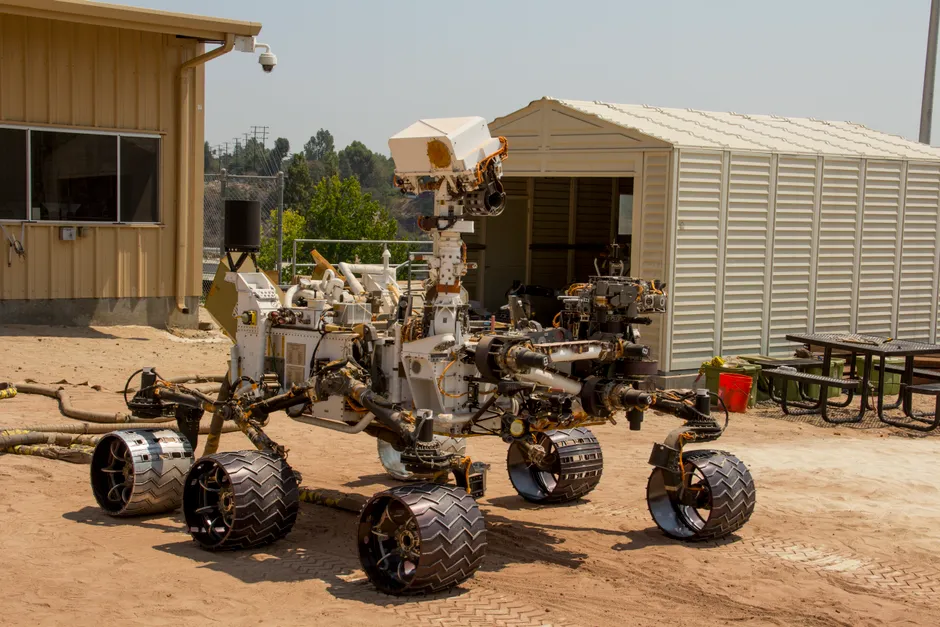
NASA's Jet Propulsion Laboratory has tested a prototype rover called ERNEST that traveled 16 miles across a desert in 37 hours — moving 10 times faster than the rovers currently exploring Mars. NASA JPL
The test matters because today's Mars rovers move like very careful drivers. NASA's Curiosity rover averages about 100 meters per hour — slower than a person walking. This slowness is deliberate, not a design flaw. When you send a command to a Mars rover, the message travels for up to 22 minutes before it arrives. By the time the rover responds and the answer comes back, 22 more minutes have passed. That means you cannot drive a Mars rover the way you drive a car. You cannot steer it in real time.
ERNEST works differently. Instead of waiting for commands from Earth, the rover decides where to go on its own. It has sensors that read the terrain, and onboard computers that plan the next move. Think of it like the difference between a child who needs constant instructions and a grown-up who can navigate and problem-solve without asking for permission at every step.
The test took place in a desert chosen to mimic the Moon and Mars — loose, uneven ground with slopes that make wheels slip. These are real problems that slow rovers down today. ERNEST was built to handle this kind of terrain.
To get a sense of scale: the astronauts who visited the Moon during Apollo 17 covered about 22 miles total in three days of walking and driving. ERNEST covered almost that same distance in a single test run, with no human controlling it at all. The test was published June 18, 2026.
NASA opened a dedicated control center for Moon and Mars rovers in December 2025, showing the agency is serious about improving how we explore other worlds. ERNEST is one of the tools NASA is using to figure out what works.
It is important to set realistic expectations. A rover that works well in a desert test is not the same as a rover ready to land on Mars. NASA has tested rovers in Earth deserts before — the Rocky rover and FIDO rover in the 1990s helped design the Spirit and Opportunity rovers that actually went to Mars — but that process took years. ERNEST's test is real progress, but it is not a promise of when this rover will actually fly.
What matters is the speed increase itself. If rovers can cover ground 10 times faster, it changes what a mission can do. A rover could explore more places in a single mission. Or a rover could carry supplies to astronauts living on the Moon instead of just collecting rock samples. The Moon missions NASA is planning through the Artemis program need rovers that can travel faster and farther than today's robots can. ERNEST is one way NASA is working toward that goal.