Iran Closes Off World's Critical Oil Route: Here's Why It Matters

Iran's military formally declared the Strait of Hormuz closed on June 20, 2026, claiming the United States broke an agreement between them, according to IRNA. The Islamic Revolutionary Guard Corps Navy issued a warning that no ships should enter the waterway.
This is the second time Iran has announced a closure in ten days. On June 11, Iran had already declared the strait shut after the US carried out military strikes on Iranian territory, per IRNA. The fact that Iran restated the closure a week later suggests that talks between the two countries did not go well.
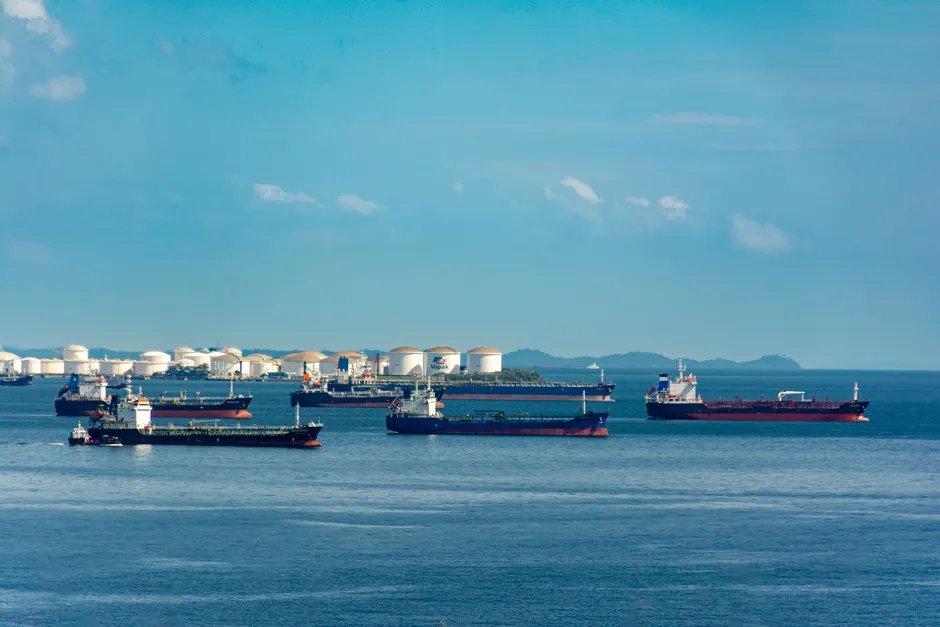
The Strait of Hormuz is a narrow passage of water between Iran and Oman. About one-fifth of the world's oil supply travels through it — roughly two miles wide at its narrowest point. Think of it like a single highway that handles a huge portion of global traffic with no detour available. There is no easy alternative route: other pipelines exist, but they cannot handle the full volume of oil that the Persian Gulf nations want to ship. When this strait closes — or even when people worry it might close — oil prices rise, shipping insurance costs go up, and countries that depend on Gulf oil have to pay more.
Iran's statement on June 20 is significant because it says the closure is a legal response to the United States breaking an agreement, not just a reaction to the military strikes. This framing is important for diplomacy: it positions Iran as the injured party following rules, rather than as a country arbitrarily blocking an international waterway. What the actual agreement says remains unknown to the public.
The Navy's warning to ships adds another layer. Insurance companies that cover shipping (like Lloyd's of London) quickly change their risk ratings for the Gulf when they hear threats like this. Even without any actual attack, the fear of being caught in Iranian waters can cause shipping companies to avoid the route entirely. Fear alone can stop traffic without a single shot being fired.
The ten-day gap between the first closure announcement and the second suggests the United States and Iran tried to work something out in private. The second announcement indicates those talks did not succeed. This creates a practical problem: other countries will now have to decide whether to pressure the US or Iran to back down — and that choice depends on understanding who actually broke the agreement, a detail nobody outside the two governments yet knows.
For people who trade oil and run ships, the big question is whether Iran really intends to stop traffic or is simply using the closure threat as leverage to get concessions before reopening the waterway. Both scenarios are dangerous. A mistake by a ship captain, a military commander, or a politician facing domestic pressure could turn this standoff into an actual confrontation that spirals out of control. The Strait has never been fully closed in modern times, though the 1980s saw serious disruptions.
What happens next will likely depend less on what Iran and the US decide alone and more on the positions of China, Japan, South Korea, and India — countries that buy huge amounts of Gulf oil. If any of these nations can find a neutral mediator to reframe the disagreement, de-escalation might still be possible. But if a maritime incident occurs first, that window closes.