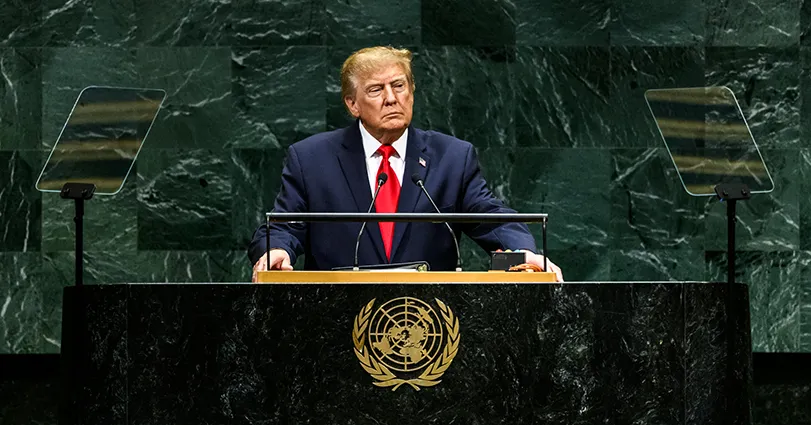
What Trump Said at the UN About Iran, Cuba and Venezuela
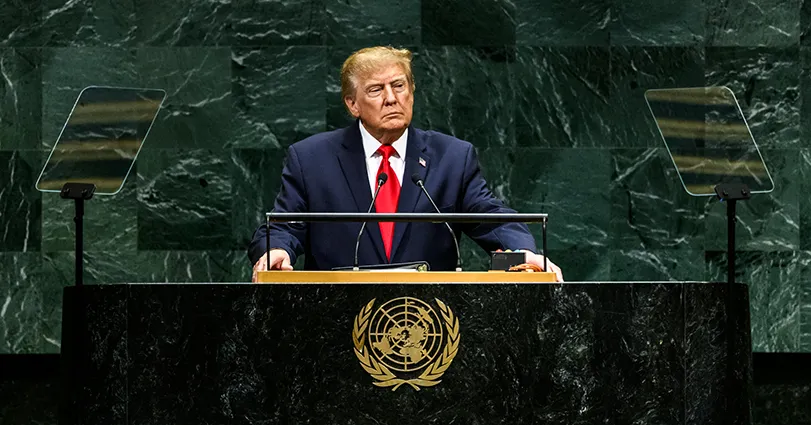
Donald Trump told the United Nations on September 22, 2026, that Iran must make a deal or face destruction. He spoke for 40 minutes at the 81st session of the U.N. General Assembly, the yearly meeting where world leaders address all member states. The White House billed the speech as a statement that American strength and resolve is back under the title "President Trump at the United Nations: 'While Others Have Talked, I Have Acted'" The White House. UN News summarized it as a defense of military action against Iran and Venezuela paired with a call for a rebrand of AI UN News.
Eleven minutes into the speech, Trump said he had "a big decision to make" over Iran The Guardian. He asked three questions: "Will a deal be made with Iran that lets them rebuild, and create a far greater country than it ever was before?" "Or do I annihilate the Islamic Republic and do it quickly, never giving them a chance to kill and destroy people and countries again?" "Do I drive them into hell with no chance of survival and no hope of future greatness or generations?" Reuters described this as a warning that he could 'annihilate' Iran without a peace deal Reuters.
Trump also said U.S. and Iranian officials met on Tuesday, September 22, 2026, shortly after his speech AP. He said U.S. envoys met an Iranian delegation for 3 hours on September 22, 2026 and said it went very well Times of Israel. He told the General Assembly that a deal with Iran is possible after the midterm elections CNN. He left the choice open.
The speech looked back to war and protests earlier in the year. The Guardian reports Trump decided to go to war against Iran in February. Iran had anti-government protests last January, weeks before the war. Trump said in the speech: "The same regime slaughtered over 72,000 of its citizens this year" in reference to those protests. He has in the past threatened to send Iran "to the stone age" or end its civilization.
Trump said twice that Iran's religious leadership had held power for 51 years. Iran's Islamic revolution, which removed Shah Mohammad Reza Pahlavi and installed the current system, happened in 1979, 47 years before 2026.
Trump also spoke about Cuba and Venezuela. He predicted the quick collapse of Cuba's communist government. Members of the Cuban delegation were seen leaving the hall as Trump discussed Cuba. Trump said U.S. Secretary of State Marco Rubio is handling talks with Cuba and is "deep into negotiations." On Venezuela, Trump defended military action in his September 22 speech. He also called for a rebrand of AI.
The broader context here is about how Trump used the speech. He made a harsh public threat, destroy or rebuild Iran, and then held a private meeting that his side called positive. It is a bit like haggling by threatening to walk away while still talking. It puts pressure on Tehran, shows strength to voters and allies, and keeps talks open until after the midterms.
What this could mean for diplomacy at the U.N. is still taking shape. Walkouts are a common form of protest at the General Assembly, and the Cuban exit fit that pattern. More important is the legal question around the threat and use of force. Defending past strikes on Iran and Venezuela while warning of future destruction and predicting collapse in Cuba tests U.N. rules on force. Whether the three-hour meeting leads to real talks or only delays the next decision will shape how other countries read U.S. promises in New York.