What Did Trump Say About Iran at the U.N.?

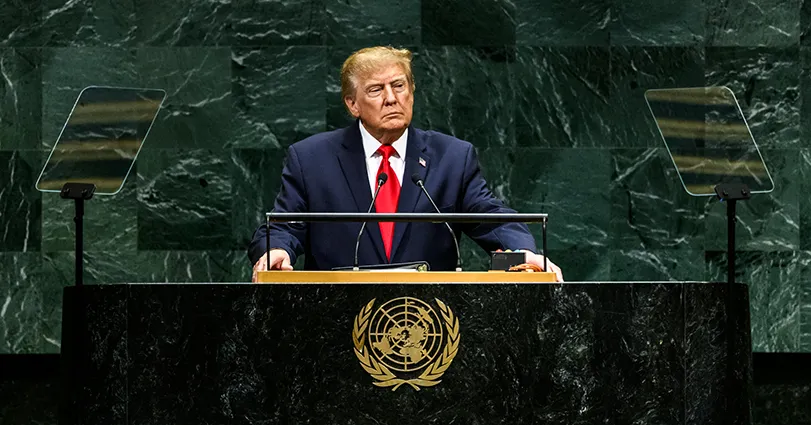
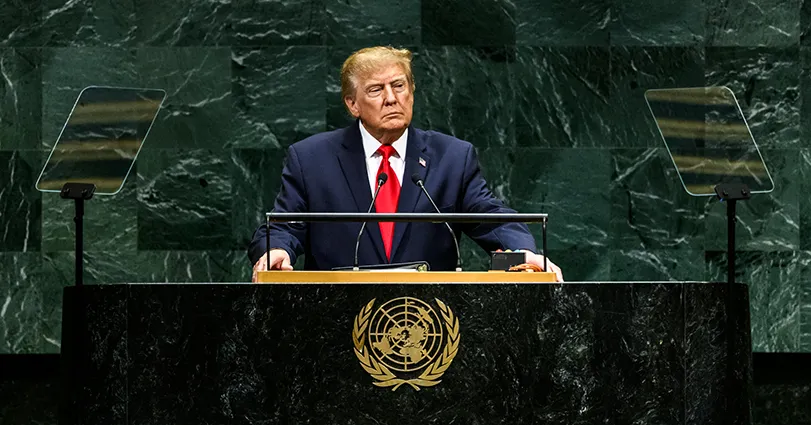
U.S. President Donald Trump told the United Nations in New York on 22 September 2026 that America faced a choice on Iran: make a deal with Tehran or 'annihilate' it. The New York Times
In that same Tuesday speech, he defended recent U.S. military action against Iran and Venezuela. U.N. News He later said the United States and Iran met after his speech. AP
The September 2026 gathering was the 81st General Assembly, the U.N.'s yearly meeting. ABC News Nearly 130 world leaders came to New York for the week. Reuters The speech period, called the General Debate, opened Tuesday, 22 September and was set to run through Saturday, 26 September, with events listed for Wednesday, 23 September 2026. U.N. Web TV
The Trump administration said top Iranian officials could attend the Assembly in New York. Reuters Iranian Foreign Minister Abbas Araghchi was at U.N. Headquarters in New York City on 22 September 2026. ABC News Iranian President Masoud Pezeshkian was set to speak on 23 September 2026. The New York Times
Ukraine's president and Argentina's president were set to speak that same day, 23 September 2026. Sky News Diplomats said the U.N. Security Council, the small U.N. group for peace and safety, might hold a private meeting with Arab leaders that week with Iran expected as the key topic. Reuters The New York Times called its 22 September live report 'As Trump Threatens Iran, Other Leaders Warn of Deep Divisions'. The New York Times
The broader context here is simple. Think of this week like a big town meeting. Leaders make loud public statements. Then they have quiet chats in the hall. A meeting right after a strong speech fits that habit. There are two tracks to watch.
Looking at what this means for diplomats there, timing is tight. Iran, Ukraine and Argentina all speak on 23 September. A small private meeting would be less showy. Public words add pressure. Private talks test ideas.
In my view, the key question is practical. Tough talk can please people at home. It can also push the other side. The danger is confusion. Tehran may hear a final warning when Washington meant pressure. So diplomats will ask simple questions. Who met. How senior were they. Was another meeting set.
Looking at what this means for the days ahead, focus will split. Public speeches are on the record. Private meetings are for testing. When both are about Iran, messages cross quickly. That does not stop a deal. It affects how a deal would be built and shared.