The U.S. Military Is Now Attacking Drug Boats—Here's Why That Matters
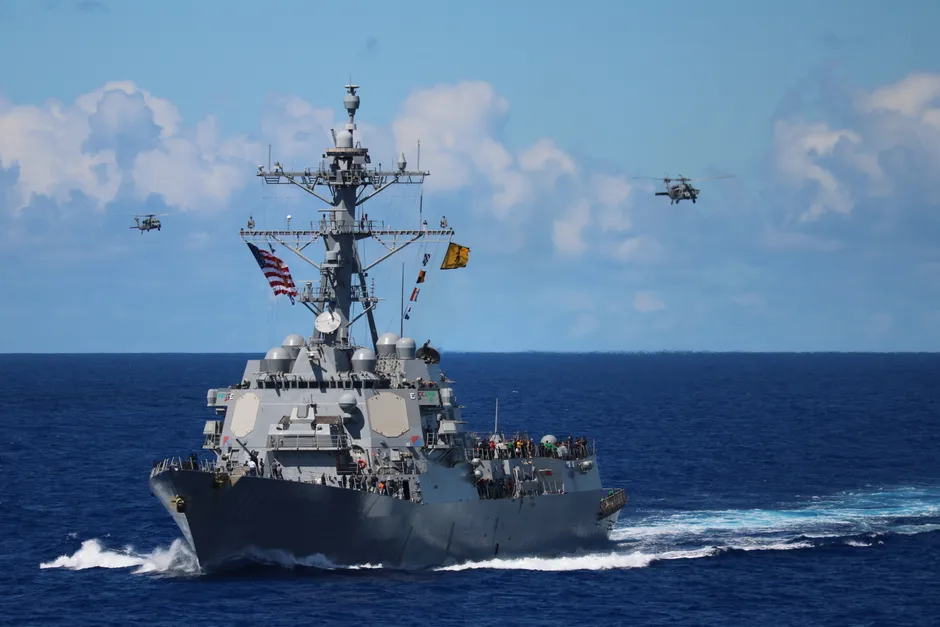
In June 2026, the U.S. military killed three people in a strike on a boat in the Eastern Pacific Ocean. American forces said those killed were narco-terrorists, Reuters reported. The operation was carried out by Joint Task Force Southern Spear, a military unit focused on stopping drug trafficking at sea.
This was not the only strike. In May 2026, a similar attack killed two people and left one survivor, Reuters reported. In December 2025, another strike killed two people and left six survivors, AP News reported. There was another strike near Costa Rica in March 2026, AP News noted. This is not happening once in a while—it is happening regularly.
A New Way of Doing Things
For decades, the U.S. Coast Guard and military stopped drug boats by boarding them, searching for drugs, and seizing the cargo. Those operations follow rules set by international maritime law and agreements between countries. Now the military is using lethal force instead—and that requires a different legal justification.
The government uses a terrorist designation—a formal legal label—to make this possible. When a group is called a terrorist organization, the military can use the laws of war instead of criminal law. Under laws of war, soldiers can treat enemy combatants as targets without needing as much evidence and without having to try to arrest them. In this case, that means the crews on suspected drug boats can be fired upon.
Congress noticed and started asking questions right away. Lawmakers from both political parties wanted to review what was happening, AP News reported in late November 2025. A senior military officer later told Congress there was no order to "kill them all"—AP News reported—which showed lawmakers were worried about what the military was allowed to do.
The Regular Work Continues
The military strikes are just one part of the effort to stop drug trafficking. The Coast Guard still boards boats, searches them, and takes drugs off them. On June 22, 2026, the Coast Guard cutter Resolute unloaded about 2,570 pounds of cocaine worth more than $19.3 million, USCG reported.
The Coast Guard cutter Bertholf completed three months of patrol during which crews boarded or approached 24 suspected drug boats—roughly two boats per week. The same Coast Guard ships also rescue people. On April 3, 2026, Coast Guard crews rescued three federal agents and two boaters off Puerto Rico. On June 1, 2026, they rescued someone whose boat caught fire near St. Thomas.
Why This Change Is Important
Drug smugglers have always found ways around Coast Guard boarding operations. They use fast boats, semi-submersible vessels (boats that sit low in the water), and spread their shipments across many small crews so if one boat is caught, the network keeps running. But if boats themselves become targets for missile strikes, smugglers have to rethink their entire strategy.
It will take time to see whether this new approach actually stops more drugs from reaching the U.S., or whether smugglers simply find different routes and methods. What we know now is that the military has launched multiple lethal strikes in the Eastern Pacific in just six months. How Congress responds—and whether it places limits on these operations—will shape what the U.S. military can do next.


