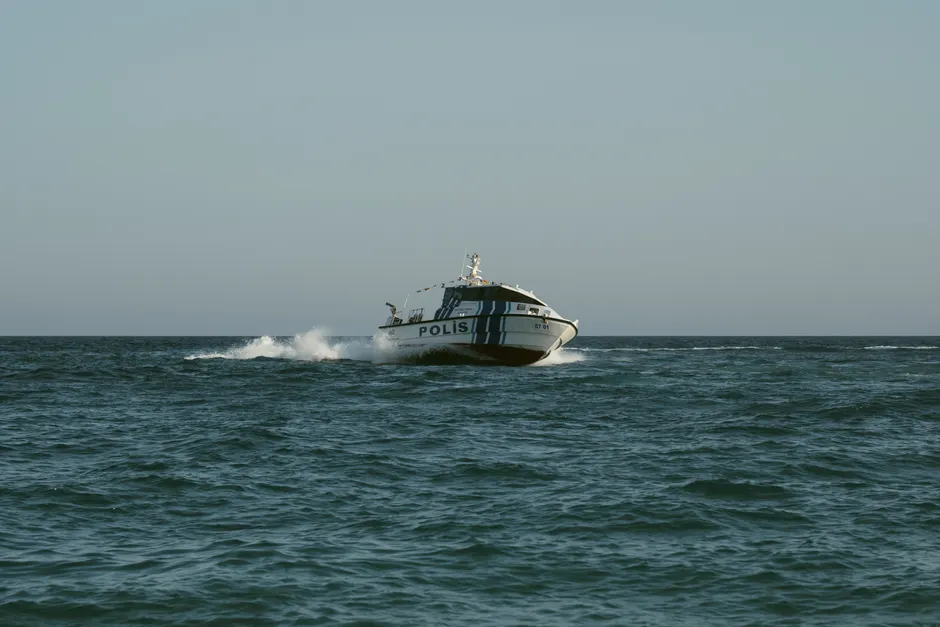
What Happened When a Chinese Boat Hit a Philippine Sailor

A Philippine navy sailor was hit in the head with a wooden baton by Chinese coast guard personnel during a confrontation near Second Thomas Shoal on July 20, 2026. This raised tensions between Beijing and Manila at a time when Southeast Asian foreign ministers, including China's Wang Yi, had gathered in the Philippine capital for talks where South China Sea disputes were expected to be a main topic Al Jazeera.
The incident happened during a routine Philippine resupply mission to a military outpost at Second Thomas Shoal, a submerged reef where the Philippines keeps a grounded warship called the BRP Sierra Madre as a station for its troops Reuters. The Philippine military said a navy rubber boat was damaged in the encounter, in addition to the injured sailor Reuters. Other Filipino sailors at the shoal captured the assault on video AP News.
The Philippine account, shared by Philippine Coast Guard spokesperson Commodore Jay Tarriela, says a Chinese coast guard boat approached the outpost and harassed Philippine personnel ABS-CBN News. The Philippine military says Chinese coast guard personnel aggressively maneuvered against the resupply operation and struck a sailor in the head with a wooden baton.
China's coast guard rejected the Philippine account. Beijing says two Philippine boats ignored warnings and rammed a Chinese patrol vessel first Al Jazeera. The two sides telling different stories is a familiar pattern at Second Thomas Shoal, where both countries routinely call their own actions defensive and the other side's provocative.
The United States responded quickly. The State Department issued a statement calling China's actions "dangerous and aggressive" against Philippine navy personnel Al Jazeera. A State Department spokesperson said China's pattern of provocation against lawful Philippine maritime operations undermines regional peace and contradicts China's commitments to resolve disputes peacefully.
The timing makes the situation more tense. Southeast Asian foreign ministers were meeting in Manila when the confrontation happened, and China's Wang Yi was among those attending. Maritime tensions were already expected to be a central topic of discussion, and the incident added urgency to talks that might otherwise have stayed on a calm diplomatic track Al Jazeera.
The legal basis for Manila's position is well established. Under the United Nations Convention on the Law of the Sea, or UNCLOS, a treaty that defines countries' rights in ocean waters, Second Thomas Shoal lies within the Philippines' exclusive economic zone, an area where a country has special rights to manage resources. China has signed this treaty. A 2016 international court ruling backed the Philippines' maritime rights, but China did not take part in those proceedings and has consistently rejected the ruling Al Jazeera.
Looking at what this means more broadly, a few things stand out. The use of close-quarters physical force, with handheld weapons against personnel, is a notable shift from earlier encounters that mostly involved water cannons, lasers, and boats maneuvering against each other. If the video footage is confirmed and shared widely at the ASEAN talks, it makes it harder for participants to treat these incidents as routine or easily contained.
The broader context here also involves the Mutual Defense Treaty between the Philippines and the United States, an agreement that obliges both countries to support each other if one is attacked. The State Department's quick and pointed language, calling China's actions a "pattern of provocation," signals that Washington is prepared to treat these encounters not as one-off events but as a sustained challenge to the regional order. Whether that stance turns into more concrete action is an open question for Manila.
For the ASEAN foreign ministers meeting in Manila, the confrontation brings a live crisis into what are usually calm discussions. Wang Yi's presence means China's top diplomat is in the room while Beijing's coast guard operates in contested waters nearby. The Philippines can now point to video evidence of the encounter, which may influence how other ASEAN members shape their own statements in the coming days.