Two Major Earthquakes Hit Venezuela: What Happened and Why the Danger Could Get Worse

On June 24, 2026, two powerful earthquakes struck north-central Venezuela within seconds of each other. The first measured 7.2 on the magnitude scale; the second, 7.5. At least 32 people died, and the government declared a state of emergency, according to Reuters.
The earthquakes centered near the city of San Felipe, about 100 miles west of Caracas, Venezuela's capital. The second earthquake's deepest point was 28 kilometers (about 17 miles) southeast of Yumare, per USGS. When two earthquakes this strong hit the same fault system within seconds, they amplify each other's damage — like two waves crashing into each other and becoming larger rather than canceling out. This made the destruction far worse than either earthquake alone would have caused.
What the Earthquakes Damaged
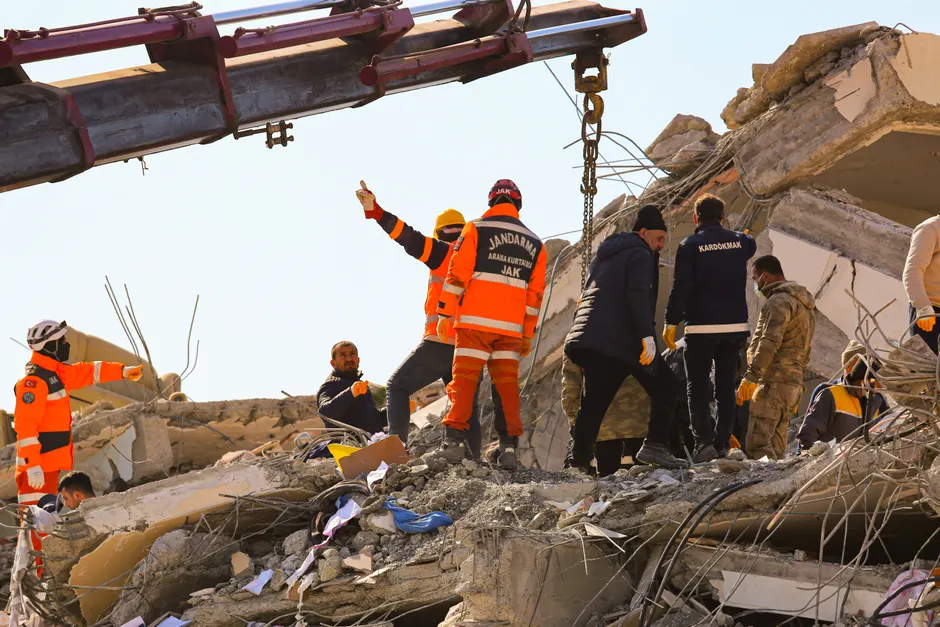
Buildings partially collapsed in several towns. CNN reported structural failures in Catia La Mar and La Guaira, densely packed port cities that are where ships bring goods in and out of Caracas. Electricity and phone networks went down across the region, making it harder for rescue teams to coordinate and harder to get accurate counts of who was hurt or killed.
Tsunami warnings were briefly issued after the earthquakes, Reuters reported, which is standard when underwater earthquakes or earthquakes near coasts happen in the Caribbean. The warnings were lifted quickly, but the initial alert caused evacuations in low-lying coastal areas anyway, which slowed down rescue efforts.
Government teams began search and rescue operations right away, and the state of emergency gives authorities the power to move military resources quickly and accept help from other countries without the usual red tape — critical tools when time matters, according to LogCluster.
Why More People May Have Died Than We Know Yet
The 32 deaths reported by Reuters on June 24 are likely too low. When earthquakes this large happen, early numbers only count people rescue workers have actually found. Many more people may be trapped under collapsed buildings in areas where power and phone lines are down — places rescue workers haven't reached yet. Deaths in major earthquakes often climb sharply over the next two or three days.
Venezuela's buildings make this worse. Years of economic problems and weak enforcement of building codes have left many older concrete apartment buildings fragile. La Guaira and Catia La Mar are already crowded neighborhoods sitting on ground that can shake more intensely than other areas. That combination — weak buildings, tight density, and ground that magnifies shaking — meant the two earthquakes did far more damage than they might have elsewhere.
Getting Help in, Getting Rescue Out
The state of emergency declaration matters procedurally. It lets the Maduro government mobilize military teams and request international aid without bureaucratic delays. But that legal authority only works if the government has enough resources to actually use it.
The activation of LogCluster — the United Nations' humanitarian logistics network — signals that aid organizations think Venezuela's own rescue capacity has been stretched too thin. LogCluster only shows up when national systems are overwhelmed.
International countries will likely offer help, but politics could complicate things. Venezuela has tense relations with the United States, and the government has been skeptical of Western aid in the past, worried about hidden conditions. Allies like Cuba, Russia, and China can help without those political complications, but they don't have the large-scale disaster response teams that the U.S. and European countries can deploy.
Why This Area Gets Earthquakes
This part of Venezuela sits where two giant pieces of the Earth's crust meet and grind against each other — the Caribbean plate and the South American plate. The Boconó fault system, which runs through north-central Venezuela, accommodates that motion. The earthquake sequence near San Felipe and Yumare is consistent with stress that has built up and suddenly released along this fault.
For now, the focus is on keeping people alive and checking whether the damage to La Guaira's port infrastructure is severe. That port is where much of Venezuela's imported food and goods come through. Serious damage there could squeeze the country's supply lines even more.