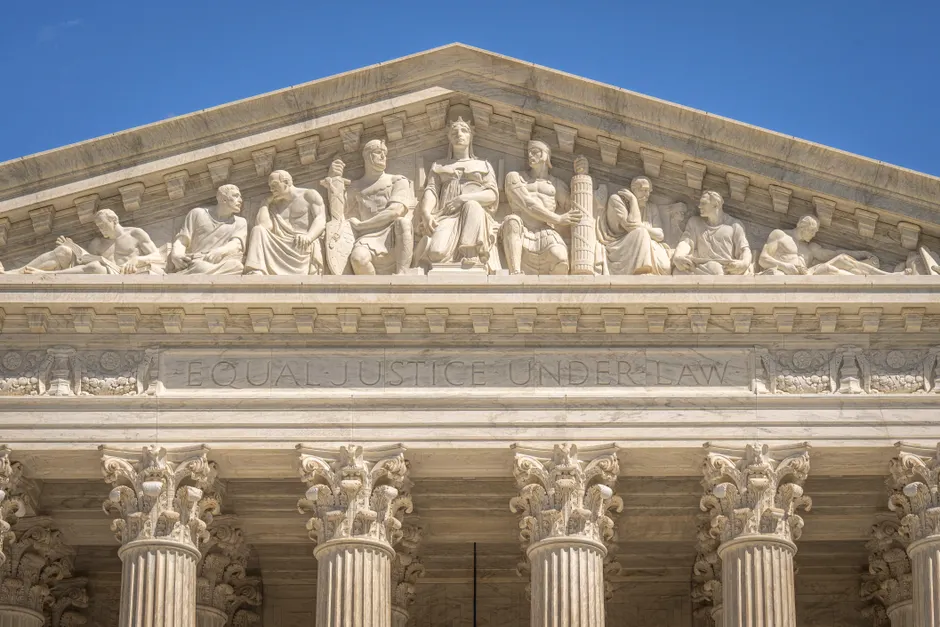
The Supreme Court May Finally Rule on State Gun Bans. Here's What That Means.

The Supreme Court May Finally Rule on State Gun Bans. Here's What That Means.
Connecticut has a law that bans certain types of guns — semi-automatic rifles, pistols, and shotguns — from being sold or owned in the state. That law is now at the Supreme Court under case number 25-421, and Connecticut's defense of it was filed on December 18, 2025. This case puts the nation's highest court in a position it has mostly avoided until now: deciding whether states are allowed to ban whole categories of guns.
How We Got Here
Three years ago, in 2022, the Supreme Court changed how the nation thinks about gun rights. In a decision called Bruen, the Court said that gun laws must follow a new test: they are constitutional only if they match the country's historical tradition of firearm regulation. This wasn't just a technical shift. It threw out the old way judges had approved gun restrictions, including bans on assault weapons.
Before Bruen, courts used a balancing test: they'd ask if the government's reason for a gun restriction was important enough to justify limiting gun rights. That test allowed most state assault weapon bans to survive. The Bruen test is different and stricter. It asks: did America have similar gun restrictions in 1791 — when the Bill of Rights was written — or in 1868, when the Fourteenth Amendment was added? If the answer is no, the law may not pass constitutional review.
What Connecticut's Law Actually Covers
Connecticut's ban applies to guns that can fire more than one bullet per trigger pull (called selective-fire weapons) and to semi-automatic rifles, pistols, and shotguns that meet certain design features. That's a broad category. The wider the net a state casts, the harder it is to find a historical parallel in the founding era or Reconstruction period — the two time periods Bruen tells courts to examine.
The Two Sides of the Argument
Connecticut's legal team will argue that the banned weapons fall outside constitutional protection. The Bruen decision itself drew a line between "weapons in common use for self-defense" — which are protected — and "dangerous and unusual" weapons, which are not. Connecticut will probably claim the banned rifles and shotguns belong in the second category.
The gun rights side will point to something else: federal appeals courts have not agreed on how to apply Bruen's test to these bans. The Fourth Circuit, Seventh Circuit, and Ninth Circuit have reached different conclusions. When lower courts split like this, the Supreme Court often steps in to settle the question.
What Happens Now
The procedural path is clear. Because Connecticut filed its response, the case is ready for the Supreme Court's attention. The justices can deny the case (leaving Connecticut's law in place), agree to hear it, or take other procedural steps. They have not yet decided to take it on.
The fact that gun rights lawyers filed briefs before the Court even agreed to hear the case signals they view this as important enough to invest in now. A similar challenge to another state's assault weapon ban is also pending under case number 25-5150.
Why This Matters Beyond Connecticut
The practical implications are substantial. If the Supreme Court rules that Bruen's historical test does not allow state assault weapon bans, many states would have to reconsider their laws. California, Maryland, Massachusetts, and New Jersey all have similar restrictions on the books. If the Court rules the other way, those states gain solid constitutional ground.
The Court hasn't signaled how it views these cases yet. Even after Bruen, the justices have turned away most Second Amendment petitions. They may let lower courts decide more cases first before the Court takes this on. But with two active cases and disagreement among federal appeals courts, the conditions are now in place for the Supreme Court to take action. Whether the justices will do so — and when — remains an open question.