Canada Just Ordered 12 New Submarines. Here's Why That Matters.
Canada Just Ordered 12 New Submarines. Here's Why That Matters.
Canada announced on July 6, 2026, that it will buy 12 new submarines from a German-Norwegian company called ThyssenKrupp Marine Systems (TKMS). Prime Minister Mark Carney made the announcement in Halifax before heading to a NATO meeting. The upfront cost is over $12 billion U.S., and when you add in 50 years of repairs and support, the total could reach $70 billion.
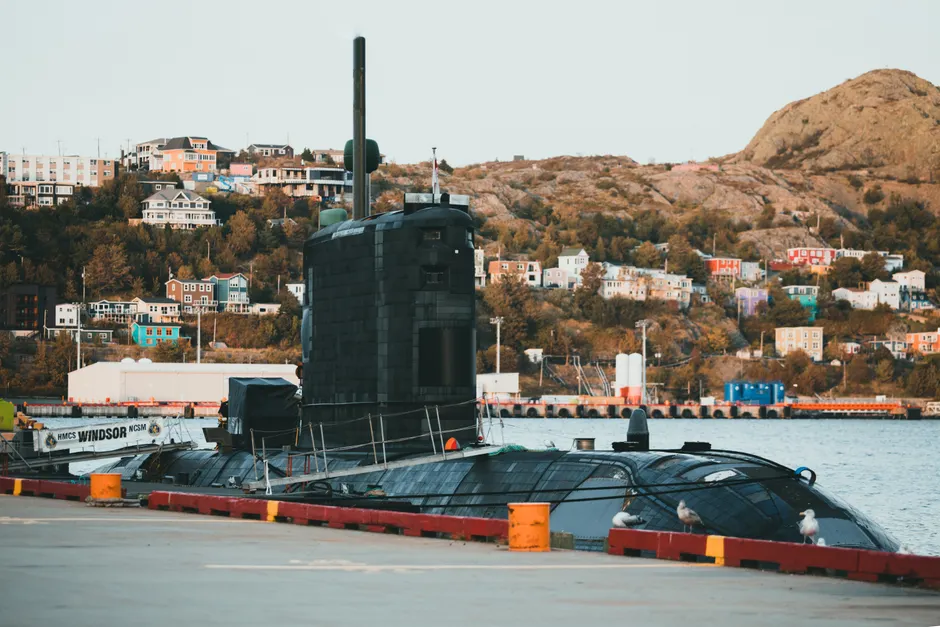
This is significant because Canada has never bought brand-new submarines before. The country has been using four older submarines, purchased secondhand from the British Navy in 1998. Only one or two of those are usually ready to use at any given time. Twelve new submarines, arriving over the next 10 to 20 years, would dramatically change Canada's ability to patrol its waters.
Two Different Submarines, Two Different Jobs
The contract came down to a competition between two companies: TKMS, based in Germany and Norway, and South Korea's Hanwha Ocean. Each company offered a different type of submarine designed for different purposes.
TKMS offered the Type 212CD. Think of it as a small, quiet submarine built for sneaking around in tight spaces — like the shallow waters around Canada's Arctic and the Northwest Passage. It uses special technology that lets it run quietly without needing nuclear power. Norway has used similar submarines for years in the demanding waters of the North Atlantic.
Hanwha offered the KSS-III Batch-II, which is larger and built to travel long distances in deep ocean. It carries more weapons and can stay out at sea for longer missions. On paper, it sounds like a ship built for big-ocean power, not the smaller, trickier Arctic waters where Canada needs to operate.
Canada's main priority is Arctic surveillance — being able to see what's happening in the Northwest Passage and assert control over those waters. The smaller, quieter TKMS submarine lines up better with that mission.
There was also a NATO angle. TKMS is part of the Western alliance; South Korea is not. Germany and Norway argued that choosing a NATO submarine would make Canadian boats work better alongside American, British, and other allied submarines. That argument carried weight in Ottawa.
The Lobbying War
Both companies pulled out all the stops to win. Hanwha promised to buy steel from Canada and use it to build armoured vehicles here. The company even ran television ads featuring a well-known Canadian journalist, Peter Mansbridge, to make its case to the Canadian public.
TKMS took a different approach. Instead of just promising the submarines, the company offered to invest in other areas — rare earth metals, mining, artificial intelligence, and batteries for electric vehicles. It was less a straight arms deal and more a signal of broader economic partnership.
What Happens Now
An announcement of a choice is not the same as a signed contract. Canada and TKMS still need to work out the details: the exact price, how much of the work will happen in Canada, whether Canadian workers will learn German technology, and other terms. This negotiation usually takes two to three years for deals this big.
The submarines won't start arriving until the 2030s at the earliest. They'll be delivered one or two at a time over a decade or more. That means Canada's undersea capacity will grow slowly, not overnight.
Canada's military spending is rising fast. In March 2026, the government announced it had crossed the NATO target of spending 2% of its economy on defence — something it had failed to do for years. The Liberals have now promised to reach 5% by 2035, which would make Canada one of the Western world's biggest military spenders. These submarines are the single biggest item in that spending plan.
There's a political signal here worth noting. A Canadian prime minister announcing a NATO supplier, then heading straight to a NATO summit, sends a message about where Canada stands in the world. Whether that choice also damages Canada's relationship with South Korea — and its broader push to do more trade with Asia — is something to watch in the coming months.


