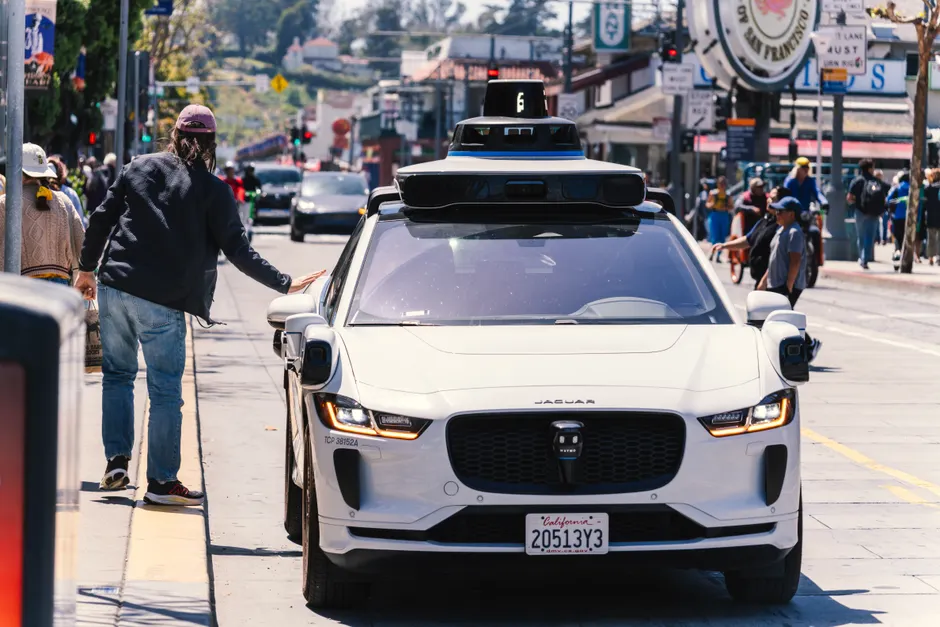
You Can Now Catch a Driverless Robotaxi at the Las Vegas Airport

Waymo has started offering robotaxi rides to and from Harry Reid International Airport in Las Vegas. The company announced the launch on Wednesday, October 21, 2026. At first, only a few riders can use it. Waymo said everyone will be able to ride after that early phase.
A robotaxi is a self-driving car you book with an app. No one sits behind the wheel. At the airport, pickups and drop-offs happen in special zones at Terminal 1 and Terminal 3. The airport's website says the Terminal 1 pickup is on Level 2 of the parking garage. It also describes rides between the airport and some destinations on the Strip, the city's main road of casinos and hotels (Harry Reid International Airport).
This is Waymo's sixth major airport. It already runs at Phoenix Sky Harbor, Nashville International, San Antonio International, San Francisco International and San José International. In Las Vegas, the service covers an area of 24 square miles (TechCrunch).
Las Vegas has had several robotaxi companies for a while. In November 2025, Reuters reported that Waymo was offering free rides on and around the Strip. Its fleet had grown past 1,500 vehicles at that point (Reuters). Amazon's Zoox started free public rides on the Strip on September 10, 2025 (Reuters). Reuters later reported that Zoox planned to start charging fares in early August 2026. The price was expected to be similar to standard ride-hailing services (Reuters). Zoox also announced rides to and from Harry Reid, scheduled to start on September 3. TechCrunch reports that Zoox already offers airport rides.
Uber and Motional launched a commercial robotaxi service in Las Vegas on March 13, 2026. Uber users in the city can request a driverless electric car at no extra cost (Reuters). In August 2026, Nevada regulators approved permits. They allow Tesla and Uber to put thousands of robotaxis on Las Vegas streets within the next year.
Airports are harder than city streets. Cars have to wait in marked zones at the curb. They have to reach upper parking levels. Demand jumps when flights land. Passengers carry bags. Starting with a small group of riders lets the company find problems before everyone can use the service.
In my view, the airport is where the robotaxi idea will be judged most closely. A person who has never ridden in a driverless car is more likely to try one on a 20-minute trip to the airport than on a short errand. An airport also gives the company many passengers in one place. The same crowds mean that travelers, airport staff and regulators will watch every pickup.
The broader context here is one city with at least three robotaxi companies, each using different technology and business plans. More permits are on the way too. Whether this leads to better service, or just more cars circling the same curbs, will show up in the next year of data. What is already clear is that a traveler landing at Harry Reid can now, at certain terminals and for certain destinations, skip the rideshare line and get into a driverless car. For years, the industry promised exactly this. Now it is happening at the curb.