Waymo's Self-Driving Taxis Now Operating in Four New US Cities
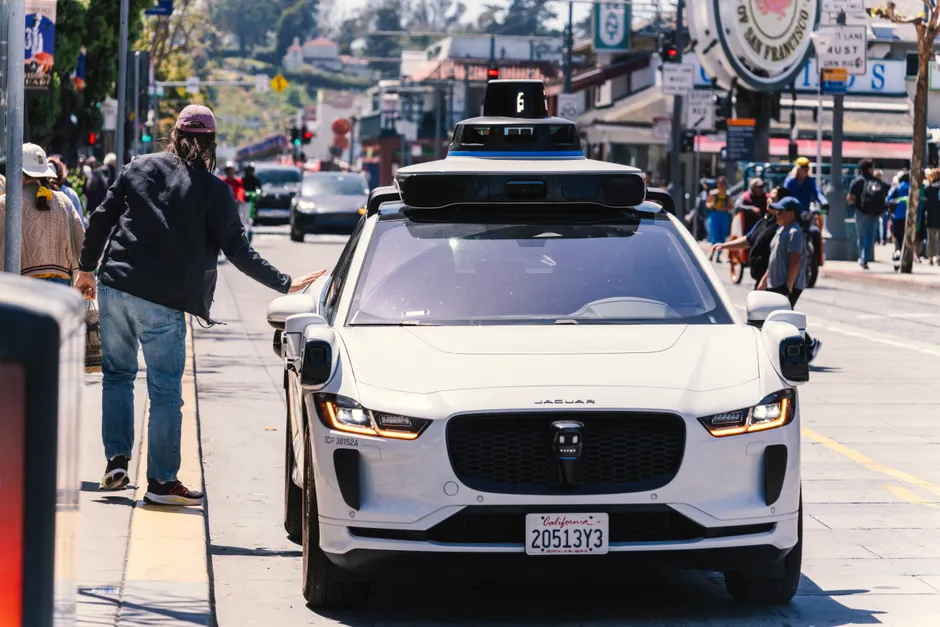
Waymo, the autonomous vehicle division of Alphabet (Google's parent company), started running driverless taxis in Las Vegas on July 8, 2026. Three more cities — Denver, San Diego, and Tampa — followed within days, according to Waymo and confirmed by CNBC. Employees can use these driverless services immediately; the general public will have access shortly after.
Waymo has already been running driverless taxis in Dallas, Houston, Orlando, and San Antonio. With these four new cities, Waymo will soon operate in more than 10 US cities with no human driver at the wheel. The company is also testing in London — its first venture outside the United States.
At the same time, Waymo's partnership with Uber is ending in Phoenix, where riders could previously request a Waymo car through the Uber app. Uber is now developing its own self-driving taxis through deals with two other companies: Lucid and Nuro. That puts Uber in the odd position of offering competitors' driverless cars in some cities while building its own in others.
Why Waymo says it's ready
Waymo timed this announcement to match a new safety report. The company analyzed over 220 million miles driven by its driverless cars across five cities through March 2026, now including Atlanta for the first time. Waymo now completes more than 4 million autonomous miles every week. Atlanta alone accounts for over 5.4 million miles of that total, per Waymo's blog.
Compared to human drivers, Waymo's self-driving system had 94% fewer crashes that caused serious injury or death. It also had 82% fewer crashes that set off airbags, and 82% fewer crashes with any injury at all. For people outside vehicles — pedestrians, cyclists, and motorcyclists — the differences were similarly large: 93% fewer injury-causing crashes with pedestrians, 84% fewer with cyclists, and 84% fewer with motorcyclists.
Atlanta's numbers are large enough now to tell their own story. That city saw 94% fewer airbag-deployment crashes and 86% fewer injury crashes than the human baseline. Carol Flannagan, a researcher at the University of Michigan who studies transportation, said Waymo's numbers are consistent across all its cities and that the company's method for comparing autonomous and human driving is sound.
Waymo uses these figures to explain what fewer crashes means in practice: roughly one fewer serious injury crash every eight days, about six fewer airbag-deployment crashes per week, and roughly thirteen fewer injury crashes per week compared to human drivers covering the same distance. Over its entire operating history, Waymo estimates it has prevented 47 serious or fatal crashes beyond what human drivers would have caused. Before launching in any new city, Waymo puts its self-driving system through a formal safety review with specific success criteria it has published online.
What's happening now
In these four cities, Waymo is starting with employees only — a careful testing phase, not a full public launch. The company has used this cautious approach in every city before opening to everyone. The bigger shift is that Waymo now operates across enough US cities, in enough different weather and road conditions, that its safety numbers are getting stronger and harder to argue with.
These four new cities are mostly in the South and Southwest, which means Waymo gets to test its cars in hot weather, on wide roads, and around busy areas like casinos. That's different from where Waymo started — San Francisco and Phoenix — so the experience matters.
London is a different story entirely. Narrow streets, roundabouts, and driving on the left side of the road are all new to Waymo's system. No timeline for when driverless service will actually run there has been announced.
Waymo and Uber's split in Phoenix shows something bigger happening in the self-driving taxi market: companies are deciding who gets to control the customer relationship. Right now, it is not clear whether Waymo's approach — riders use its own app directly — or Uber's model — a marketplace that brings together different services — will win more customers. Neither company has taken sides publicly.


