Self-Driving Cars Are Getting in the Way of Ambulances and Fire Trucks. Federal Regulators Just Stepped In.
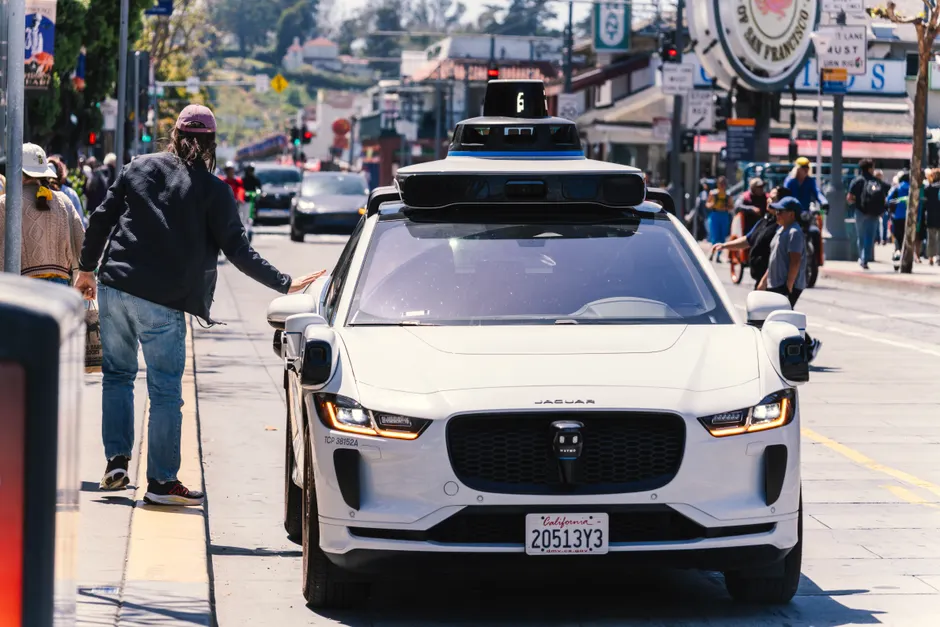
On July 8, 2026, the federal agency that regulates vehicles ordered self-driving car companies to fix a concrete problem: their cars are blocking emergency responders. Administrator Jonathan Morrison told manufacturers they have until the end of the month to show they can solve it.
The problem is straightforward. Autonomous vehicles have been driving into active emergency scenes, blocking ambulances and fire trucks, and failing to recognize flashing lights, flares, and other emergency signals. The federal agency, NHTSA, says it has found "a clear pattern" of this happening TechCrunch. In one case documented earlier this year, a police officer had to physically move a Waymo vehicle out of the way while responding to a mass shooting TechCrunch. In another, an officer in Dallas moved a self-driving car to clear a path for first responders rushing to a building explosion Fox4.
The federal letter is blunt. "The inability to detect and appropriately respond to such situations represents a functional insufficiency," it states, and notes that "emergency scenes are not rare or extreme edge cases" TechCrunch. The agency also called the problem "a danger to the general public" The Verge.
Notably, the letter does not name any specific company, nor does it spell out penalties. But it draws a comparison: drivers who block law enforcement face fines and jail time. That suggests the regulator is considering similar consequences for companies whose self-driving cars don't improve TechCrunch.
Why this is happening
Self-driving cars work by using cameras and sensors to see the road and understand what's around them. They're trained to recognize pedestrians, bicycles, and other cars under normal driving conditions. But an emergency scene is chaotic: cones placed haphazardly, smoke obscuring lane markers, officers using hand signals in ways that aren't standard. These things fall outside what the cars were trained to recognize, so they don't know how to respond.
This isn't just a federal problem
California reached the same conclusion independently. Starting July 1, 2026, a new state law requires self-driving cars operating there to detect first responders and bring themselves to a safe stop California Assembly ATRN. The fact that regulators in two different places arrived at the same fix on roughly the same timeline suggests this is a real, widespread issue — not a one-off edge case.
Interestingly, the federal government is loosening rules in other areas at the same time. NHTSA is eliminating requirements for things like windshield wipers and visors — equipment designed for cars with human drivers. But it's tightening the rules around recognizing emergency scenes. That's a shift in how regulators think about autonomous vehicles: not as simple replacements for human drivers, but as a different kind of machine altogether, with its own set of safety requirements.


