US Bombs Iran Again—Peace Deal Breaks Down

The United States conducted a second wave of air strikes on Iran early Thursday, July 9, 2026, hitting approximately 90 military targets across the country, including sites in the capital, Tehran. This marks the largest escalation since the US and Iran signed a peace agreement in June 2026, just weeks ago. Al Jazeera reported the developments.
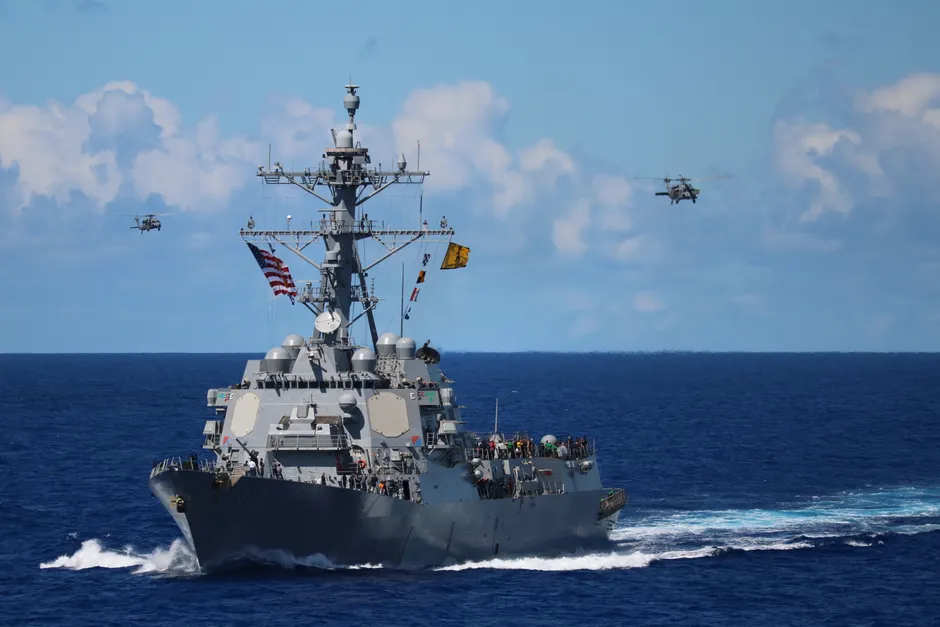
On Wednesday, the US had already launched a major attack, striking about 80 Iranian military targets. More than 60 of those strikes targeted small boats operated by Iran's Islamic Revolutionary Guard Corps (the IRGC, Iran's elite military force). The US military said it was retaliating for Iranian attacks on three commercial ships in the Strait of Hormuz earlier that week—shipping vessels flagged to various nations but carrying cargo in one of the world's most critical shipping lanes. CENTCOM, the US military command in the Middle East, announced the strikes on Wednesday. Thursday's follow-up was described in similar terms.
At least 14 people have been killed across the two nights of strikes, including at least one member of the IRGC, according to Al Jazeera. Iran fired back at US military bases and facilities in nearby Gulf countries. In Bahrain, air raid sirens sounded hours after the second round of US strikes, per Al Jazeera.
The fighting broke out while Iran was holding the funeral of its Supreme Leader, Ayatollah Khamenei, who was killed in US and Israeli strikes back in February 2026. The US has also cancelled an oil export waiver—a special permission that was part of the June peace deal—that allowed Iran to sell oil abroad without severe economic penalties. Removing that waiver undercuts one of the deal's main reasons for existing: to give both sides a reason to stop fighting.
At a NATO meeting in Ankara on Wednesday, President Trump said he thought the peace agreement was "over." He did leave open the possibility that talks could restart. He also said the strikes would not lead to a long-term military campaign. Yet Thursday's escalation to roughly 90 targets happened after he said that—creating uncertainty about whether the US actually intends to limit this conflict.
Why did the fighting start again? Iran attacked three commercial ships in the Strait of Hormuz in early July. But here's where it gets murky. According to Tehran-based analyst Hossein Royvaran, those ships may have accidentally sailed into waters where Iranian crews were clearing naval mines, rather than being deliberately targeted. Al Jazeera reported his assessment. Neither the US nor Iran has clarified what actually happened, and the US military described the incident as an intentional attack.
The Strait of Hormuz is a narrow waterway where roughly one-quarter of the world's oil passes through. It has now become nearly impossible to cross safely. Most ships are now confined to a northern route that Iran has deemed safe. The International Maritime Organization reported that about 6,000 sailors are currently stranded in and around the strait. This shows how quickly a crucial trade route can shut down once military conflict begins.
So where does this leave the peace deal? The June agreement was supposed to prevent this exact situation. Iran would rein in its military; the US would ease the economic penalties (sanctions) on Iranian oil sales. Now that agreement has fallen apart: Iran attacked ships, the US struck back twice with nearly 90 targets total, and the US has formally cancelled the oil waiver. Both sides are now without a clear path to negotiate.
Trump has suggested Washington could still talk to Iran while continuing strikes—a strategy the US has used before, mixing military action with an open door for diplomacy. But Iran is in a different position: it is burying its Supreme Leader and facing American bombs on its own capital. Whether it has any interest in talking right now is unclear. The military losses and the scale of the strikes will shape what Iran decides to do next in the Gulf, especially since the fighting has already spread to neighboring countries like Bahrain.
The cancellation of the oil waiver removes the biggest economic carrot that made the June deal work. It happens at the exact moment when fighting is getting worse, not better. Global oil markets and shipping companies are watching closely to see if that northern route through the Strait of Hormuz stays the only safe passage, and whether those 6,000 stranded sailors will remain trapped there indefinitely.