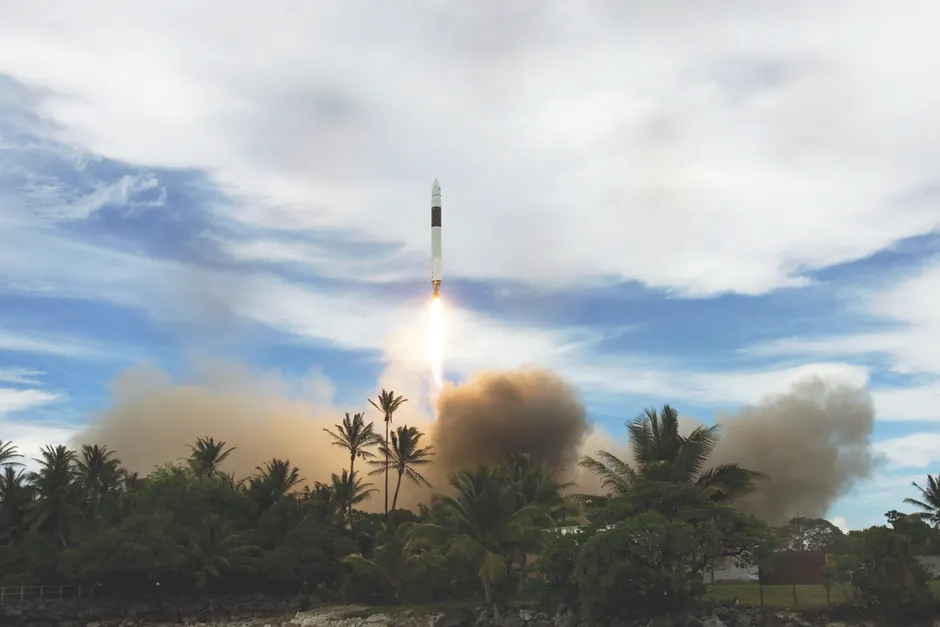
China Caught a Falling Rocket Booster in a Net—Here's Why That Matters

On July 10, 2026, China successfully caught a falling rocket booster in a large net attached to a floating platform off the island of Hainan. This was the Long March 10B, and it happened on the rocket's very first flight, according to state broadcaster China Global Television Network. Bloomberg called it China's first successful sea landing of a reusable orbital rocket.
To understand why this matters, think of it like this: rockets are expensive. They launch once, do their job, and then fall back to Earth and get destroyed. If you could catch them, repair them, and launch them again, you'd save enormous amounts of money. SpaceX has been doing this for years with Falcon 9 rockets—they land themselves back on a platform using engines. China's approach is different and perhaps simpler: the booster doesn't land itself; instead, a net catches it mid-air, the way you might catch a falling basketball in a large blanket.
China has been working toward this for a while. The country attempted its first rocket recovery in December 2025, and officials said they would test a reusable Long March rocket by mid-2026. The July 10 flight fits that plan. The Chinese state contractor that builds these rockets, called CASC, announced back in 2024 that it would test two large reusable rockets in 2025 and 2026—so they are roughly on schedule.
This rocket isn't just for commercial launches. China wants to send astronauts to the Moon before 2030, and this same booster design will help with that program. Because the government is guaranteed to use it for lunar missions no matter what, the rocket's finances work differently than a rocket built only for paying customers. The government demand acts as a safety net for funding.
China is not the only company pursuing this. LandSpace, a private Chinese company, has a rocket called Zhuque-3 that has already reached orbit. It attempted a recovery but did not succeed. However, the company says it plans to catch and refurbish a booster later in 2026. Another private company, iSpace, is building Hyperbola-3 and has tested its landing system on the ground but has not yet tried catching a booster in the air.
Here is what matters for the economics: catching a booster once is impressive, but catching it reliably and cheaply is what actually saves money. SpaceX took years and many failed landing attempts before reusable rockets became routine and affordable. Right now, China has not published any data on how much it costs to repair the caught booster, how long the repair takes, or how many times the same booster can be reused. Until those numbers are public, the July 10 catch is a demonstration of skill—not yet evidence that China can beat the cost of buying new rockets.