What's Happening in the US-Iran Conflict: A Straightforward Guide

On July 16, 2026, the US military fired missiles at an empty oil tanker in the Strait of Hormuz, a narrow waterway between Iran and the Arabian Peninsula. It was the fifth day in a row that the US had struck Iranian targets in the region. The missiles hit the ship's smokestack after it ignored repeated warnings, according to The Guardian.
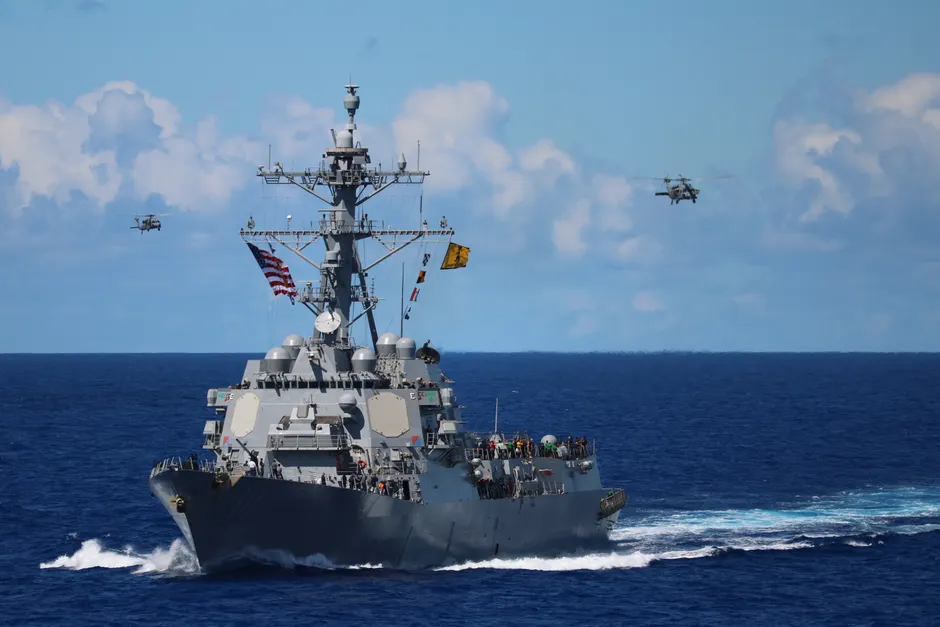
The tanker was trying to reach Kharg Island, Iran's main oil export terminal. But the US had reimposed a naval blockade on Iranian ports the day before, meaning American warships were stationed to stop ships from entering or leaving those ports. US Central Command (CENTCOM) said the strikes targeted Iranian military capabilities "used to threaten vessels freely transiting through the strait of Hormuz, an international waterway vital to global commerce." No specific military unit or named spokesperson beyond CENTCOM was cited.
The same day, the US also struck the Iranian capital. Air defence systems were heard throughout Tehran in the early hours of July 16. The capital had not been a direct target in the earlier days of the campaign, which had focused on military sites along the coast.
On July 15, the US targeted coastal defences and missile sites along Iran's southern coast. It also struck cruise missile storage and launch facilities on Greater Tunb Island, a small Iranian-held island in the eastern Strait of Hormuz. The reimposition of the naval blockade coincided with these strikes.
Iranian officials said the total US strikes have killed more than 35 people and wounded more than 300. These figures have not been independently verified.
Iran struck back, but not just at US forces. Tehran launched attacks on Bahrain and Kuwait, two countries that host large US military bases. This matters because it pulls neighbouring countries into a conflict that had been between the US and Iran alone.
A powerful branch of Iran's military called the Islamic Revolutionary Guard Corps (IRGC) threatened to shut down all energy exports from the Middle East. "Regional energy exports are either shared by all or denied to all," the IRGC said. Iran has long treated the Strait of Hormuz as a shared resource rather than an open international waterway.
Tehran's chief negotiator, Mohammad Bagher Ghalibaf, spoke about the diplomatic side of the crisis. He warned that the US-Iran memorandum of understanding — a type of agreement between the two countries — could "only have meaning if its clauses are valid and being implemented," signalling that the agreement is now under serious strain.
The current campaign began months ago. The US created "Project Freedom," a military operation to keep the Strait of Hormuz open for commercial shipping, after Iran blocked the passage and trapped thousands of ships inside the Persian Gulf, according to defense.gov. On June 10, Secretary of War Pete Hegseth announced that the US planned major strikes on Iran. The Department of Defense, which as of 2026 operates under the designation "Department of War" with Hegseth as Secretary of War, laid the groundwork for the current posture through Project Freedom's operational framework.
There was an earlier incident on July 2, when the US fired a missile at a vessel heading toward Iran. The US also announced it would charge a 20% fee on cargo passing through the Strait of Hormuz, according to Reuters. So ships passing through the strait now face a fee, while ships trying to reach Iranian ports face military action.
The broader context here is that the situation in the Persian Gulf has been turned upside down. The Strait of Hormuz carries about a fifth of all the oil and gas shipped worldwide through its narrow lanes. Think of it as a highway that nearly everyone depends on for energy. Iran's blockade, the US military response, the reimposed naval embargo, and now strikes on Tehran itself have collapsed whatever fragile agreement the US and Iran had reached. Ghalibaf's statement is not a full withdrawal from that agreement, but it is a warning, and the conditions he describes are getting harder to meet.
The IRGC's threat to shut down energy exports matters because Iran has weapons positioned along the strait's northern shore, including fast attack boats, anti-ship missiles, and naval mines. The question is whether Iran can or will actually close the strait while the US is bombing those same weapons. Iran's decision to attack Bahrain and Kuwait instead of trying to close the strait directly suggests it may be trying to spread the conflict wider and pressure US allies, rather than fight head-on for control of the waterway.
The path ahead looks like continued escalation. The US has shown it is willing to strike the Iranian capital, enforce a blockade with lethal force, and keep up five days of attacks without stating publicly when it would stop. Iran has shown it is willing to absorb those strikes and retaliate against neighbouring countries. Neither side has signalled a willingness to step back, and the diplomatic agreement both sides reference is being weakened as events unfold.