What's Happening With the US Blockade on Iran and the Fighting in the Middle East?

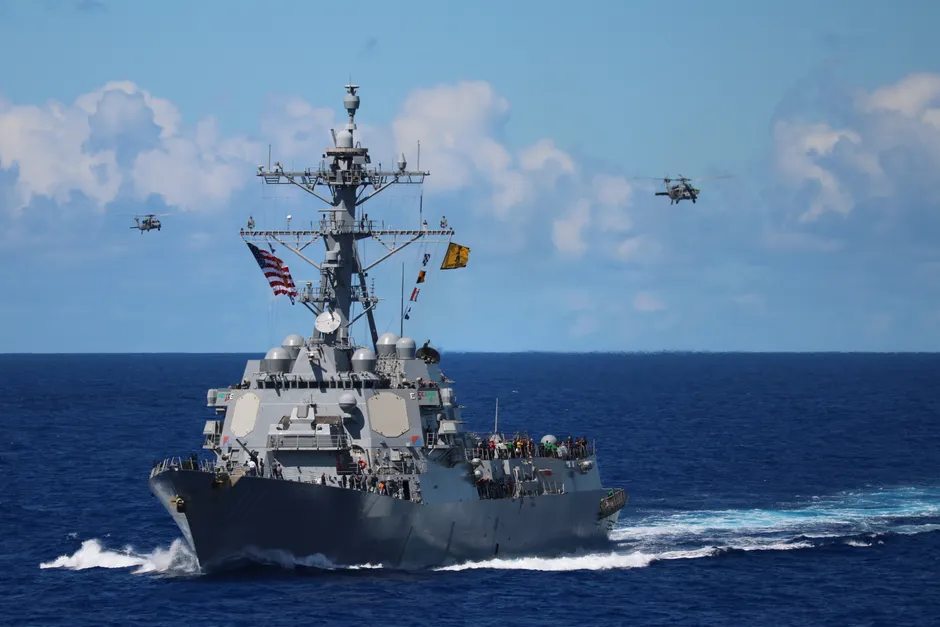
On July 25, 2026, the US military shot at a commercial oil tanker in the Strait of Hormuz after the ship tried to break through an American blockade around Iran's ports at least four times. A blockade is when a country uses its military to stop ships from entering or leaving another country's ports. Navy Captain Tim Hawkins, speaking for US Central Command, said the crew kept trying to get through before US forces fired into the ship's engine room (BBC). The tanker is no longer heading to Iran. The BBC did not name the ship, calling it only "a tanker ship" and "the second commercial ship the US has disabled since it reimposed its blockade."
Earlier reports from July 24 confirmed what happened. PBS NewsHour and ABC7 News both reported that the US military fired on another merchant vessel trying to break through the blockade, calling it the second ship disabled since enforcement started again (PBS; ABC7). Before that, The Guardian reported on July 16 that the US used Hellfire missiles — small, precise missiles often fired from drones — to disable an empty oil tanker in the same strait (The Guardian). A CENTCOM public release says that in the first 24 hours of enforcement, the military redirected two ships that complied and disabled one that did not (CENTCOM).
The Strait of Hormuz is a narrow strip of water between Iran and Oman. It is one of the most important shipping routes in the world because a huge portion of the world's oil passes through it.
The fighting is not limited to the Strait of Hormuz. The Houthis — an armed group that controls parts of Yemen and is backed by Iran — said they fired missiles at the Saudi Arabian city of Jizan, causing fires. They said this was in retaliation for Saudi air strikes on Houthi targets in the Yemeni city of Hodeida and on Kamaran island (BBC; Al Jazeera; The Defense Post). A Houthi military spokesman named Yahya Saree made public statements about the Saudi strikes and the Houthi response in July 2026. Saudi air defenses intercepted a Houthi ballistic missile on July 24 (Saudi Gazette).
Several countries have spoken out against the Houthis. The United Kingdom and Jordan both condemned the Houthis for targeting a Saudi ship in the Red Sea, according to Saudi Press Agency reports from July 23 (SPA-UK; SPA-Jordan). Yemen's government condemned a separate Houthi missile attack on July 15 (SPA-Yemen). A group called the Coalition to Restore Legitimacy in Yemen said Houthi statements against Saudi Arabia are hiding the truth and that "unprecedented force" will protect security (SPA-Coalition). The Coalition's military command also said the Houthis are blocking flights at Sana'a International Airport, which it says puts the Yemeni people under siege (SPA-Joint Forces).
Meanwhile, oil markets moved the other way. Two very large oil tankers chartered by China successfully passed through the Bab el-Mandeb Strait — another narrow waterway that connects the Red Sea to the open ocean. This helped bring the price of Brent crude oil, a key global benchmark for oil prices, down to just over $96 a barrel (BBC).
The broader context here is about how the US is enforcing the blockade. Earlier, American forces would redirect ships that tried to get through. Now they are using missiles and gunfire to disable the ships' engines so they cannot move at all. Imagine a traffic cop who used to wave cars into a U-turn but now disables the engine so the car cannot move. This makes it much riskier for any ship trying to reach Iran, which could limit what Iran is able to import. Also, the name of the latest ship the US disabled has not been made public by CENTCOM or the BBC, which means shipping insurers and companies that track vessels will need to figure that out on their own.
The fact that fighting is happening in both the Strait of Hormuz and the Red Sea at the same time suggests the pressure on the region is coordinated. Houthi strikes on Saudi targets, along with their retaliation for the strikes on Hodeida and Kamaran, force Saudi Arabia to spread its air defenses across more areas. The Coalition's talk of "unprecedented force" suggests more escalation is coming. But the fact that Chinese tankers made it through the Bab el-Mandeb Strait shows some ships can still get through these narrow passages, which helps keep oil flowing to global markets. The drop in oil prices to $96 suggests traders are paying more attention to those safe passages than to the fighting.
The condemnations from the UK, Jordan, and Yemen's government are meant to paint the Houthi attacks as violations of international shipping rules. The Coalition's claim about the airport closures adds another layer of conflict — both sides are accusing each other of besieging civilians. With the US blockade firmly in place and Houthi strikes continuing, the fighting across both waterways looks set to continue.