Why Ukrainians Are Protesting the Firing of a Top War Official
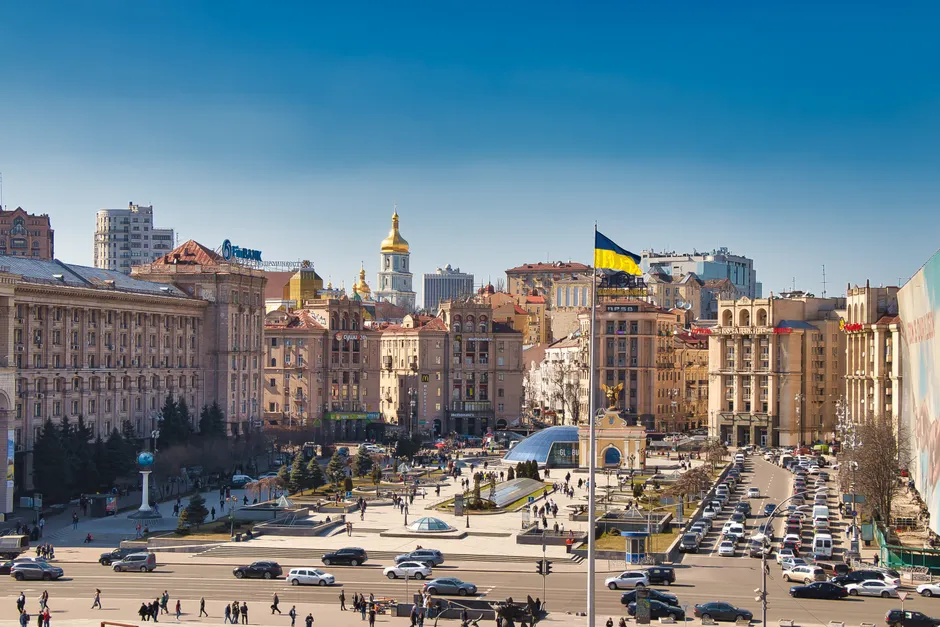
Thousands of Ukrainians took to the streets in Kyiv and other cities on July 16, 2026, one day after President Volodymyr Zelensky fired his defence minister, Mykhailo Fedorov. Fedorov, who was 35 years old, had become one of the country's best-known wartime leaders. Protests spread across the country, with crowds gathering in the capital near the President's Office and in the city of Odesa, among others (Kyiv Independent; Pravda; Euromaidan Press).
In central Kyiv, protesters gathered at Ivan Franko Square. The BBC reported the scene, quoting a Ukrainian soldier named Oleksandr who said the firing was "the worst mistake Zelensky has made during his entire presidency." Oleksandr told the BBC he had joined the army earlier in 2026 specifically because he trusted Fedorov and his plans. He also said he does not know anyone, in the army or in society, who supports the decision to replace him (BBC News).
Maria Lavrynets, 31, also spoke to the BBC at the Kyiv protest. She said many of her friends in the military have died and that she does not want the war to continue. Lavrynets told the BBC that Fedorov's results are visible, that soldiers' motivation is visible, and that "we should stand for them" (BBC News).
Fedorov came to the defence job through an unusual path. He first became well known as Ukraine's minister of digital transformation, a role focused on bringing the country's technology up to date. When Russia launched its full-scale invasion in 2022, Fedorov organized a volunteer group called the "IT Army of Ukraine" to carry out cyber attacks against Russian targets. He also led a campaign called the Army of Drones, which raised money from ordinary citizens to buy military drones (BBC News).
As defence minister, Fedorov pushed major reforms. He restructured the ministry, which many Ukrainians had seen as slow and stuck in old Soviet-era habits. He also added gamification, meaning he designed a system where military units earned points or credits for destroying Russian equipment. The goal was to motivate frontline troops and create a way to measure how well units were performing (BBC News).
The Kyiv Independent described Fedorov's firing as part of a broader government reshuffle, or shake-up of leadership positions, and said it deepened turmoil within Ukraine's military leadership. Calls for protest began on July 15, the same day the dismissal was first reported by news outlets (Kyiv Independent; Meduza). France24 reported that Fedorov was Zelensky's most popular minister at the time of his removal, which helps explain the strength of the public response (France24).
The scale of the protests was large. Thousands rallied in Kyiv alone, with demonstrations in several other cities, all demanding Fedorov be given his job back. The fact that protests stretched from the capital to Odesa suggests the anger was not limited to one area. The presence of active-duty soldiers among the protesters, as described by Oleksandr, adds a different kind of pressure. In a country in its fifth year of full-scale war, military morale is not just a political issue, and the accounts gathered by the BBC suggest that at least some soldiers see a direct link between Fedorov's leadership and their own willingness to serve.
The broader context here is the clash between wartime reform and political power. Fedorov's overhaul of the defence ministry and his unconventional methods, from volunteer cyber networks to a points-based system for combat, made him a symbol of modernization in a system long criticized for being slow to change. His removal was described by the Kyiv Independent as part of a reshuffle, but it triggered a public backlash strong enough to bring mass demonstrations within a single day. Whether that backlash forces the government to reverse course or makes it dig in further is the immediate question. The testimonies from Kyiv indicate that, for some Ukrainians, this firing is not being seen as a routine change of personnel but as a break with real consequences for the war itself.


