Why Canadian Wildfire Smoke Is Making US Air Unhealthy Right Now

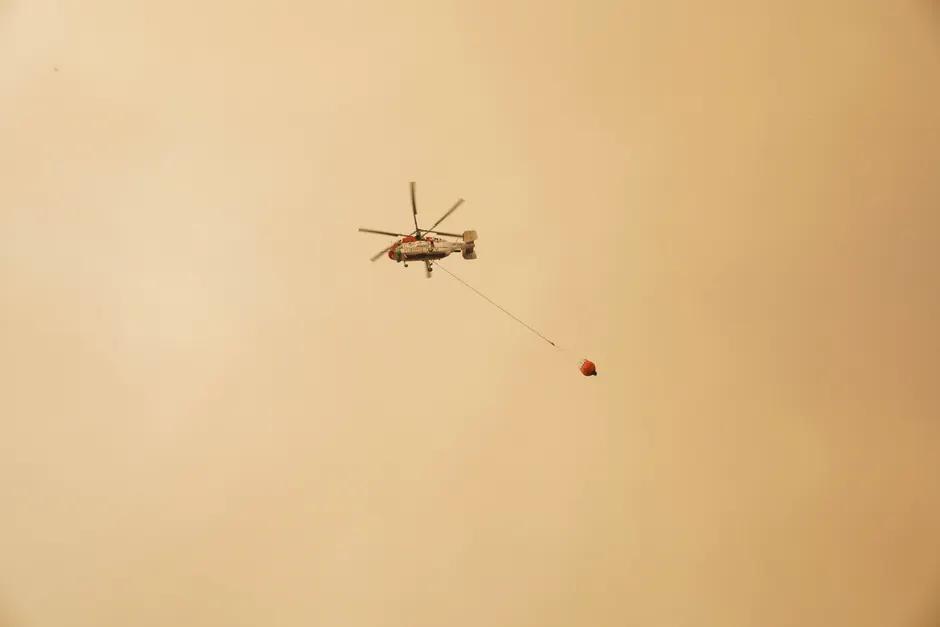
More than 800 wildfires were burning across Canada as of July 14, 2026, and most of them were out of control BBC News. A large group of fires in western Ontario sent thick smoke over Thunder Bay and Toronto, making the air unhealthy to breathe in both cities. IQAir, a company that tracks air quality worldwide, ranked Detroit as having the worst air quality of any city on Earth that day, followed by Minneapolis and then Toronto BBC News.
The smoke has traveled far from where the fires are actually burning. Thin layers of tiny pollution particles have drifted high in the sky over the Great Lakes and New York, causing hazy skies and making sunrises and sunsets look unusually red. Winds from the northwest are expected to keep pushing smoke into northern US states through the weekend.
AirNow.gov, a US government air quality website, reported a reading of 275 for Minnesota on something called the Air Quality Index, or AQI. The AQI is a numbered scale from 0 to 500 that tells you how clean or polluted the air is. A score of 275 falls into the "Hazardous" category, the most serious level, meaning everyone, not just sensitive groups, could be affected. The Mississippi River Valley area registered a 151, which is considered "Very Unhealthy" AirNow.gov. As of July 15 at 11:00 PM PDT, AirNow.gov's national map showed "Hazardous" as the highest air quality category anywhere in the country AirNow.gov.
The state of Michigan issued a statewide air quality alert on July 14 because of smoke from both Canadian and Minnesota wildfires Detroit Free Press. Wisconsin also put out air quality advisories for the same reason. The National Weather Service office in Buffalo said smoke from fires in northern Minnesota and Canada would keep causing poor air quality across its area NWS Buffalo.
In Minnesota, the governor sent the National Guard to help fight wildfires in the northern part of the state on July 13. Those fires had burned more than 800 acres in five days and were not yet contained, according to a state website cited by Reuters. Reuters also reported on July 14 that wildfires were burning at the same time across both Europe and North America, showing how widespread this fire season has become Reuters.
Officials are leaning heavily on forecasting tools. A website called FireSmoke.ca runs a model called BlueSky Canada that produces detailed forecasts showing where and when smoke will be thickest at ground level, looking about two days ahead FireSmoke.ca. The Canadian Interagency Forest Fire Centre, or CIFFC, puts out a daily report on the overall fire situation, with its most recent Canada Report updated on July 8 CIFFC.
Thunderstorms are expected across Ontario in the coming days, but the rain is not expected to do much to slow the fires. A shift in wind direction by Monday should push the smoke plume toward Quebec instead, which would bring some improvement to air quality in the southern United States. The timing matters: there are concerns that smoke could drift into New Jersey, where the World Cup final is scheduled for Sunday BBC News.
The broader context here is that this is not an isolated event. The 2023 Canadian wildfire season showed how smoke from distant fires can make air unhealthy thousands of kilometers away, and the current situation is following a similar path. What makes this episode different is that fires in both Canada and Minnesota are burning at the same time, pushing air quality into the "Hazardous" category across multiple US cities at once. When three major cities, Detroit, Minneapolis, and Toronto, simultaneously rank as the worst in the world for air quality because of a single smoke event, it tells you something about the enormous amount of material that is burning.
For people working in emergency management, public health, and aviation, the situation is changing quickly. CIFFC's daily reports and BlueSky's two-day smoke forecasts are the main tools for looking ahead, but both depend on weather conditions that can shift. The wind change expected by Monday could bring relief to southern Canada and the northern US, but it sends the smoke problem east into Quebec. The World Cup final in New Jersey adds another layer: if smoke levels rise there on Sunday, a huge public event could be directly affected by wildfire pollution crossing an international border.
What is still uncertain is whether the expected thunderstorms in Ontario will bring enough rain to actually reduce the fires, or whether the fires will keep spreading under the current dry and windy conditions. The most recent CIFFC report is now eight days old, and an updated assessment would help clarify whether the 800-fire count has grown.