Why Australia Is Furious With Laos Over the Backpacker Poisoning Case

Australia has called in Laos's top diplomat in Canberra and sent its own envoy to Laos after Laos said it would bring charges of no more than one year in jail over the poisoning deaths of six young backpackers in November 2024. Foreign Minister Penny Wong said Australia was "deeply frustrated and bitterly disappointed" and wanted "real charges with teeth" (The Guardian, 17 July 2026).
Wong published a media release titled "Laos methanol developments" on 17 July 2026 (Australian Foreign Minister media release, 16 July 2026). She appointed Pablo Kang as a special envoy, a diplomat sent on a specific mission, to travel to Laos that same day and deliver Australia's objections in person. Wong also said she would raise the issue with her Lao counterpart at a regional summit in Manila the following week (BBC, 17 July 2026).
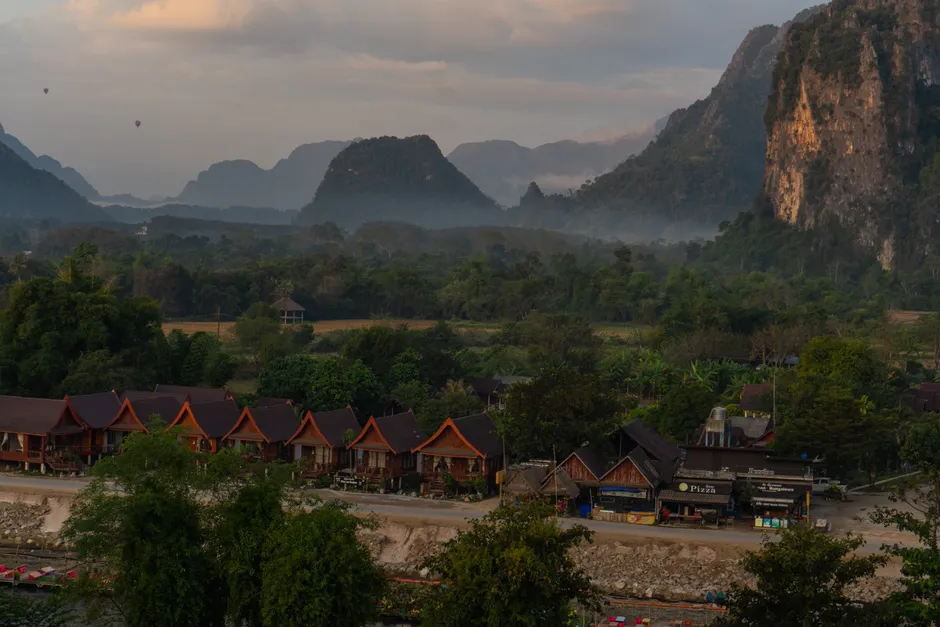
The case goes back to an incident at the Nana Backpacker Hostel in Vang Vieng, a town popular with young travellers in Southeast Asia. Six tourists died after drinking free shots served at the hostel that were believed to be tainted with methanol. Methanol is a highly toxic chemical sometimes illegally added to alcohol to make it cheaper to produce. Even small amounts can be deadly. The victims included Bianca Jones and Holly Morton-Bowles, both 19-year-old Australians, as well as tourists from Britain, America, and Denmark. Simone White, a 28-year-old lawyer from southeast London, was among those who died (Reuters, 21 November 2024). A New Zealand citizen who was also poisoned survived and returned home (Reuters, 24 November 2024).
ABC News reported on 16 July 2026 that Lao authorities were expected to bring charges carrying penalties of up to one year in jail combined and a maximum fine of A$1,600 (ABC News, 16 July 2026). That penalty has angered the victims' families. Mark Jones, Bianca's father, told the ABC that "furious would be an understatement" and called on Prime Minister Anthony Albanese to contact Laos's leader directly to demand real justice. Shaun Bowles, Holly's father, said the expected charges were "very hard to comprehend" (BBC, 17 July 2026).
These new charges follow an earlier legal case tied to the same hostel. Ten people connected to the Nana Backpacker Hostel had already been charged with destroying evidence and received suspended sentences and fines of $185 each (BBC, 17 July 2026). The key difference is that those earlier charges were about covering up evidence, while the new charges target the people allegedly responsible for the poisoning itself. Australia's argument is that penalties of up to one year are far too light given that six people lost their lives.
Laos initially struck a different tone. In November 2024, the Lao government said it was "profoundly saddened" by the deaths and promised to prosecute those responsible (Reuters, 24 November 2024). The gap between that promise and the penalties now emerging nearly two years later is what Australia is trying to pressure Laos to close.
The timing is tied to the regional diplomatic calendar. Wong's planned meeting with her Lao counterpart on the sidelines of the Manila summit gives her a formal setting to raise the issue face to face, while Kang's presence in Laos adds a second channel for direct pressure. The BBC reported that Lao authorities were expected to hold a press conference later on the day of Wong's announcement, suggesting Laos was preparing to present its own version of events to the public (BBC, 17 July 2026).
The bigger picture is whether a country like Australia can actually change the mind of a one-party state like Laos, where the courts have limited independence. Australia's influence over Laos is limited. Trade between the two countries is small, and Laos depends far more on China and Vietnam. Calling in an ambassador and sending a special envoy are meaningful diplomatic steps, but they signal concern rather than force a result. What Australia is really doing is building a paper trail of formal objections that could support tougher steps later, such as changing travel warnings or working with the other victims' governments, if the charges go ahead as currently planned.